
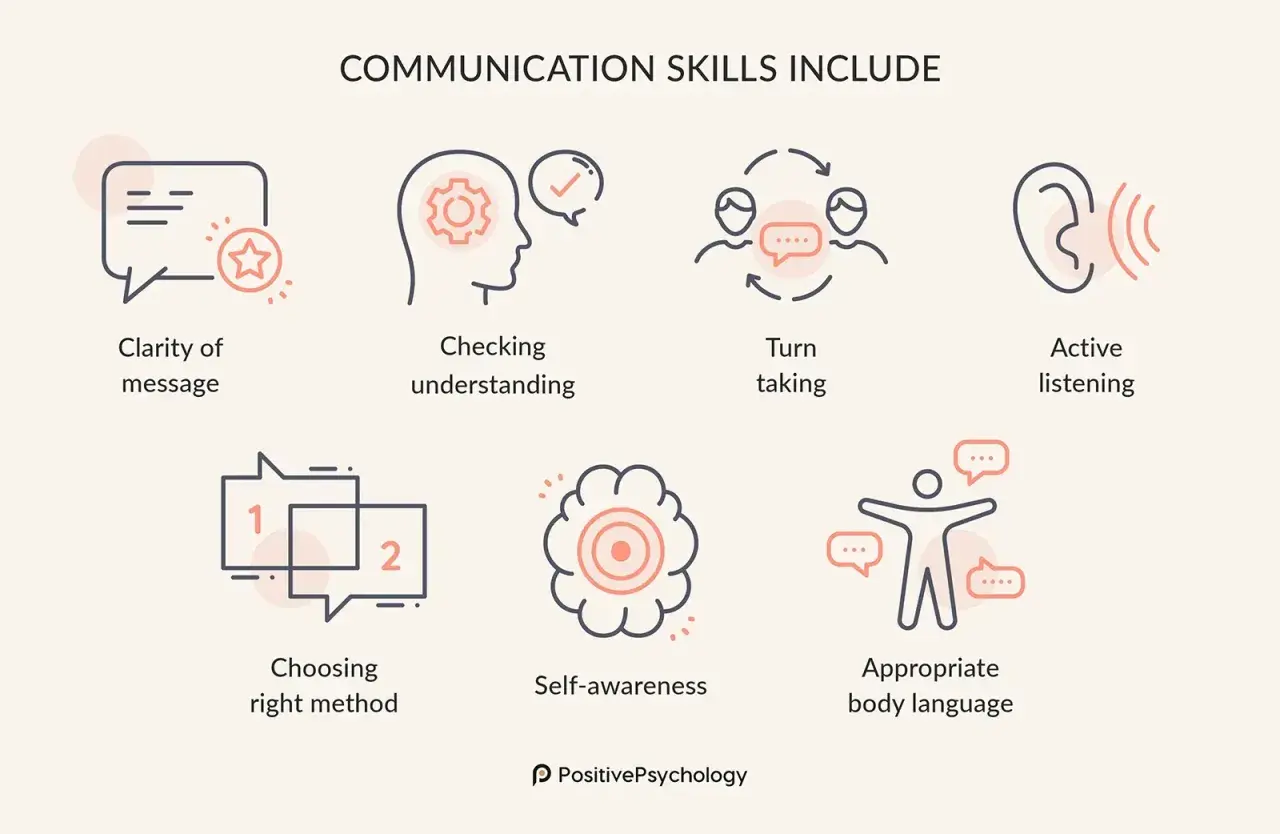
Workplace communication is rarely tested when everyone is calm. It is tested when someone is overloaded, disappointed, grieving, defensive, or unsure what happens next. That is where understanding and compassion stop being abstract values and become practical tools: they help people feel heard, keep standards intact, and move the conversation towards a workable next step.
What strong workplace communication changes in practice
- It turns emotional tension into clearer next steps instead of longer arguments.
- It keeps empathy grounded in action, not just pleasant language.
- It helps managers ask better questions, especially when the issue is sensitive.
- It makes hybrid and written communication feel less cold and more trustworthy.
- It works best when it is consistent, not performed once and forgotten.
What it means in a real workplace conversation
I treat this skill less as a personality trait and more as a communication discipline. Empathy tells you that someone is under strain; compassion asks what you can do next that is actually useful. In my view, that shift is what separates a polite reply from a conversation that genuinely helps.
CIPD’s evidence on psychological safety points in the same direction: when people feel safe enough to speak, they are less defensive, more open about mistakes, and better able to contribute honestly. That matters because a team cannot solve what people are afraid to name.
| Approach | What it does | What it sounds like |
|---|---|---|
| Empathy | Shows that you have noticed the emotion behind the message | “I can see this has been a difficult week.” |
| Compassion | Moves from recognition to practical help | “Let’s work out what can change today.” |
| Sympathy | Feels for the person but can stay at a distance | “That sounds awful.” |
| Avoidance | Keeps the task moving but ignores the person | “We just need to move on.” |
The difference looks small on paper, but in a team meeting it changes the temperature of the room immediately. Once you can see that difference, the next question is how to use it in a way that sounds natural rather than rehearsed.

What it sounds like in real conversations
The best responses are short, calm, and specific. I do not think people under pressure need a speech; they need to know they have been understood and what happens next. That is true whether the conversation is face to face, over video, or in a message thread that has started to go flat and defensive.
| Situation | A better response | Why it works |
|---|---|---|
| A deadline slipped after a family issue | “Tell me what changed, and let’s decide what is realistic now.” | It acknowledges the situation without excusing away the work. |
| A colleague is visibly overwhelmed in a meeting | “You seem under pressure. Would it help to pause and pick this up later?” | It gives the person dignity and a way to recover without embarrassment. |
| Someone strongly disagrees with a decision | “I want to understand your concern before we settle the next step.” | It lowers defensiveness and keeps the conversation focused on the issue. |
| An employee says they are struggling to concentrate | “Thanks for saying that. What support would make this week easier?” | It shifts from vague reassurance to a practical, usable offer. |
Those phrases work because they do three things at once: they acknowledge the person, reduce threat, and keep the task moving. In a professional setting, that is usually the sweet spot.
How to use it without sounding scripted
The biggest mistake I see is trying to sound caring without actually changing the structure of the conversation. The tone may be warm, but if the person leaves with no clarity, nothing has really improved. A better approach is to keep the language plain and the process disciplined.
- Notice what you can actually see. Name the observable signal rather than guessing the full story. “You seem quieter than usual” is safer than “You are not coping.”
- Ask one open question. “What would help most right now?” usually opens the door better than a string of closed questions.
- Reflect back the main point. A brief paraphrase shows you are listening and helps the other person hear their own thoughts more clearly.
- Offer one realistic option. I prefer one clear offer to three vague promises. “We can move this deadline” is more useful than “Let me know if you need anything.”
- Agree the next check-in. Compassion without follow-up often feels performative. Even a short time stamp creates trust.
When I coach managers, I often say that the goal is not to sound perfect; it is to make the other person feel safe enough to be specific. That is where useful action starts, and it leads directly to the next trap teams need to avoid.
Where compassion goes wrong
Compassion loses credibility when it becomes vague, evasive, or self-protective. I would rather see a manager say, “Let’s take ten minutes and work out what support is realistic,” than say, “Don’t worry, we’ll sort it,” and then disappear. One is clear; the other is comfortable for the speaker and useless for the listener.
- Solving the problem too fast. People often need to finish the thought before they are ready for advice.
- Using warmth as a substitute for action. A nice tone does not fix a broken process.
- Promising flexibility you cannot approve. False reassurance damages trust more than a careful “I need to check.”
- Turning the conversation into your own story. Brief context can help; taking over the moment does not.
- Confusing compassion with lowering every standard. Good support does not mean vague performance expectations.
The boundary is simple: be human, but stay clear about role, responsibility, and next steps. That balance matters even more in the UK context, where support often sits alongside formal policies and legal rights.
Why the UK context matters
In the UK, compassionate communication is not only a leadership style; it is often the way people access leave, adjustments, and support. Acas notes that grief is different for everyone and that support should be tailored to the person, not just to the policy sheet. It also makes clear that there is no automatic right to paid bereavement leave in every case, which is why a manager’s language and the organisation’s process both matter.
For carers, the picture is more structured. The Carer’s Leave Act 2023 came into effect on 6 April 2024, and eligible employees can take up to 1 week of carer’s leave in any 12-month period. Employers can choose whether to pay for it, but they do not have to. That makes the conversation around timing, notice, and flexibility more important than ever.
CIPD makes a similar point about mental health: early conversations, trust, and an open culture are essential, because people are far less likely to speak up if they do not trust the manager they are speaking to. In other words, the quality of the conversation shapes whether support is actually used.
| UK situation | What compassionate communication looks like | What to check |
|---|---|---|
| Bereavement | Ask what support the person wants now and later, without forcing a single response | Contract, bereavement policy, leave options, pay rules |
| Carer responsibilities | Discuss timings early and keep the tone practical, not punitive | Carer’s leave, flexible working, rota cover, unpaid leave |
| Mental health strain | Keep the discussion private, simple, and calm, then agree support or adjustments | Return-to-work plan, workload changes, occupational health, manager follow-up |
When the policy side is clear, the human side becomes easier to navigate. That is why the best workplaces do not separate compassion from management; they make it part of everyday leadership.
How to build it into everyday team habits
The skill becomes durable only when it is built into routine, not saved for crises. In practice, that means making small changes that are easy to repeat under pressure.
- Start 1:1s with a real check-in. One honest question at the top of the meeting can surface issues before they become problems.
- Separate feedback from judgement. Describe the behaviour, the impact, and the next step instead of making the conversation personal.
- Use written follow-up after emotional conversations. A brief recap reduces confusion and helps both sides remember what was agreed.
- Train managers to pause before advising. A two-second pause prevents the reflex to fix everything too quickly.
- Normalise adjustment conversations. If flexibility only appears in emergencies, people will hesitate to ask for it.
- Keep policies easy to find. Compassion should not depend on someone already knowing the right manager to ask.
If I were looking for a simple measure of progress, I would watch for earlier escalation of issues, fewer repeated misunderstandings, and more direct requests for help. Those are better signs than people merely saying the culture feels “nice.”
The small signals people remember
The strongest teams do not become compassionate by accident. They are built from small signals: people are not interrupted, difficult news is handled privately, follow-ups happen when promised, and managers do not hide behind polished phrases when a clear answer is needed. Over time, those signals teach people whether it is safe to be honest.
- People ask for help earlier.
- Disagreements stay factual instead of becoming personal.
- Written messages feel firm but not cold.
- Support conversations end with a next step, not just reassurance.
If you want one practical test, use this: after a difficult conversation, does the other person leave with more clarity and less fear? If the answer is yes, the communication is doing real work, and that is usually where trust starts to compound.
