
A strong 360 assessment certification is less about collecting a badge and more about learning how to run a feedback process that people trust. In practice, the useful courses teach you how to design the questionnaire, choose raters, protect anonymity, read the report, and turn the results into development actions. For readers in the UK, the real question is not whether the course sounds impressive, but whether it gives you the confidence to handle a live 360 cycle without damaging trust.
The best courses teach process discipline, not just theory
- Most programmes are provider-issued credentials for HR, L&D, coaches, and consultants rather than formal licences.
- A credible course covers design, ethics, report interpretation, feedback delivery, and action planning.
- Typical formats range from a 10-hour self-paced module to a 2-5 day coached workshop.
- In the UK, entry-level facilitator training can start around £199 ex VAT, while the assessment tool itself is often priced per participant.
- The process works best when 360 feedback is treated as a development tool first, not as a blunt performance-rating exercise.
What the certification actually prepares you to do
In my view, the value of this kind of training is practical, not ceremonial. You are not just learning what 360-degree feedback means; you are learning how to run it responsibly, from the first briefing to the final action plan. That matters because the same survey can be useful or useless depending on how it is introduced, who rates whom, and how the results are handled.
A good course should prepare you to:
- build or select a questionnaire that matches the organisation’s goals
- choose the right raters without creating a popularity contest
- explain anonymity, confidentiality, and report access clearly
- read patterns instead of overreacting to one score
- facilitate a development conversation that leads to next steps
The most important distinction is this: the certification should make you competent to interpret behaviour and guide development, not just press buttons in a platform. Once that is clear, it becomes easier to judge the actual process behind the credential.

How the certification process usually works
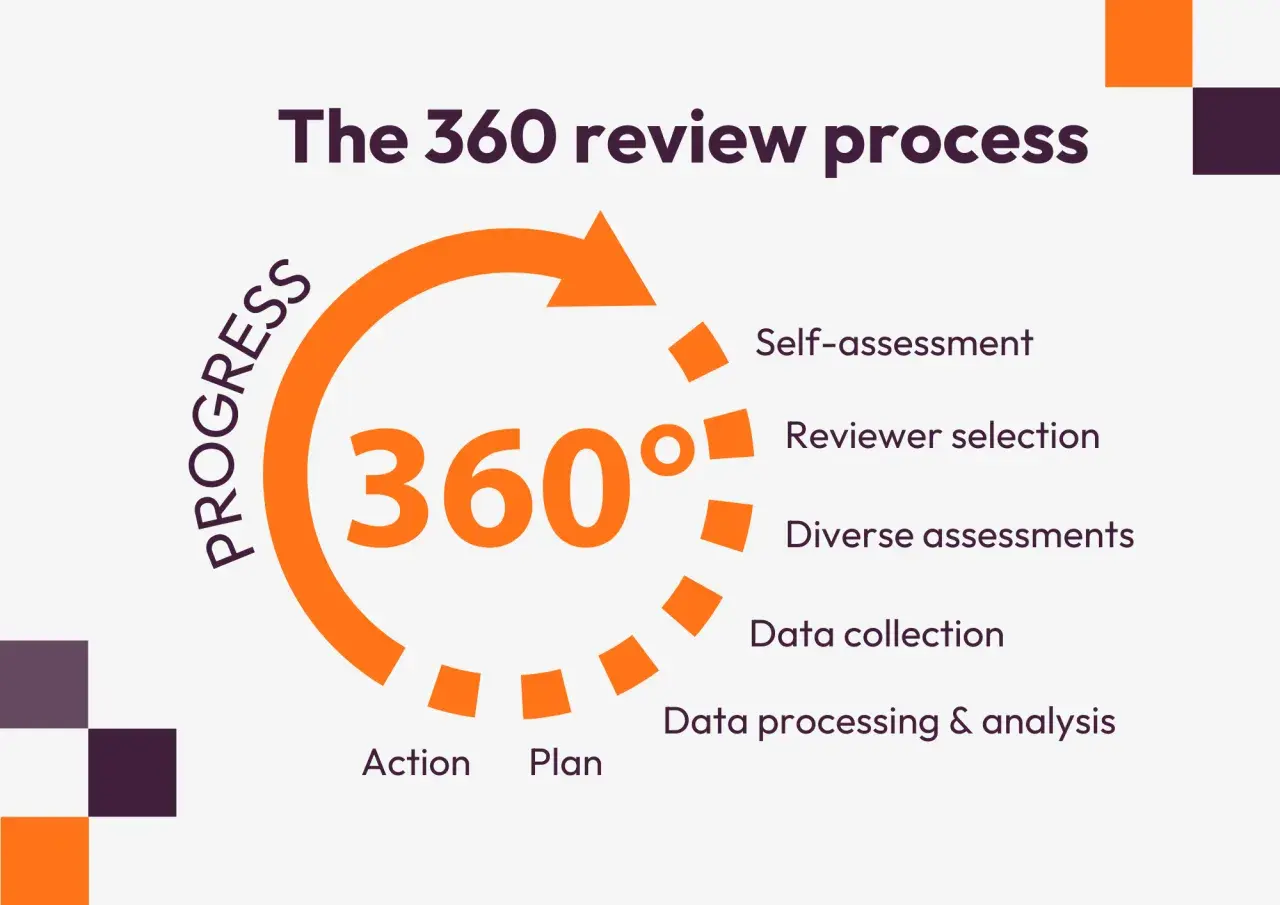
Most programmes follow the same basic rhythm, even when the branding differs. The details change, but the logic is consistent: prepare the participant, collect feedback, interpret the results, and convert them into a development plan.
- Set the purpose and population. Decide whether the 360 is for leadership development, coaching, promotion readiness, or culture work. This is where many weak projects go off track, because the purpose is left vague.
- Choose raters carefully. The participant usually proposes peers, direct reports, managers, and sometimes clients or partners. In a well-run process, the final list is reviewed so the sample is credible and balanced.
- Complete the self-assessment. The self-rating is useful because it reveals perception gaps, not because it is automatically more accurate than anyone else’s view.
- Collect and release the report. Good systems wait until enough responses are in to protect anonymity and avoid distorted results.
- Run the debrief. This is the point that separates serious training from a checkbox certificate. The debrief should translate scores into behaviour, patterns, and priorities.
- Build an action plan and follow up. The real return comes later, when the person changes specific habits and checks progress after 60 to 90 days.
What a strong programme should teach
A useful 360 course goes beyond the mechanics of sending surveys. It should help you understand why certain designs work and where they break down. Some assessment suites are treated as restricted instruments, which is sensible: if the tool has a specific measurement model, the administrator should be trained to use it as intended.
- Question design - each item should target one behaviour, not three ideas at once. Overloaded questions create muddy data.
- Interpretation of patterns - look for themes across rater groups, not just a single mean score.
- Feedback delivery - people can hear difficult messages if the debrief is calm, specific, and non-defensive.
- Confidentiality and ethics - the course should explain data handling, access rights, and how to protect participant trust.
- Development planning - the output should be a small set of behaviour changes, not a long wish list.
- Cultural fit - 360 feedback can support development beautifully, but it becomes risky if used too early as a performance-management weapon.
I would also expect the course to show you how to avoid score clustering, where raters bunch everyone around the same middle score and the report loses sharpness, and how to handle a levelled questionnaire, which is simply a different version for different role levels. That kind of judgement is what turns a certificate into a real working skill.
Which training format fits your role in the UK
Not everyone needs the same depth of training. A manager running an internal leadership programme has a different need from a coach who plans to interpret reports for external clients. I usually separate the options into four buckets.
| Format | Typical duration | Indicative cost | Best for | Watch out for |
|---|---|---|---|---|
| Tool-only access | Set-up time plus your own facilitation | Often £50-£150 per participant; some public-sector tools are around £40 + VAT | Teams that already have internal expertise | Weak debriefs and poor interpretation if the user is inexperienced |
| Short facilitator course | About 10 hours or a one-day workshop | From around £199 ex VAT | HR and L&D teams running internal programmes | May not go deep enough for external coaching work |
| Broader certification | 2-5 days, or roughly 29 hours in some programmes | Usually higher and quote-based | Coaches and consultants who need stronger report-reading and facilitation skills | Can be more instrument-specific |
| In-house bespoke programme | Varies by scope | Quote-based | Larger organisations wanting consistency across teams | Quality depends heavily on the provider and the internal sponsor |
If you want a rough budget anchor, I would think in three layers: a short facilitator course can be around £199 ex VAT, the assessment tool itself is often £50-£150 per participant, and a more intensive certification costs more once practice, support, and multi-day delivery are included. The better the format match, the less likely you are to end up with a certificate that looks good but does not change your day-to-day work.
Where 360 programmes go wrong
The fastest way to waste money on 360 feedback is to treat it like a generic survey. The process looks simple from the outside, but small mistakes create big distortions.
- Using it for everything - if a process is meant for development, do not bolt on punitive appraisal expectations halfway through.
- Choosing too many competencies - the questionnaire becomes noisy, and nobody knows what to act on.
- Picking weak raters - if the sample is too small or too politically loaded, the feedback loses credibility.
- Skipping the debrief - report delivery without conversation usually creates anxiety, not development.
- Confusing insight with change - people can understand a report and still not change behaviour without coaching and follow-up.
- Ignoring readiness - if the culture does not tolerate honest feedback, the numbers may look polished but tell you very little.
I would be especially cautious about using 360 feedback as a performance-rating tool in a low-trust culture. It can work, but the conditions have to be right. For most organisations, the safer route is to build confidence through development first and expand the use case later.
What I would check before paying for a course
Before I buy any 360 feedback training, I want to see proof that the course will help me act, not just learn. That means I look for sample reports, practice debriefs, and a clear explanation of how confidentiality is protected.
- Does the training explain questionnaire design, rater selection, report interpretation, and feedback delivery?
- Is the certification tied to one instrument, or will it give you transferable skills?
- Do you get live practice, not just slides and theory?
- Is there follow-up support after the course, such as moderation, coaching, or resources?
- Are the costs clear, including VAT, participant licences, and any extra report fees?
For a UK buyer, those questions matter more than glossy branding. If the course helps you run a credible process, handle difficult conversations, and turn feedback into one or two measurable behaviour changes, then it is doing the job. If it only gives you a badge, I would keep looking.
