
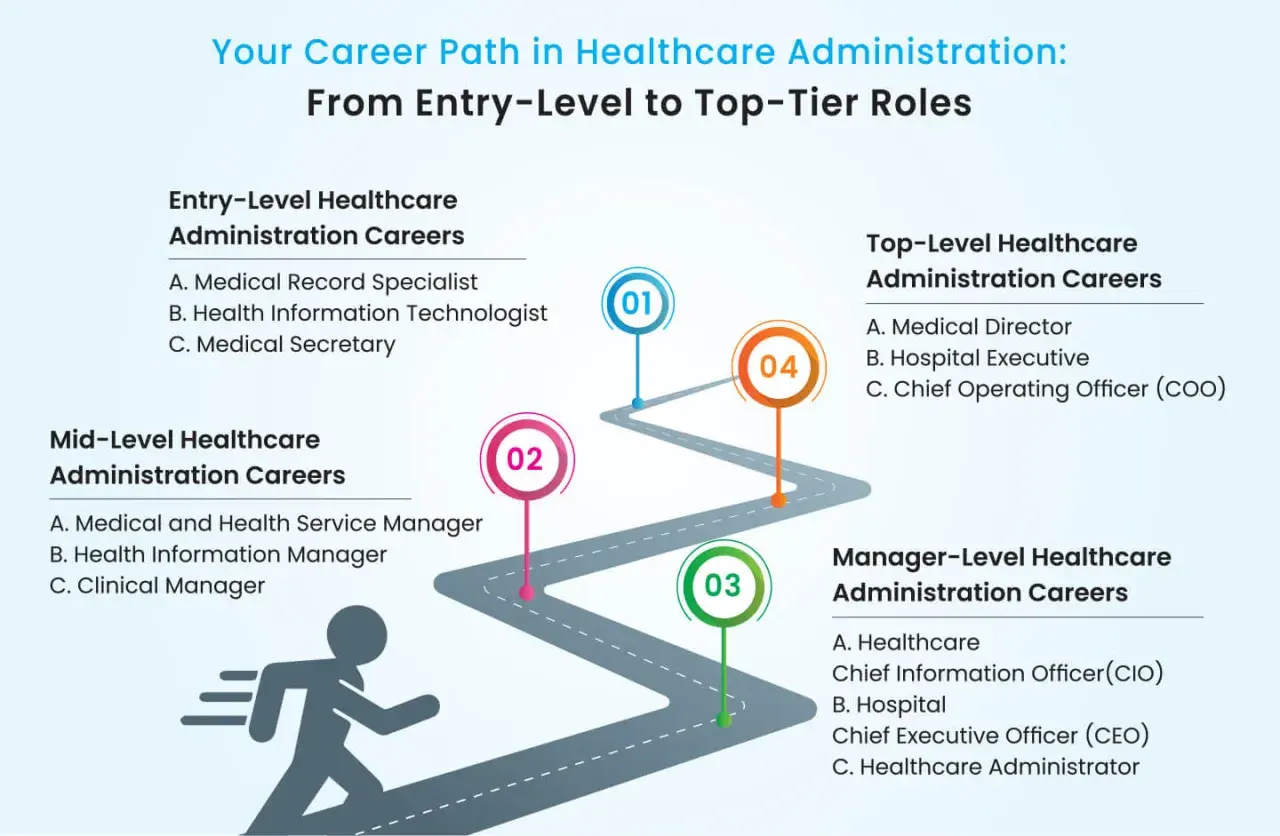
A health care administration online degree can be a practical way into management without stepping away from a job in care, operations, or support services. In the UK, these programmes are usually framed as healthcare management or leadership degrees, and the stronger ones focus on finance, staffing, service improvement, and decision-making rather than clinical practice. I’m going to unpack what the route really covers, who it suits, how the UK options differ by level, and what to check before you pay tuition.
The core facts in one glance
- Most online programmes in this field are designed for people who want to move into coordination, supervision, or service management rather than direct clinical work.
- The best courses teach practical management skills such as budgeting, HR, policy, quality improvement, and data use.
- In the UK, online options range from entry-level certificates to MSc and MBA routes, with very different time commitments and price points.
- Employer value depends more on course quality, accreditation, and relevance than on the word “online” itself.
- The strongest return usually comes when you can apply the learning in a real workplace, especially in the NHS, social care, or private healthcare.
What this route is really for
I would not treat this as a generic business degree with a health label attached. The point of the route is to help you understand how healthcare services run day to day, where money gets spent, why teams struggle, and how better systems improve patient experience. That is why it appeals to people already working in reception, ward support, scheduling, care coordination, or junior administration who want to move into a leadership track.
It also fits professionals who want to switch into healthcare from another sector, but there is a catch: the fit is strongest when you are happy working on operations, people, or service design. If your goal is clinical practice, this is the wrong path. If your goal is to run a better service, reduce bottlenecks, manage teams, or support strategic decisions, it makes sense.
In the UK, the most common outcomes are jobs in the NHS, social care, private clinics, community services, and project or programme support. I would especially recommend the route to people who already see where a service breaks down and want the tools to fix it. Once that job fit is clear, the next question is what you actually learn online.

What you will study online
Most strong programmes blend management theory with healthcare reality. I would expect modules in finance, HR, leadership, policy, operations, quality improvement, and data analysis. The best courses do not just teach vocabulary; they make you explain how to use those ideas in a ward, clinic, care home, or service team.
Typical topics include:
- Finance and budgeting so you can read spending, justify resources, and understand the trade-offs behind staffing decisions.
- HR and people management so you can think about recruitment, rotas, retention, performance, and workplace communication.
- Policy and governance so you can see how rules, accountability, and regulation shape service delivery.
- Operations and service improvement so you can work on patient flow, capacity, waiting times, and process design.
- Data and digital transformation so you can use evidence, dashboards, and digital tools rather than relying on instinct alone.
- Leadership and change management so you can lead through conflict, uncertainty, and reorganisations without losing the team.
How UK programmes differ by level
Online health and care management programmes in the UK are not one single product. I would think about them in four broad levels, because each one suits a different stage of career.
| Level | Typical online duration | Best for | What it usually signals |
|---|---|---|---|
| CertHE or entry route | About 16 months part-time | Career starters or switchers who want a lower-risk first step | Foundational understanding of management, finance, policy, and communication |
| Bachelor's degree | Usually 3-4 years, depending on whether it is full-time, part-time, or a top-up route | People who want a broader academic base | Deeper theory, research skills, and stronger long-term progression |
| MSc | Often 1 year full-time or 2 years part-time | Working professionals already in health or care | Advanced leadership, analysis, and service improvement skills |
| MBA with a healthcare focus | As little as 12 months online on some programmes | Mid-career managers aiming at senior leadership | Business breadth plus healthcare-specific strategy |
That structure lines up with what I see in current UK provision: some programmes are built as short online entry routes, while others are full master’s degrees aimed at people who already have workplace experience. If I were choosing for most readers already in care or administration, I would usually start with the MSc question first and only move to an MBA if I needed broader general-management depth. With those levels in mind, the real issue becomes quality and recognition.
How to judge quality and employer value
The phrase “online” does not tell you much on its own. The quality question is whether the course is respected by employers and whether it gives you skills you can actually use. In my view, four things matter most.
- Accreditation - If a programme has links to a recognised management body, that can strengthen the management side of the qualification.
- Module relevance - Look for content on finance, quality improvement, data, people management, and healthcare systems, not just abstract theory.
- Assessment style - Case studies, projects, and workplace-based assignments are usually more valuable than heavy exam-only routes for this field.
- Support and pacing - Clear tutor support, live sessions, peer interaction, and realistic deadlines matter more than glossy marketing pages.
I also pay attention to whether the programme is truly flexible or only technically online. Some degrees are fully online; others use blended delivery, live teaching blocks, or occasional in-person sessions. That is not a problem if you know it in advance, but it becomes a problem when people assume they can study asynchronously at any time of day. The healthcare sector is increasingly comfortable with digital learning anyway: the NHS Leadership Academy still runs structured development programmes, and NHS England now points to core online, modular leadership content. To me, that is a useful signal that flexible learning is no longer treated as second-rate. Once quality is clear, the next question is whether the numbers work.
What it costs and where the money goes
Tuition varies sharply, so I would avoid making decisions from the headline word “online” alone. Current UK examples show a spread that is wide enough to change the value proposition completely.
| Example price point | What it suggests |
|---|---|
| £8,030 per year | A relatively competitive postgraduate fee on a healthcare management MSc |
| £9,660 total | An online MBA route that is still fairly accessible for a full master’s-level award |
| £10,200 total | A mid-range master’s price for a global healthcare management programme |
| £16,640 total | A higher-fee MBA option that may reflect brand, support, or business-school positioning |
Those prices do not tell the full story. I would also budget for books, software, internet upgrades, and the hidden cost of time. If the course includes live blocks or a dissertation project, you may need protected study hours or even a temporary reduction in work. That is why employer sponsorship can make a real difference, especially if your current role is already in the sector. If you are eligible for postgraduate funding, it can help, but I would still treat funding as support rather than the main reason to apply. The final step is deciding whether the programme actually fits your week and your career plan.
The checklist I would use before enrolling
Before I pay for any online healthcare management programme, I would work through a simple filter:
- Does this match my next role? If the course does not move me toward a specific job change, I would keep looking.
- Is the format genuinely workable? I would check weekly workload, live session times, and whether there are any campus requirements.
- Does the entry level fit my background? I would not jump straight to an MBA if I still need the basics of management and healthcare systems.
- Are the modules practical? I would want finance, HR, quality, data, and leadership to show up in the curriculum, not just generic theory.
- Will I build something useful at work? A dissertation or project based on a real service problem is far more valuable than a purely academic topic.
- Does the course have the right external signals? I would look for accreditation, employer links, and a track record of graduates moving into relevant roles.
If I were choosing today, I would favour the programme that helps me use the learning immediately in a real setting, not the one with the loudest marketing. The best online degree in this field is the one that gets you closer to a genuine next step, whether that is service coordinator, team leader, or operations manager.
