
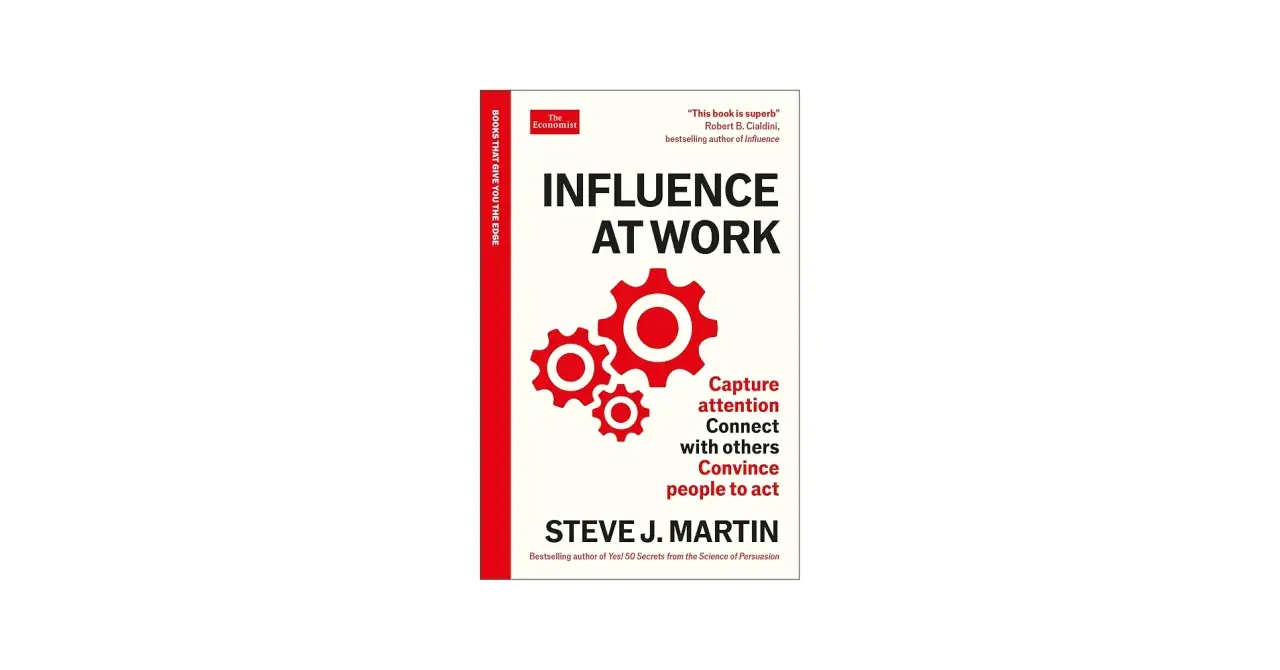
Three questions decide whether your message lands
- The model asks you to align your own objective with the other person’s priorities and the measures shaping their decisions.
- It is especially useful in leadership communication, internal comms, change conversations, and cross-team negotiation.
- Good influence usually comes from framing, timing, and evidence, not from repeating the same request louder.
- The framework works best when you prepare for objections before the meeting starts.
- It breaks down when the real blocker is policy, budget, politics, or a decision that has already been made elsewhere.
What the model is really asking you to do
I would treat this as a diagnostic tool, not a motivational slogan. The idea is simple: before you try to persuade someone, you need to understand what you want, what they care about, and what pressures shape their choices.
That is why the model works so well in workplace communication. It stops you from writing a message from your own point of view only, which is where a lot of internal emails, presentations, and change updates go wrong. You may be clear, but still irrelevant.In practice, the model helps you move from “Here is my request” to “Here is why this matters to you, right now, in the way you are already being judged.” Once those three forces are visible, the conversation becomes much easier to shape.
Why it matters in workplace communication
In a UK organisation, people rarely make decisions on content alone. They make them through the filters of budget, time, risk, reputation, and delivery. If your message ignores those filters, it can be technically correct and still fail.
I see this most often in three situations: asking for resources, pitching a change, and trying to get another team to cooperate. In all three, a generic message sounds polite, but it does not give the listener enough reason to act.
| Situation | Weak message | Stronger message | Why it works better |
|---|---|---|---|
| Budget request | “We need a new communications tool because the current one is frustrating.” | “This tool would cut manual work, improve reporting, and reduce the risk of missed updates.” | It speaks to time, risk, and efficiency, which are usually easier for leaders to evaluate. |
| Change announcement | “Please support the new process.” | “The new process removes duplicate approvals and makes month-end reporting faster.” | It shows the personal and operational benefit instead of just asking for compliance. |
| Cross-team support | “Can you help with this?” | “If your team can send the figures by Friday, we can finalise the board pack on time.” | It links the request to the other team’s deadline and the wider business outcome. |
That shift sounds small, but it changes the tone completely. Instead of asking people to care about your priority, you show them how it connects to theirs. That is the real skill underneath the framework, and it leads naturally to the questions you need to ask before you speak.
The three questions behind the framework
The triangle only works if you can answer the three corners with some precision. I do not mean perfect precision, because that is unrealistic. I mean enough clarity to stop guessing.
| Corner | What it means | Questions to ask | What you are listening for |
|---|---|---|---|
| Your work | The issue, decision, or change you want to move forward. | What exactly am I asking for? What outcome do I need? | Scope, urgency, and the practical result you want. |
| Their work | The priorities, deadlines, and responsibilities already filling their day. | What are they focused on this quarter? What is already taking their energy? | Competing goals, workload, and the topics they will naturally care about. |
| How they are measured | The scorecard, pressures, and risks shaping their decisions. | What does success look like for them? What are they trying to avoid? | Cost, risk, delivery, accountability, and reputational exposure. |
I find the third corner is the one people miss most often. They prepare a good argument for the work itself, but they do not connect it to the scorecard the other person is actually carrying. In leadership communication, that usually means talking about engagement while the manager is thinking about risk, delivery, or budget pressure.
Once you can name those three corners, your message stops being generic. It becomes targeted, and that is what makes it persuasive.
How I would use it before a difficult conversation
When I am preparing for a meeting, I work through the model in a fixed order. It keeps the message tight and prevents me from leading with the wrong point.
- Write the ask in one sentence. If I cannot say what I want clearly, the conversation will drift.
- Map the audience. I identify who is in the room, who has influence, and who may quietly block the idea later.
- Translate the benefit. I frame the request in terms the other person already values, such as time saved, risk reduced, or delivery improved.
- Choose the right channel. For a sensitive ask, I prefer a live conversation or a short meeting. Email is fine for follow-up, but it is a weak first move when trust or nuance matters.
- Prepare for one likely objection. I never assume the first question will be supportive, so I bring a calm answer to the most obvious pushback.
If the conversation is important, I also test the message aloud. That is where weak framing shows up fast. A sentence that sounds clever on paper can sound self-centred when spoken to a senior leader. If that happens, I strip it back and make the benefit more concrete.
This is also where the model protects you from overexplaining. A short, relevant message is usually stronger than a long one filled with context the other person does not need.
Where the model breaks down
The framework is useful, but it is not magic. There are clear limits, and I think it is better to name them than pretend otherwise.
- It does not fix a decision that has already been made. If a budget has been frozen or a policy has already been approved, framing alone will not reopen it.
- It does not override power dynamics. If the other person has no discretion, then your job is to influence the people above them, or change the timing.
- It does not replace evidence. Good framing helps, but weak facts still stay weak. If you want approval, your case still needs substance.
- It can be misused. If you only mirror someone’s priorities without being honest about your own, the conversation may look aligned but produce the wrong outcome.
- It is not enough for formal processes. In areas such as consultation, compliance, procurement, or union-related change, communication has to sit inside the right process as well.
In other words, the model helps you communicate better, but it does not remove constraints. That matters in real organisations, where the smartest message in the world still has to pass through budgets, governance, and politics.
Once you accept that limit, the model becomes more useful, not less. It tells you where persuasion can work, and where you need a different strategy.
What it looks like in a UK team this week
Imagine a communications lead in a UK professional services firm who wants approval for a manager toolkit after a restructure. The ask is not really “Can I have budget for some content?” The ask is “Can I get support for a tool that will reduce confusion, save manager time, and keep the change consistent?”
Using the model, the pitch would look something like this:
- Your work. A simple toolkit that helps managers explain the restructure consistently.
- Their work. Managers are already dealing with team questions, delivery pressure, and their own workload.
- How they are measured. Senior leaders care about adoption, speed, risk, and whether the change lands cleanly.
That framing is stronger because it treats the request as part of the leader’s job, not as an extra favour. It also gives you a better chance of getting a clear yes, or at least a useful no.
If I had to reduce the whole approach to one rule, it would be this: do not start with what you want people to hear. Start with what they already have to care about. That is the fastest way to make workplace communication feel relevant, credible, and worth acting on.
