
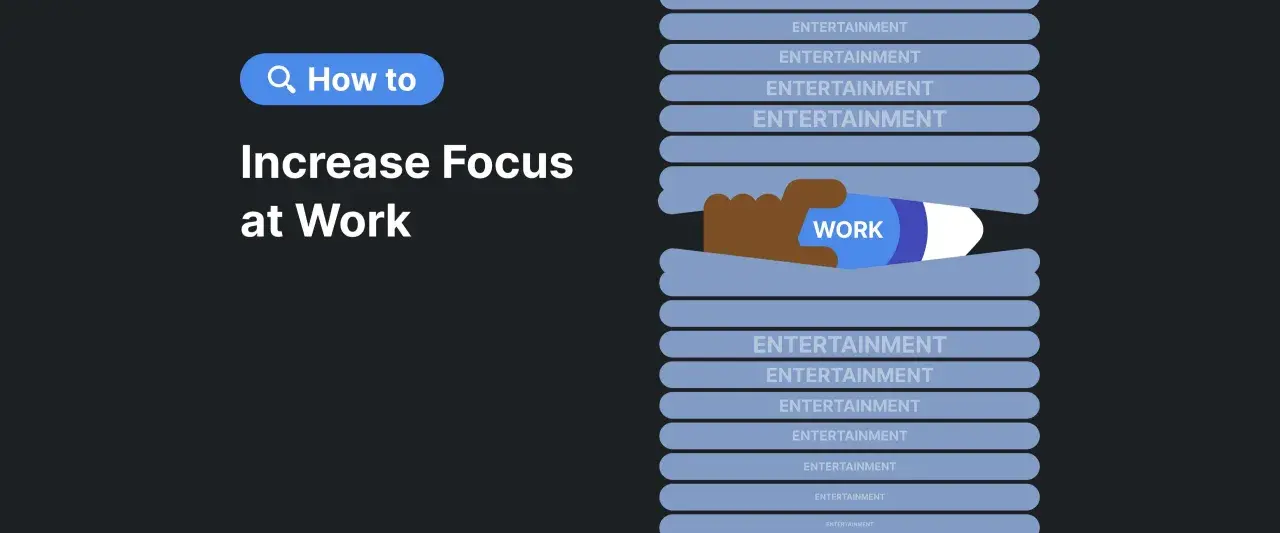
The practical answer to how to focus at work is usually not more effort, but better structure. When attention keeps slipping, the problem is often too many switches, not too little discipline. In this guide I cover the habits, workspace choices, and workload decisions that make concentration easier to sustain, especially in hybrid and office-based roles.
What matters most if you want steadier focus at work
- Reduce task switching first; concentration improves faster when your day has fewer interruptions.
- Protect your best thinking time for one meaningful task, not inbox checking and admin.
- Short breaks help recovery; 5 to 10 minutes away from the screen each hour is a sensible baseline.
- Use one repeatable method, such as Pomodoro or time blocking, instead of improvising all day.
- If fatigue or stress is driving the problem, sleep, workload, and boundaries need attention too.
Why concentration slips so easily during the workday
Most people do not struggle with focus because they are lazy. They struggle because modern work keeps asking the brain to change gear: email, chat, meetings, half-finished tasks, then back again. Every switch leaves behind a bit of attention residue, which means part of your mind is still tied to the previous task even when you have moved on.
That is why a ten-second notification can cost more than ten seconds. It does not just interrupt the moment; it changes the mental context. In practice, the usual culprits are:
- unclear priorities that force you to re-decide what matters all day;
- open inboxes and constant messaging that make every task feel urgent;
- multitasking that spreads your attention too thin to do deep work well;
- noise, awkward seating, or a desk that is not set up for sustained thinking;
- fatigue, stress, or poor sleep that lower concentration before the workday even starts.
Once you see focus as a system problem rather than a character flaw, the fix becomes much more practical. The next step is to design your day so attention has fewer chances to leak away.

Build a day that gives your brain fewer decisions
I usually start with the shape of the day, because willpower alone does not survive a chaotic calendar. A clear plan removes friction before the first distraction appears. If you are wondering how to focus at work without relying on motivation, this is where I would begin:
- Choose one real priority before you open your inbox. One outcome worth finishing is better than a long list that only creates pressure.
- Put your hardest task in your best energy window. For many people that is the first 60 to 90 minutes of the day, before meetings and admin begin to fragment attention.
- Batch low-value work. Emails, approvals, and quick replies are easier to handle in two or three fixed windows than in dozens of tiny interruptions.
- Prepare your workspace the night before. A ready desk, charged laptop, notes, and the right files save a surprising amount of mental switching.
- End the day with a shutdown routine. Write tomorrow’s first task, close open tabs, and stop the workday deliberately. That habit makes the next morning cleaner.
If you work in a UK office where meetings are stacked tightly or your hybrid schedule changes every few days, this kind of structure matters even more. It gives your brain a dependable rhythm, which is exactly what concentration likes. Once the day is shaped properly, a repeatable method can do the next layer of work.
Choose a focus method you can repeat
There is no single perfect productivity system, but there are a few that consistently help. I prefer methods that are simple enough to survive a busy day. The goal is not to make work look tidy on paper; it is to make attention easier to keep.
| Method | Best for | Typical pattern | Main limitation |
|---|---|---|---|
| Pomodoro | Getting started on tasks that feel heavy or boring | 25 minutes of work, 5 minutes of break | Can feel too segmented for deep analytical work |
| Time blocking | Roles with a lot of competing priorities | 60 to 90 minute calendar blocks for specific work | Needs realistic scheduling or the plan collapses |
| Task batching | Email, admin, approvals, and repetitive communication | Group similar tasks into one or two windows | Less useful for work that needs fresh thinking |
| Single-tasking | Writing, analysis, strategy, and careful decision-making | One task at a time until a clear stopping point | Requires stronger boundaries around interruptions |
My rule is simple: pick one method for at least two weeks before judging it. Constantly switching systems is just another form of distraction. If one approach is not working, I would adjust the block length or the break length before abandoning the idea entirely. Once the method is in place, the environment has to support it.
Make distraction harder than concentration
The most effective focus tactics are often annoyingly ordinary. They work because they remove easy exits. A good system does not depend on you resisting every ping, conversation, or open tab all day.
In an open office
- Use headphones, even without music, if they signal that you are not available for casual chat.
- Turn off non-essential notifications and check messages at set times instead of reacting instantly.
- Keep one visible cue for deep work, such as a status message or a notebook on the desk.
- Move your most difficult work to quieter windows, such as early morning or after the lunch rush.
When you work from home
- Separate work from personal space as much as possible, even if it is only a dedicated corner and a clear desk.
- Keep your phone out of arm’s reach during focus blocks.
- Build a start and finish ritual so the workday does not leak into every part of home life.
- Avoid “quick” household tasks between tasks; they usually break concentration more than they save time.
On hybrid days
- Use office days for collaboration and home days for deep work when your role allows it.
- Group meetings together instead of scattering them across the entire day.
- Use the commute or the first ten minutes at your desk to decide the one thing that must move today.
The point is not to create a perfect environment. It is to make distraction slightly harder and focus slightly easier. If that still feels unusually difficult, the next question is whether the real issue is workload or wellbeing.
Know when low focus is a workload or wellbeing problem
If concentration has been poor for weeks, I stop treating it as a simple productivity problem. Persistent brain fog, irritability, shallow sleep, skipped lunches, or a constant feeling of pressure usually mean the workload, not the worker, needs attention. The NHS advises regular breaks and a dedicated workspace, and Mind is equally clear that realistic targets and manager support matter when work starts to feel unmanageable.
Signs that the issue is bigger than a bad habit include:
- you reread the same email several times and still do not retain it;
- small tasks take much longer than they used to;
- you cannot switch off after work, even when you are tired;
- you are working through lunch or skipping breaks to keep up;
- you are sleeping badly despite being exhausted.
When that pattern shows up, I would not start by adding more apps or stricter rules. I would talk to a manager, reduce unnecessary commitments, and check whether rest, sleep, or mental health support is needed. Once the root cause is clearer, a reset plan becomes much more effective than another productivity experiment.
A five-day reset that makes focus easier to keep
If I had to rebuild focus from scratch, I would keep the plan small and repeatable. The aim is to create momentum, not perfection.
- Day 1: Choose one priority task and block the first focus window for it.
- Day 2: Batch email and chat into fixed check-in times.
- Day 3: Take two proper breaks away from the screen, including lunch.
- Day 4: Remove one recurring distraction, such as phone checks or noisy notifications.
- Day 5: Review which block length and environment gave you the most progress.
That kind of reset is usually enough to show what is helping and what is just making the day feel busier. Keep the parts that reduce switching, drop the rest, and treat concentration as a workplace skill you refine over time rather than a talent you either have or do not have.
