A strong resume can list many abilities, yet still leave one question unanswered: which skills actually matter for the role you want? I use a practical framework that separates technical knowledge, people skills, transferable strengths, digital fluency, and leadership abilities, then shows how to develop and prove each one at work.
The right skill mix combines knowledge, behavior, and adaptability
- Hard skills prove that you can perform specific tasks.
- Soft skills influence how effectively you communicate, collaborate, and respond to pressure.
- Transferable skills remain useful across roles, industries, and career changes.
- Digital and analytical abilities now support almost every modern workplace.
- Evidence matters more than labels, so connect each skill to a result, project, or behavior.
The main types of skills employers recognize
There is no single perfect taxonomy, because the same ability can fit more than one category. For example, project management is a technical discipline, a transferable strength, and a form of leadership when it involves coordinating people and decisions.
For career planning, I find it most useful to work with five broad groups. This approach is simple enough for a resume but detailed enough to reveal where development is needed.
| Skill category | What it means | Workplace examples |
|---|---|---|
| Hard or technical skills | Specific abilities that can be taught, tested, or measured | Excel modeling, accounting, coding, welding, data analysis |
| Soft skills | Behaviors that shape how you work with yourself and others | Communication, empathy, teamwork, resilience |
| Transferable skills | Strengths that can move from one role or industry to another | Planning, research, negotiation, problem-solving |
| Digital skills | Using technology, information, and digital systems effectively | Cybersecurity awareness, CRM use, automation, digital collaboration |
| Leadership skills | Abilities used to guide decisions, priorities, and people | Delegation, coaching, strategic thinking, conflict resolution |
The U.S. Bureau of Labor Statistics also publishes occupation-level skills data, which is useful when comparing the abilities connected with different careers. I use those descriptions as a starting point, but I always check real job postings too. Employers often describe the same skill in different language.
Hard skills show what you can do
Hard skills are usually the easiest to define because they relate to a task, tool, process, or body of knowledge. A payroll specialist may need tax software and compliance knowledge, while a marketing analyst may need spreadsheet modeling, research methods, and campaign reporting.
These abilities are often demonstrated through a portfolio, certification, test, work sample, or measurable result. Saying “proficient in data analysis” is less convincing than showing that you built a dashboard, identified a cost problem, or improved reporting accuracy.
Common examples by career area
- Business and finance: budgeting, forecasting, financial modeling, bookkeeping, and regulatory reporting.
- Technology: programming, database management, cloud platforms, user testing, and information security.
- Marketing: search optimization, market research, email platforms, content measurement, and conversion analysis.
- Operations: inventory control, process mapping, quality assurance, scheduling, and vendor management.
- Healthcare and service roles: documentation, patient records, safety procedures, scheduling systems, and specialized technical protocols.
Technical skills are important, but they have a shelf life. Tools change, software is replaced, and workplace standards evolve. I recommend building learning agility alongside technical expertise, so your value does not depend on one platform or one method.
Soft skills shape how your work gets done
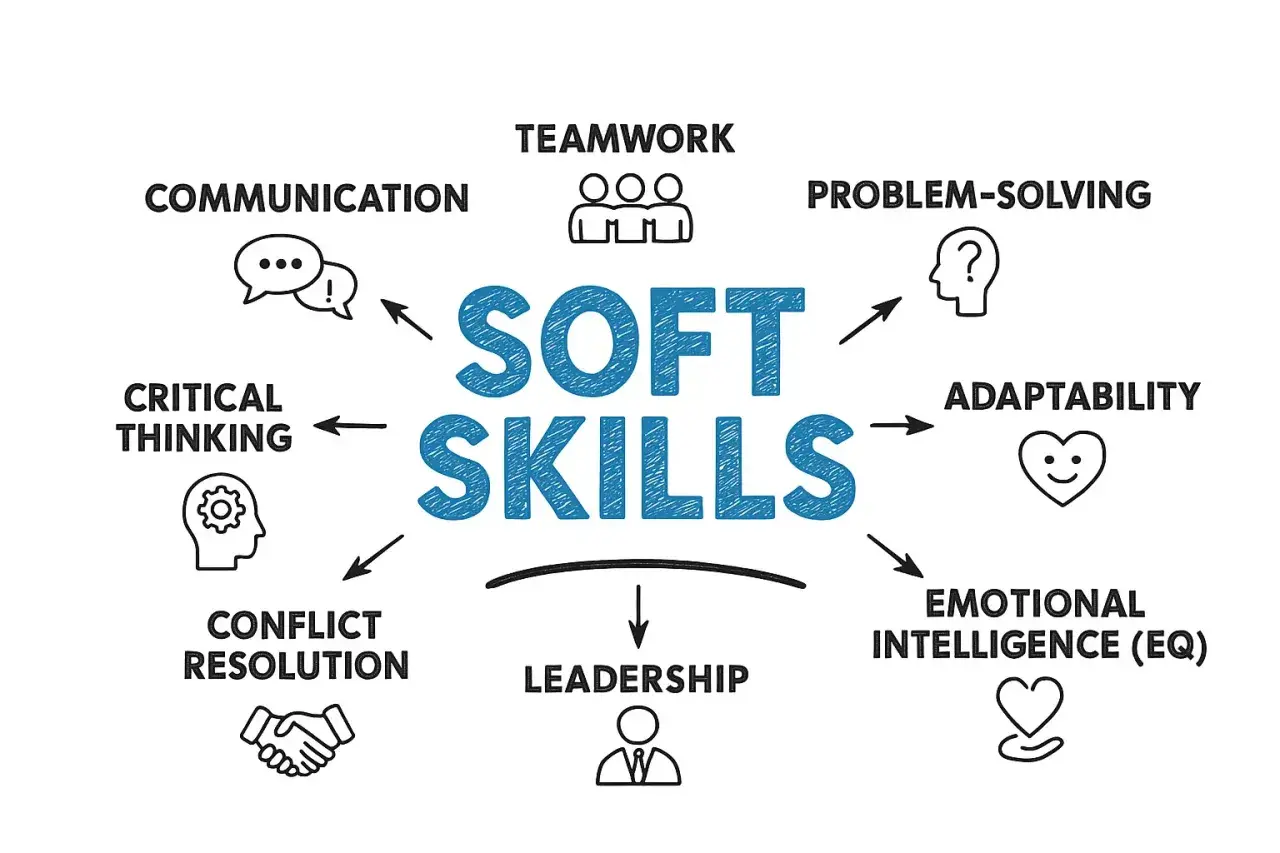
Soft skills describe the human side of performance. They include communication, listening, emotional awareness, reliability, adaptability, and the ability to work productively with different personalities.
They are sometimes treated as vague personality traits, but strong soft skills produce observable actions. A good communicator clarifies expectations, summarizes decisions, and adjusts the message for the audience. A resilient employee recovers from a setback and turns it into a practical next step.
The soft skills that matter most at work
- Communication: expressing ideas clearly in writing, conversation, meetings, and presentations.
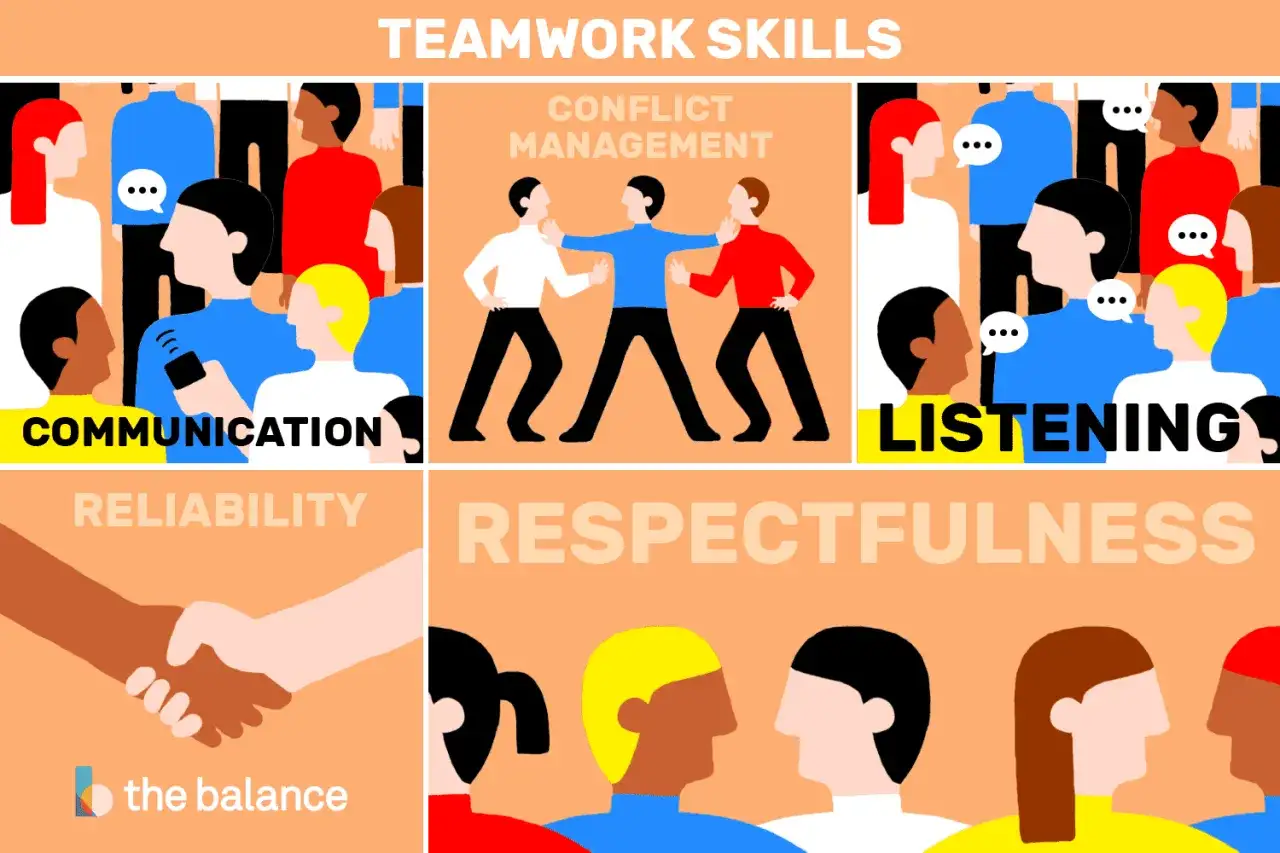
- Collaboration: sharing information, managing dependencies, and contributing without dominating the group.
- Critical thinking: examining evidence before choosing a solution.
- Problem-solving: identifying causes instead of treating only visible symptoms.
- Adaptability: changing priorities or methods without losing focus.
- Self-management: organizing time, energy, attention, and commitments.
- Emotional intelligence: noticing how emotions affect decisions and relationships.
In my experience, employers rarely reject someone because that person lacks the word “teamwork” on a resume. They become concerned when interviews and work samples show unclear thinking, poor follow-through, or difficulty receiving feedback. The behavior matters more than the label.
Transferable skills protect your career flexibility
Transferable skills can move with you when your job title changes. A restaurant supervisor may carry over scheduling, customer service, conflict management, and coaching skills into healthcare administration or retail operations.
This category is especially useful during a career change, after a layoff, or when returning to work after a break. The challenge is that people often describe transferable abilities too generally. “Leadership” is a claim. “Trained five new employees and reduced onboarding time by two weeks” is evidence.
How to identify your transferable strengths
- List projects, responsibilities, volunteer work, coursework, and side activities you have completed.
- Mark the actions you repeated, such as organizing, persuading, analyzing, teaching, or improving.
- Match those actions to problems in the target role.
- Rewrite each skill as an outcome supported by a specific example.
For example, “customer service” becomes more useful when translated into de-escalated complaints, retained clients, or improved response times. That translation helps hiring managers see how your previous experience could solve their current problems.
Digital, cognitive, and leadership skills work together
Modern work rarely depends on one isolated ability. A project manager may need software knowledge, numerical reasoning, negotiation, written communication, and leadership in the same afternoon. The strongest professionals combine several categories rather than treating them as separate boxes.
Digital skills
Digital fluency means more than knowing how to use office software. It includes finding reliable information, protecting sensitive data, working in online systems, interpreting dashboards, and learning unfamiliar tools quickly.
Not every employee needs to become a programmer. Most people do need basic data literacy, cybersecurity awareness, and confidence with workplace platforms. The right level depends on the role, but digital avoidance is rarely a sustainable career strategy.
Cognitive skills
Cognitive skills support how you process information and make decisions. They include reasoning, attention to detail, creativity, memory, reading comprehension, and strategic thinking.
These abilities become visible when you compare options, spot patterns, ask precise questions, or explain why one recommendation is stronger than another. I consider clear reasoning one of the most valuable career assets because it improves both technical work and communication.
Read Also: How to Focus at Work - Stop Switching, Start Concentrating
Leadership skills
Leadership is not limited to managers. An individual contributor shows leadership by taking ownership, helping others succeed, making sound decisions, and keeping a project moving when conditions are uncertain.
Useful leadership abilities include delegation, coaching, prioritization, accountability, negotiation, and conflict resolution. A title may give someone authority, but trust is built through consistent decisions and follow-through.
How to build and demonstrate the right skills
Skill development works best when it is connected to a real work problem. Instead of deciding to “get better at communication,” choose a behavior you can practice, such as writing clearer project updates or leading a short team briefing.
- Choose one target skill. Start with an ability that appears repeatedly in job postings or affects your current performance.
- Define what good looks like. A measurable definition might be completing a report without corrections or presenting a recommendation in ten minutes.
- Practice in a real setting. Volunteer for a project, lead a meeting, build a sample, or solve a small problem at work.
- Ask for specific feedback. Ask what was clear, what caused friction, and what should change next time.
- Collect proof. Save metrics, work samples, testimonials, certificates, and examples of improved results.
- Review the skill every quarter. Skill priorities change as your role, industry, and technology change.
A common mistake is collecting courses without creating evidence of use. Training can introduce a concept, but repeated application is what turns knowledge into a dependable skill. Another mistake is listing every ability equally. A focused resume with six relevant strengths is usually stronger than one crowded with thirty keywords.
When I assess a skill gap, I separate three issues: whether I lack knowledge, whether I lack practice, or whether I struggle to explain my experience. Each problem needs a different solution. A course may solve the first, deliberate practice the second, and better storytelling the third.
Build a skill profile that matches your next move
The best skill profile is not the longest one. It is the combination that matches the work you want to do and the evidence you can honestly provide.
- For a new job, prioritize the abilities repeated in the employer’s requirements.
- For a promotion, strengthen decision-making, communication, ownership, and coaching.
- For a career change, translate previous responsibilities into transferable outcomes.
- For long-term resilience, combine technical depth with learning agility and digital confidence.
I would choose one technical skill, one people skill, and one transferable strength for the next 90 days. That small combination creates a balanced development plan and gives you concrete stories to use in interviews, performance reviews, and future career decisions.