
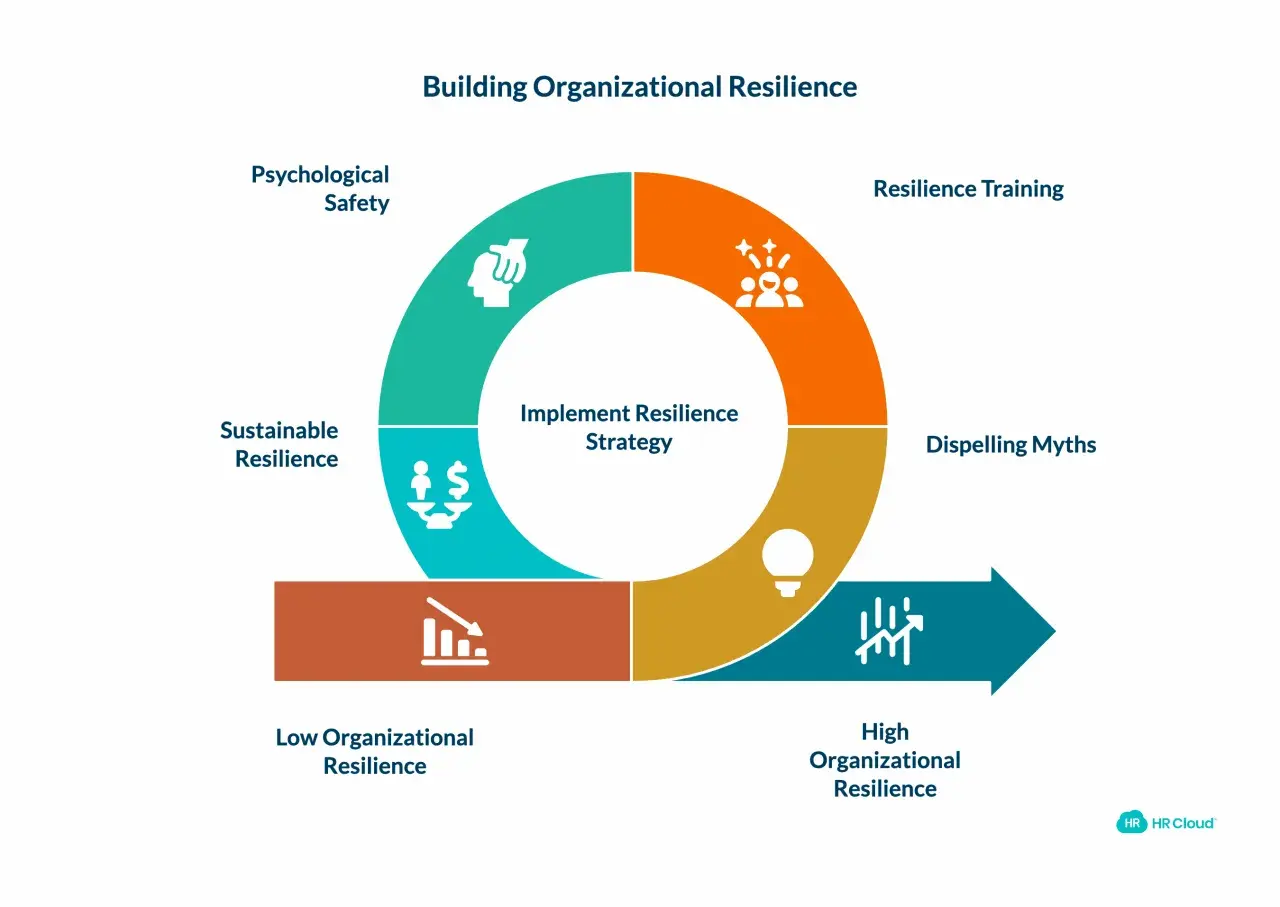
Leading under pressure is not mainly a test of motivation; it is a test of recovery, judgment, and the habits that hold when plans break. Effective leadership resilience training is less about telling people to be tougher and more about helping them recover faster, make better decisions under pressure, and create steadier teams. This article breaks down what the training should cover, which format fits which leadership problem, and how to judge whether it is actually changing behaviour.
The essentials to know before you choose a resilience programme
- The real goal is not stoicism; it is staying clear-headed, adaptive, and constructive when pressure rises.
- Good programmes combine self-awareness, emotional regulation, decision-making, coaching, and team habits.
- In the UK, resilience work should sit alongside workload control and stress risk management, not replace them.
- Short workshops can help with language and quick tools, but lasting change usually needs practice and follow-up.
- Progress is visible first in behaviour, then in team climate, and only later in harder business metrics.
What resilience looks like in a leader under pressure
For leaders, resilience is not a vague sense of being “strong”. It is the ability to stay useful when the situation turns messy: when the deadline slips, a team member resigns, a client escalates, or the board wants answers before the data is complete. I see it as a mix of emotional control, flexible thinking, recovery habits, and the discipline to keep leading without turning reactive.
The CIPD’s evidence review is useful here because it makes one point very clearly: resilience is shaped by more than personality. Social support is a strong predictor of resilience, and supportive manager relationships help people cope under pressure. That matters because leaders do not become resilient in isolation; they become resilient through better habits, better relationships, and better operating conditions.
That is why the best programmes do not try to “toughen up” leaders. They help them notice stress earlier, respond with more precision, and create conditions where the team can stay steady too. From there, the next question is not whether resilience can be trained, but what the training should actually contain.

How leadership resilience training should work in practice
The strongest programmes are practical. They do not drown leaders in theory or psychological jargon. They give them a way to spot pressure signals, reset themselves, and communicate clearly when their instinct is to rush, shut down, or over-control.
| Core element | What it should develop | What goes wrong when it is missing |
|---|---|---|
| Self-awareness | Recognition of personal stress triggers, fatigue patterns, and early warning signs | Leaders only notice pressure once they have already become blunt, indecisive, or withdrawn |
| Emotional regulation | Simple ways to pause, settle, and respond rather than react | Meetings become tense, and difficult conversations get avoided or mishandled |
| Flexible thinking | Reframing problems, separating facts from assumptions, and holding multiple options | Leaders lock into worst-case thinking or make rushed decisions that create more noise |
| Recovery habits | Boundaries, breaks, delegation, sleep discipline, and post-crisis reset routines | People become permanently “on”, which is one of the fastest routes to burnout |
| Team containment | Clear priorities, calmer check-ins, and more consistent support for the people around them | The leader absorbs every problem personally and becomes the bottleneck |
When this kind of training works, it changes behaviour that others can actually observe. Leaders ask better questions. They stop improvising under stress. They delegate more cleanly. They become less theatrical about pressure, which is often the real test. A good programme should feel like practice for real work, not a motivational event with a few nice phrases attached.
Which format fits the problem you actually have
Not every leadership issue needs the same intervention. If the problem is broad awareness, a short workshop can be enough to create a shared language. If the problem is a senior leader who keeps getting overwhelmed by high-stakes decisions, coaching is usually more effective. If the issue is cultural or team-wide, a cohort programme with follow-up tends to be stronger because it creates accountability and peer learning.
| Format | Best for | Typical length | Main limitation | My take |
|---|---|---|---|---|
| Short workshop | Quick awareness, common language, and a few immediate tools | 2 to 4 hours | Often too shallow if it stands alone | Good as a first step, weak as a full answer |
| One-to-one coaching | Specific pressure points, confidence gaps, or decision habits | 6 to 10 sessions | Limited reach across the wider team | Best when one leader needs deep change |
| Cohort programme | Groups that need shared learning and mutual accountability | 4 to 8 weeks | Needs real participation, not passive attendance | Strong for middle managers and cross-functional teams |
| Hybrid programme | Organisations that want lasting behaviour change | Workshop plus coaching plus action learning | More coordination and cost | Usually the most credible option when pressure is systemic |
As a pricing reference, BPP lists a 3-hour online live leadership resilience session from £474. That is a sensible entry point if you want a practical reset, but it is not enough on its own if the organisation expects habits, culture, and workload patterns to change. The right format depends on whether you need awareness, behaviour change, or both.
Why the UK context matters
In the UK, resilience work has to sit inside a broader duty of care, not outside it. HSE says employers have a legal duty to protect workers from stress at work by assessing the risk and acting on it. That makes an important point for any leadership programme: training can strengthen people, but it cannot be used as a substitute for fixing avoidable stressors.
If the real issue is excessive workload, unclear priorities, poor role design, or bullying, no amount of personal resilience training will fully solve it. I would treat any programme that ignores those factors as incomplete. The training should help leaders cope better, yes, but it should also help them lead in ways that reduce preventable strain for everyone else.
- Workload clarity: leaders need a realistic view of what matters most, or resilience becomes a euphemism for overcommitment.
- Manager support: regular check-ins, useful feedback, and clear escalation routes matter more than slogans.
- Psychological safety: people need to be able to say when pressure is becoming unmanageable.
- Role clarity: unclear decision rights drain energy fast and make even capable leaders look ineffective.
Once those basics are in view, it becomes much easier to measure whether the programme is doing anything useful, rather than simply making people feel briefly inspired.
How to know if the programme is paying off
I would not judge a resilience programme only by attendance or post-course satisfaction scores. Those are easy to collect and often misleading. A stronger approach is to track behaviour change first, then team climate, then business outcomes.
| What to track | What improvement looks like | When to review |
|---|---|---|
| Leader self-assessment | More confidence in pressure situations and better awareness of triggers | Before the programme, then at 6 and 12 weeks |
| Observed behaviour | Clearer communication, better delegation, calmer decision-making | 6 to 12 weeks |
| Team climate | Fewer escalations, more predictable priorities, better quality of 1:1s | 3 to 6 months |
| Business signals | Lower avoidable absence, less churn, fewer stalled projects, better retention | 3 to 6 months and beyond |
The important point is that the early signs are behavioural, not financial. If a leader starts delegating better, recovering faster after setbacks, and handling difficult conversations with more control, the downstream results usually follow. If none of that changes, the programme probably taught ideas, not habits.
Common mistakes that quietly cancel the value
Most weak programmes fail for ordinary reasons. They are not necessarily badly written; they are simply detached from how leadership pressure really works. The usual mistakes are easy to spot once you know what to look for.
- Confusing resilience with stoicism: leaders are told to “stay strong” when they actually need better tools, better boundaries, and better support.
- Running a one-off event: a single workshop can create interest, but it rarely changes behaviour without follow-up practice.
- Ignoring the system: if workload, ambiguity, or poor management are the real drivers, individual training will have a ceiling.
- Making the content too generic: leaders need examples that match their real pressure points, not abstract advice detached from their roles.
- Leaving line managers out: resilience often rises or falls in the day-to-day relationship between manager and team.
The pattern I see most often is this: the programme gives people a nice language for pressure, but the organisation keeps rewarding the same exhausting habits. That is why the design has to include follow-through, not just delivery.
The choice that tends to work best in real organisations
If the need is broad and the leaders are new to the subject, I would start with a short workshop and a simple set of practices they can use immediately. If the need is deeper, I would move to coaching for individuals who are carrying a lot of ambiguity, conflict, or visibility. If the whole leadership layer is under strain, I would choose a blended programme that includes peer learning, manager practice, and a review of workload and expectations.
The simplest decision rule is this: use training to build capability, use coaching to change behaviour, and use organisational action to remove avoidable strain. When those three parts line up, resilience stops being a slogan and starts becoming part of how people lead. That is the version worth investing in, because it still matters when the room gets difficult and the easy answers disappear.
