
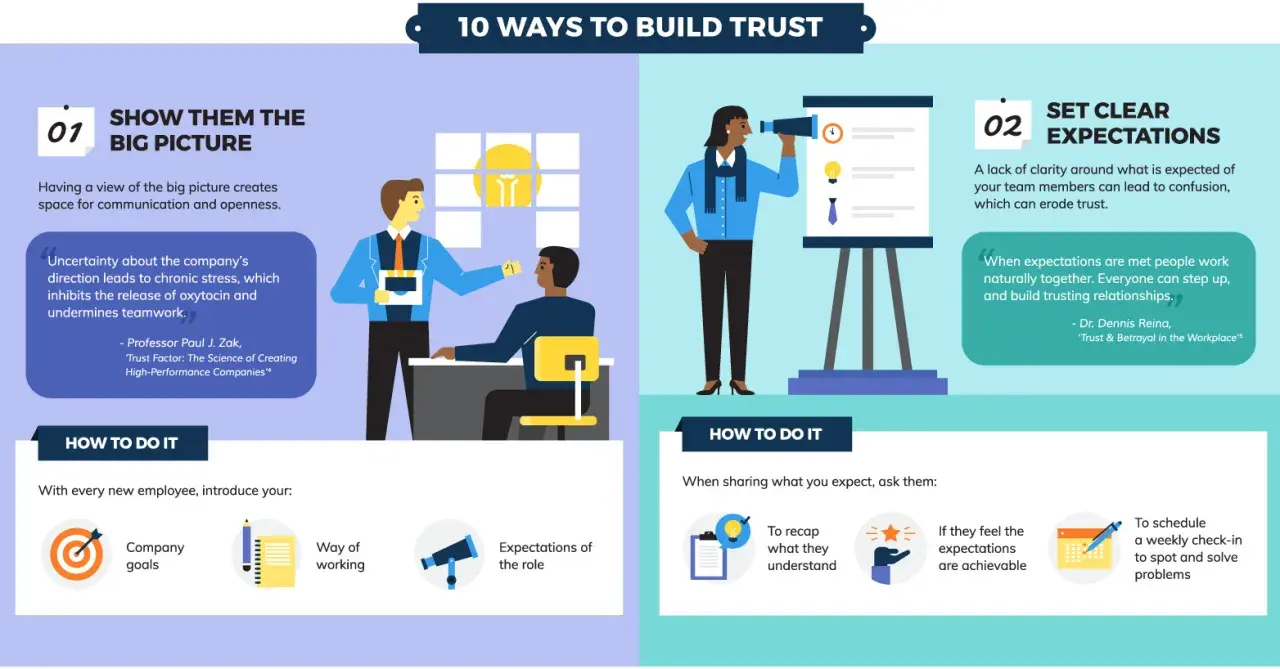
The practical takeaway in one glance
- Clarity beats volume: people need to know what is expected, why it matters, and what happens next.
- Channel choice matters: not every message should go through email, chat, or a meeting.
- Cadence creates trust: regular 1:1s and team check-ins reduce guesswork and anxiety.
- Two-way communication is essential: listening and acting on feedback matters as much as sending updates.
- Remote and hybrid work need rules: contact should be agreed, useful, and not overwhelming.
- Difficult conversations work best early: be specific, respectful, and clear about the next step.
What good communication between managers and staff actually looks like
The first mistake I see is treating communication as a stream of updates. Good management communication is not just about sending information; it is about creating clarity, confidence, and follow-through. People should understand what they are doing, why it matters, how their work is being judged, and where they can raise concerns without feeling exposed.
In practice, I break it into four parts. First, the message must be clear enough that people do not need to decode it. Second, it must arrive often enough to be useful, but not so often that it feels like noise. Third, the manager must respond when people ask questions or raise problems. Fourth, promises have to be kept. If you say you will come back with an answer on Friday, Friday means Friday.
CIPD’s guidance on line manager support makes the underlying point well: the culture and standards people experience are shaped heavily by their line manager. That is why communication is not a soft extra; it is part of management itself. Once that is clear, the next question is practical: which channel should carry which message?

Choose the right channel for the message
Not every conversation belongs in email, and not every update deserves a meeting. One of the fastest ways to reduce friction is to match the channel to the purpose. I would also keep the channel mix simple. If people have to remember six places to check for important information, communication has already become too complicated.
| Situation | Best channel | Why it works | Watch out for |
|---|---|---|---|
| Quick status update | Chat or short email | Fast, low-friction, easy to scan | Do not turn it into a thread that drifts for days |
| Coaching or performance feedback | Private 1:1, ideally video or in person | Lets you read tone, ask questions, and respond in real time | Avoid doing this in public messages or after a meeting ends abruptly |
| Sensitive issue or conflict | Phone, video, or face-to-face | Reduces misunderstanding and helps you manage emotion | Never use a public channel for something that should be private |
| Team-wide change or new priorities | Meeting plus written follow-up | Gives people a chance to ask questions and then revisit the detail later | Do not assume one announcement is enough |
| Absence or return-to-work contact | Agreed call or email | Keeps the contact purposeful and respectful | Too much contact can feel intrusive |
| Urgent operational issue | Call first, then confirm in writing | Speed matters, but so does a record of what was agreed | Do not rely on a long email when the decision is time-critical |
Acas is clear that managers should agree how and when people communicate, and it also warns that using too many methods can become confusing and stressful. That is a useful rule of thumb: pick a default channel for each type of message, then stick to it. Once the channel is right, the next issue is rhythm, because people judge communication not only by what is said, but by how reliably it appears.
Build a communication rhythm people can rely on
I rarely trust a management team that only speaks when something goes wrong. Consistent contact is what makes people feel seen, and it also makes problems smaller because they surface earlier. Regular meetings do not need to be elaborate. In fact, the best ones are often short, predictable, and focused.
| Cadence | Length | Purpose | Best for |
|---|---|---|---|
| Daily check-in | 2-5 minutes | Surface blockers and confirm priorities | Remote teams, frontline work, fast-moving projects |
| Weekly 1:1 | 20-30 minutes | Coaching, support, workload, and progress | Most direct reports |
| Weekly team huddle | 15-20 minutes | Align on priorities and dependencies | Small and medium teams |
| Monthly development conversation | 30-45 minutes | Skills, career goals, and longer-term motivation | High performers, new joiners, and anyone needing growth support |
| Quarterly review | 45-60 minutes | Review goals, change priorities, and reset expectations | Teams with shifting objectives |
When I recommend a rhythm like this, I am not asking managers to create more meetings for the sake of it. I am asking them to make communication predictable. That predictability reduces anxiety and stops every conversation from feeling like a surprise inspection. It also helps managers notice patterns: recurring workload issues, motivation drops, or confusion about priorities. The rhythm is the container; the real value comes from what people feel safe enough to say inside it.
Treat employee voice as part of the job, not a survey event
Two-way communication is where many managers sound good in principle and weak in practice. They ask for input, but they do not close the loop. They say they want honesty, but they only respond well when the feedback flatters their plans. People notice that quickly, and once they do, silence becomes a rational choice.
I prefer a simple loop for employee voice:
- Ask a real question, not a decorative one.
- Listen without interrupting or defending the first reaction.
- Reflect back what you heard so people know you understood it.
- Decide what will change, what will not, and why.
- Come back later with an update, even if the answer is “not yet”.
Handle difficult conversations before they become team drama
The best time to address a problem is usually earlier than feels comfortable. Most managers wait too long because they hope the issue will fix itself or because they do not want to sound harsh. In reality, delay usually makes the conversation more awkward, not less. By the time frustration has built up, the other person often feels ambushed.
When I handle a difficult conversation, I keep it grounded in behaviour and impact. I avoid labels like “lazy” or “unprofessional”, because those trigger defence. Instead, I describe what I have observed, explain why it matters, and ask for the employee’s view. That structure is simple, but it works:
- State the facts: what happened, when, and how often.
- Explain the impact: missed deadlines, confusion, stress, customer issues, or team delay.
- Invite explanation: ask what is going on from their side.
- Agree the next step: one change, one deadline, one follow-up point.
That approach also supports trust. CIPD’s research on trust and psychological safety points to fairness, respect, and open communication as foundations for people speaking up. I would add one practical rule: do not save up ten small complaints and deliver them all at once. That feels like a trial, not a conversation. Deal with issues close to the moment, keep your tone steady, and stay focused on what needs to change next.
Adapt your style for hybrid work, remote teams, and absence
Hybrid work changes communication more than many managers expect. You lose the informal cues from deskside chats, so you need to be more deliberate about contact, context, and follow-up. That does not mean more messages; it means better ones. In remote teams, people need to know when they should expect replies, where decisions will be recorded, and how urgent issues should be raised.
Acas advises managers to agree how and when they will stay in touch with employees who work from home, and to make sure the tools are clear and usable. I would extend that logic to every flexible arrangement. Set expectations early, especially for:
- New starters: first-week structure, introductions, and who to contact.
- Working from home: core hours, response windows, and escalation routes.
- Absence: the reason for contact, the frequency, and who will lead it.
- Leave periods: what updates the employee wants, and what can wait.
There is also a human side here. A manager who checks in too often can create pressure, but a manager who disappears can make people feel forgotten. The sweet spot is agreed, purposeful contact. If someone is off for sickness, for example, the contact should support wellbeing and return-to-work planning, not act like surveillance. If someone is on holiday, the contact should usually be minimal unless they have asked for updates. Once you get that balance right, communication stops feeling like interruption and starts feeling like support.
The habits that keep communication credible over time
When I look at strong managers, I usually see the same habits repeated. They are not dramatic, but they are consistent, and consistency is what employees remember.
- They are predictable: people know when to expect updates and feedback.
- They close the loop: every important conversation ends with a next step.
- They explain decisions: even unpopular choices come with context.
- They share bad news early: silence creates rumour, not stability.
- They invite challenge: disagreement is treated as useful information, not disrespect.
- They coach instead of only instructing: people grow faster when the conversation is about development as well as delivery.
If I had to reduce the whole topic to one sentence, it would be this: trust grows when managers communicate clearly, listen properly, and do what they said they would do. That is the standard I would use in any UK team, whether the work is office-based, remote, or a mix of both. Communication is not a separate leadership skill sitting beside management; it is the mechanism that makes the rest of management work.
