
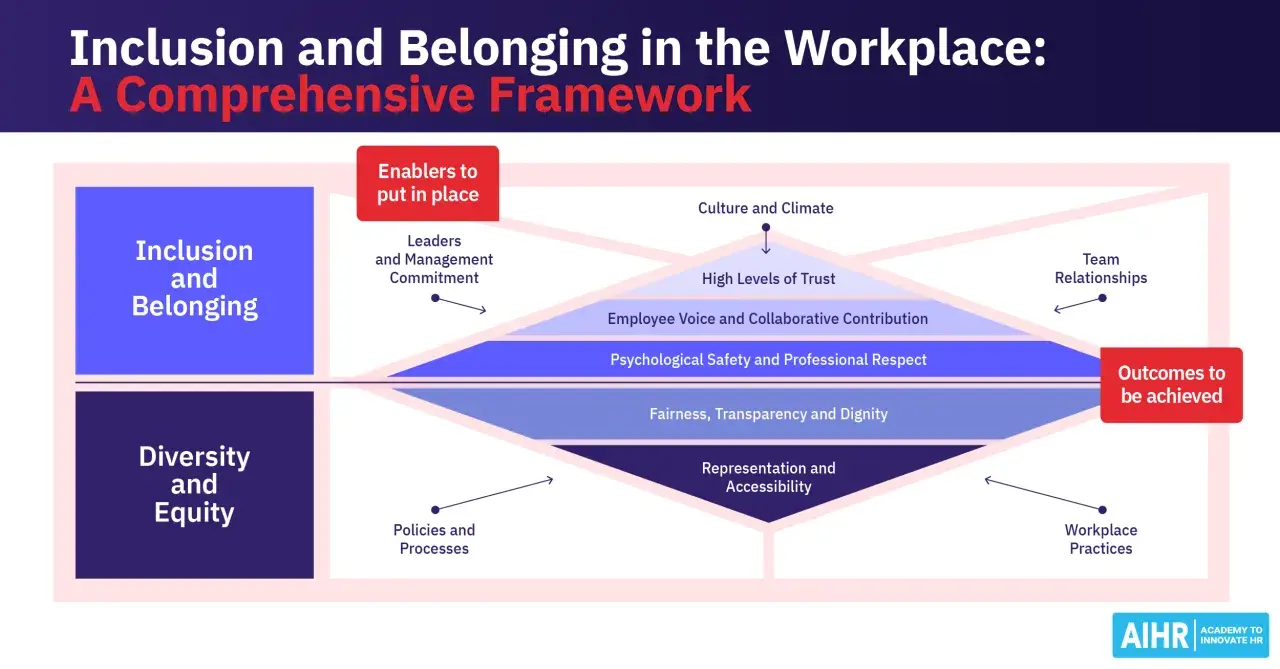
The inclusion definition is simple on paper: it is the practice of making people feel that they belong, are respected, and can contribute without having to shrink themselves. In a workplace, that only becomes meaningful when it changes how people are hired, heard, promoted, and supported. This article breaks down what inclusion means in practice, how it differs from diversity and belonging, and what leaders in the UK can do to build a healthier culture.
Key points about inclusion at work
- Inclusion is about participation, influence, and belonging, not just representation.
- Diversity answers who is in the room; inclusion answers who gets to speak and shape decisions.
- In the UK, inclusion sits alongside legal fairness and everyday management behaviour.
- Inclusive cultures improve trust, retention, and the quality of decisions.
- Managers shape inclusion most directly through meetings, feedback, hiring, and flexibility.
What inclusion means at work
I treat inclusion as a workplace condition, not a slogan. It is the difference between someone being present and someone being able to participate fully, influence decisions, and develop without constantly editing who they are.
That matters because people rarely leave a job only because of pay or workload. They also leave when the culture makes them feel invisible, second-guessed, or unsafe to speak honestly. In that sense, inclusion is less about making everyone feel comfortable all the time and more about building a setting where people can contribute without penalty.
Psychological safety sits close to this idea. It means people can ask questions, admit mistakes, and challenge ideas without fearing humiliation or retaliation. Once that is in place, a team usually gets better information, better debate, and better decisions. That leads naturally to the next question, which is how inclusion differs from the other terms people often mix together.How inclusion differs from diversity, equity and belonging
These words are often used as if they mean the same thing, but they describe different parts of the same culture. I find the distinction useful because a company can be diverse on paper and still exclude people in practice.
| Concept | Main focus | What it looks like at work |
|---|---|---|
| Diversity | Who is in the organisation or team | People with different backgrounds, identities, and experiences are represented |
| Equity | Whether people have fair access to opportunity and support | Processes and adjustments remove structural disadvantages instead of assuming everyone starts in the same place |
| Inclusion | Whether people can participate fully and be heard | Voices are welcomed, ideas are taken seriously, and difference does not lower someone’s chance of success |
| Belonging | How it feels to be part of the group | People can be themselves without expecting punishment, awkwardness, or constant translation |
The short version is this: diversity is about presence, inclusion is about participation, equity is about fairness, and belonging is about the lived result. A team may have all four, but if one is missing, the culture feels incomplete. That distinction matters even more when you start looking at the small daily behaviours that either make inclusion real or quietly undermine it.

What inclusion looks like in everyday work
The easiest way to spot inclusion is not to read a policy. It is to watch what happens in meetings, feedback conversations, hiring decisions, and informal conversations after the meeting ends. Inclusive workplaces do not rely on one charismatic leader to set the tone; they build habits that make participation easier for everyone.
- Agendas are shared early, so people have time to prepare instead of being ambushed.
- Meeting chairs make room for quieter voices, not just the people who speak fastest.
- Clear criteria guide hiring, promotion, and pay decisions, so outcomes are harder to explain away as “fit”.
- Reasonable adjustments are treated as a normal part of good management, not special treatment.
- Language is checked for assumptions that exclude people by gender, age, disability, culture, or family status.
- Feedback is specific and behaviour-based, rather than vague comments about attitude or confidence.
That is where psychological safety becomes visible. If someone can raise a concern, disagree with a senior colleague, or ask for an adjustment without being labelled difficult, the culture is doing real work. If they cannot, the organisation may still look polished from the outside, but the internal experience is much weaker. From there, the business impact becomes hard to ignore.
Why inclusion changes performance, retention and trust
Inclusive culture is often treated as a values issue, but it has a practical side that shows up fast. When people feel that their voice matters, they tend to share more information, spot risks earlier, and commit more energy to the team. When they do not, they protect themselves first, which usually means less candour, less creativity, and more quiet disengagement.
That affects retention too. People are far more likely to stay when they believe their manager sees them clearly and makes space for them to succeed. They are also more likely to recommend the organisation to others, which matters in a labour market where reputation travels quickly.
Acas makes a similar point in its practical guidance: an inclusive workplace can reduce the risk of bullying, harassment, and discrimination. I think that is important because culture problems rarely begin with one dramatic incident. More often, they start with repeated small exclusions that make some people feel they are visitors rather than members of the team. Once that pattern takes hold, the organisation needs more than good intentions to fix it.
How to build inclusion in a UK workplace
In the UK, the legal baseline is the Equality Act 2010, which protects nine characteristics: age, disability, gender reassignment, marriage and civil partnership, pregnancy and maternity, race, religion or belief, sex, and sexual orientation. That law matters, but an inclusive culture has to go beyond compliance if it wants people to thrive rather than simply avoid risk.
- Start with a clear policy. People need to know what respectful behaviour looks like, what is not acceptable, and how to raise a problem without fear.
- Train line managers properly. They are the daily face of the culture, and they shape inclusion far more than a poster or internal campaign ever will.
- Review recruitment and promotion. Look for biased wording, inconsistent interview questions, narrow selection criteria, and panels that do not reflect the organisation.
- Make flexibility normal. Hybrid working, staggered hours, and other adjustments can remove barriers for parents, carers, disabled staff, and people with different energy patterns.
- Treat reasonable adjustments as routine. A reasonable adjustment is a change that helps someone do their job fairly, and it often costs little compared with the value it unlocks.
- Measure experience, not just headcount. Representation tells you who is present; surveys, listening sessions, and exit interviews tell you who feels included.
If I had to reduce that list to one rule, it would be this: do not leave inclusion to goodwill. Build it into systems, manager habits, and decision points, because that is where culture is actually made. The mistakes below are what usually happen when organisations skip that step.
Common mistakes that weaken inclusion
Most inclusion efforts fail for predictable reasons. The problem is rarely that leaders do nothing; it is that they do one visible thing and assume the culture has changed.
- Tokenism, where representation is celebrated but influence never changes.
- One-off training, which raises awareness briefly but leaves systems untouched.
- Equality treated as sameness, where everyone gets the same input even when some people need different support to reach the same outcome.
- HR carrying the whole load, while line managers continue old habits in daily work.
- Only tracking numbers, so leaders know how many people are hired but not how many feel heard, promoted, or safe to speak.
- Ignoring accessibility, especially in meetings, documents, and workplace technology.
I also see organisations talk about inclusion while quietly rewarding the behaviours that exclude people, such as interrupting, overworking, or favouring those who mirror senior leaders. That is why the next test is useful: it cuts through the language and gets to what people actually experience.
The simplest inclusion test for leaders
When I want a quick read on a team, I ask three questions: can people speak, can people progress, and can people stay without hiding who they are? If the answer is no to any of those, the workplace is not as inclusive as it thinks it is.
- Do the same voices dominate every meeting?
- Are decisions explained through clear criteria rather than informal preference?
- Do managers follow up on access needs and adjustments in a timely way?
- Can people raise disagreement without being treated as disloyal?
- Do employees across different backgrounds report the same level of trust?
That is the standard I would use for any workplace culture: not whether the organisation sounds progressive, but whether difference can become contribution without friction, fear, or career damage. When leaders get that right, inclusion stops being a separate initiative and becomes part of how the business works every day.
