
Strong charity leadership is rarely about having all the answers. It is about making sound decisions under pressure, keeping people aligned, and protecting mission, money and trust at the same time. The right nonprofit leadership training can sharpen those habits, but only if it is built around the realities of the voluntary sector rather than generic management theory.
What matters most before you choose a programme
- Sector fit matters. Charity leaders face trustees, funders, volunteers and regulators, so the training must reflect that environment.
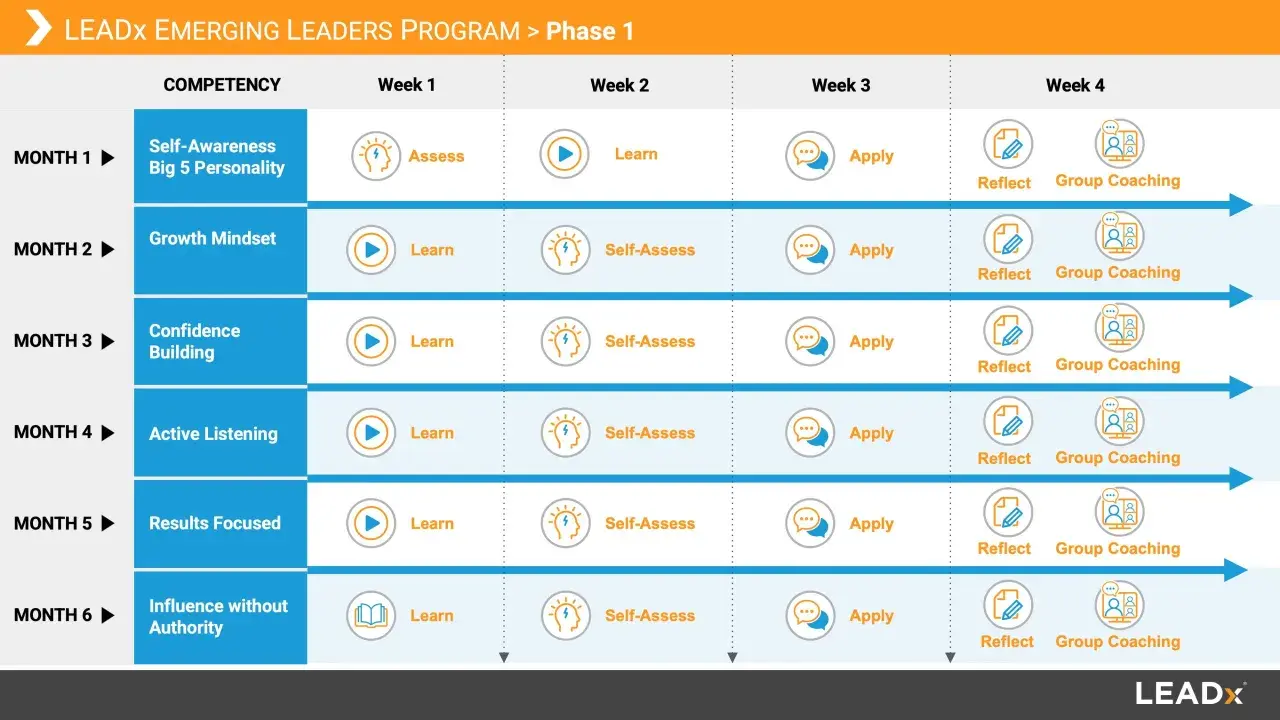
- Short sessions and longer cohorts solve different problems. A workshop builds awareness; a multi-month programme changes behaviour more deeply.
- Good content is practical. Look for governance, finance, fundraising, people management, change and external engagement, not just motivational language.
- Follow-up is non-negotiable. Without reflection, coaching or action plans, most of the learning fades quickly.
- Fit the format to the role. Emerging leaders, trustees and chief executives need different levels of depth, confidentiality and peer support.
Why charity leaders need a different kind of development
I think the biggest mistake is assuming a charity leader can be developed in the same way as a corporate manager. In a UK charity, the job is split across mission delivery, trustee relationships, unstable income, staff wellbeing, volunteer coordination and public accountability. That combination changes the kind of leadership people need.
- Funding is rarely predictable. Leaders must make plans without assuming next quarter will look like the last one.
- Governance is shared. Trustees and senior staff have different responsibilities, and the relationship needs clarity, not ego.
- Teams are mixed. Paid staff, volunteers, contractors and partner organisations often work side by side.
- External scrutiny is real. Reputation, safeguarding and transparency matter as much as internal performance.
That is why generic leadership language usually underperforms here. The better programmes build judgement, not just confidence, and they help people lead through constraints instead of pretending the constraints do not exist. Once that is clear, the next question is what high-quality content should actually cover.
What strong programmes actually teach
The best programmes do not try to cover every management topic in one sitting. They focus on a small set of capabilities that move a charity forward, and they translate each one into real decisions, meetings and conversations. That is very close to how NCVO frames charity leadership today: knowledge, mindset and connections.
| Focus area | What good training should cover | Why it matters |
|---|---|---|
| Strategic direction | Prioritisation, decision-making with imperfect information, long-term planning | Keeps the mission clear when the day-to-day gets noisy |
| Governance and accountability | Trustee relationships, role boundaries, reporting, risk and scrutiny | Prevents confusion, duplication and avoidable tension |
| Finance and income | Management accounts, reserves, scenario planning and fundraising realism | Protects sustainability when income is volatile |
| People and culture | Delegation, feedback, conflict, inclusion and hybrid or remote team leadership | Improves retention, morale and execution |
| External engagement | Partnerships, advocacy, stakeholder communication and collaboration | Expands reach and strengthens credibility |
| Resilience and reflection | Self-awareness, pacing, peer learning and coaching | Helps leaders stay effective instead of simply staying busy |
If a course does not include scenarios or action learning, I treat that as a warning sign. Leaders in this sector rarely need more theory; they need practice making decisions when the answer is messy and the stakes are high. That is also why delivery format matters so much.
The main formats and when each one makes sense
In 2026, UK options already span one-day courses, a four-month cohort programme and short executive courses, which tells you something useful: there is no single right shape for leadership development. I would choose the format that matches the scale of the problem, not the one that sounds most impressive.| Format | Best for | What it does well | Where it falls short |
|---|---|---|---|
| One-day workshop | New managers, trustees, or leaders who need a fast reset on one issue | Quick clarity, focused tools, low time commitment | Limited behaviour change unless there is follow-up |
| Multi-month cohort programme | Emerging leaders, aspiring chief executives, succession pipelines | Peer learning, reflection, real-world application, stronger network | Requires time, energy and organisational support |
| In-house programme | Leadership teams that need shared language and alignment | Tailored to the organisation’s strategy, culture and pressure points | Depends heavily on the quality of the brief and facilitator |
| One-to-one coaching | Senior leaders who need confidential support on specific decisions or habits | Highly personalised, practical and honest | Does not replace sector basics or peer learning |
For a cost anchor, Edinburgh Napier University’s current three-day course for large charity organisations is priced at £950 per person, or £875 with the early-bird rate. I would treat that as a senior-level benchmark: a shorter public workshop should usually sit well below it, while bespoke coaching or in-house work can easily exceed it depending on design and facilitator time.
The real choice, though, is not price alone; it is whether the programme fits the person and the role.
How to choose the right programme for your role
When I help people think through this decision, I start with the role before I start with the provider. A newly promoted team leader, a trustee, and a future chief executive are not buying the same thing, even if the course brochure uses similar language.
| Role | Best-fit format | What to prioritise |
|---|---|---|
| Newly promoted manager | One-day workshop or coaching | Delegation, feedback, team culture and difficult conversations |
| Emerging director or aspiring chief executive | Multi-month cohort or a deeper short course | Strategy, governance, finance, external voice and resilience |
| Trustee or chair | Governance-focused session | Boundaries, scrutiny, board dynamics and decision quality |
| Leadership team in change | In-house programme | Alignment, communication, culture and transition planning |
- Is the challenge knowledge, confidence or behaviour? If it is one specific behaviour, coaching often beats a classroom.
- Can participants practise with real cases from the charity? Generic examples rarely stick.
- Will trustees or line managers support the change? Without sponsor support, the learning stays personal instead of organisational.
- Is there time to apply it? A good programme should create action within 30 days, not someday.
How to make learning stick after the course ends
This is where a lot of charity leadership development loses momentum. People return from an energetic session, feel motivated for a week, then slide back into old patterns because nobody has turned the learning into a plan.- Choose one live issue before the course starts. It could be trustee communication, team delegation, fundraising pressure or culture change.
- Turn it into a 30-60-90-day action plan. Keep the actions small enough to execute and visible enough to review.
- Use action learning or peer reflection. Action learning is a small group that works through real problems, tests ideas and comes back to review what happened.
- Build in manager, chair or trustee check-ins. The learner should not carry the follow-up alone.
- Measure one or two practical outcomes. Useful signals might be cleaner board papers, better meeting discipline, stronger volunteer retention, or a steadier fundraising pipeline.
I also think it is important to be honest about what training cannot do on its own. It will not fix chronic underfunding, impossible workloads or poor governance. What it can do is help leaders navigate those realities more intelligently, which is often the difference between drift and progress.
The quick filter I use before buying into a programme
When I look at nonprofit leadership training that works, I ask one simple question: will this change what people do in real meetings, real budgets and real people decisions? If the answer is yes, the programme is probably strong.
- Red flag: it talks about leadership but never mentions trustees, fundraising or mission pressure.
- Red flag: it promises transformation without practice, coaching or any follow-up.
- Red flag: it sounds polished but feels too generic for the actual role.
- Green flag: it uses charity-specific cases, not just corporate examples.
- Green flag: it includes reflection, peer learning or coaching.
- Green flag: it ends with clear actions, not just enthusiasm.
