
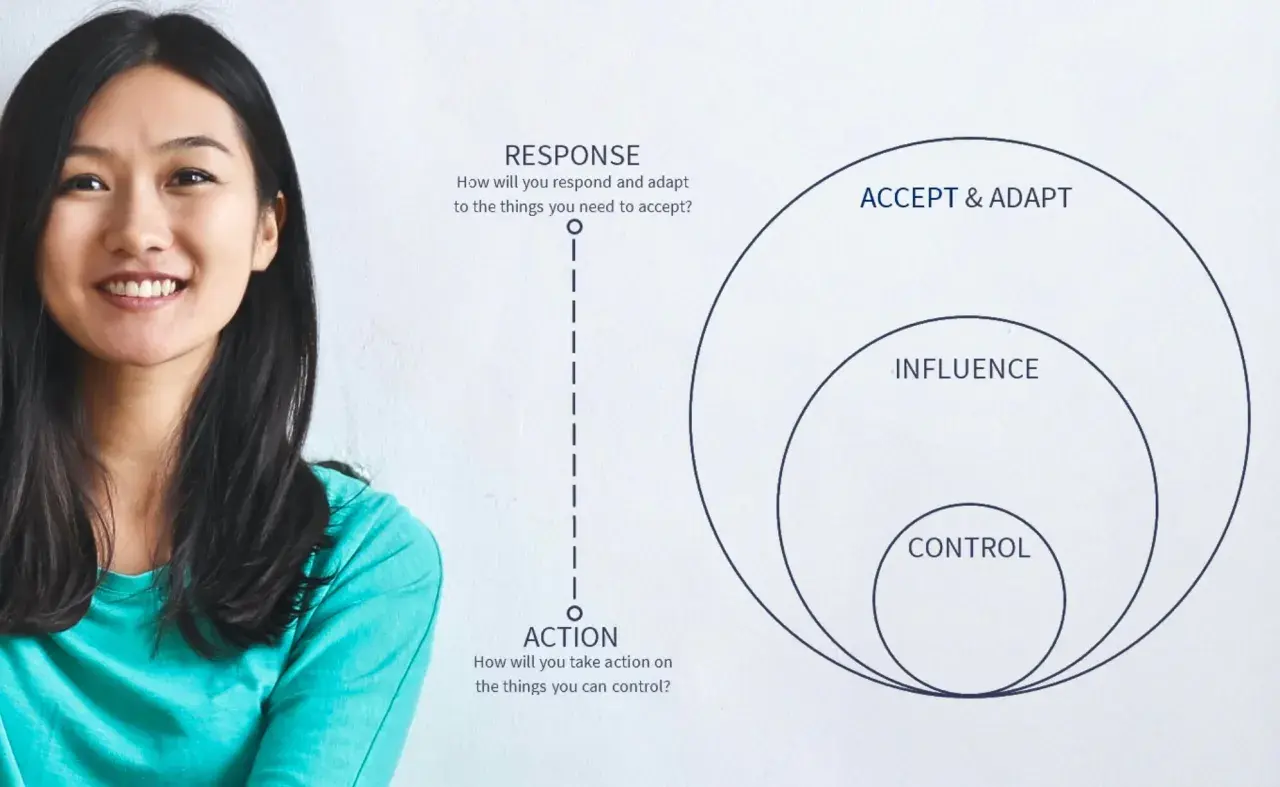
Leadership is changing because work is more distributed, decisions move faster, and people expect managers to do more than relay instructions. The most useful way I can explain reframing leadership is as a move from control to clarity: you still set direction, but you stop treating authority as the main tool. This article breaks down what that shift means, why it matters for coaching-led teams, and how to make it real in daily management.
The shift is from control to clarity, coaching and accountability
- Leadership becomes more effective when it focuses on context, decisions and follow-through instead of constant oversight.
- Managers shape most of the engagement signal inside a team, so leadership habits have a direct business impact.
- Coaching is not softer management; it is structured questioning, feedback and accountability.
- The approach fails when it becomes vague, passive or detached from performance.
- In UK workplaces, the biggest friction is often not intention but time, permission and manager capability.
What reframing leadership actually means
At its core, this is not a slogan. It is a different lens. Instead of asking, “How do I get people to comply?”, I would ask, “What conditions help people do excellent work?” That small change alters the way you lead meetings, give feedback, delegate decisions and respond to pressure.
In practice, I think of leadership as four connected jobs: setting direction, shaping the environment, building capability and holding standards. When one of those is missing, the team feels it quickly. Too much direction without environment creates micromanagement. Too much environment without standards creates drift. Good leadership keeps all four in balance.
| Traditional lens | Reframed lens |
|---|---|
| The leader's role is to direct. | The leader's role is to create the conditions for good work. |
| Questions are mostly about status and compliance. | Questions are about outcomes, blockers and decisions. |
| Feedback arrives late, usually after something has gone wrong. | Feedback is continuous and corrective before problems harden. |
| Authority comes from position. | Authority is reinforced by clarity, consistency and trust. |
| Success means people did what they were told. | Success means people can think, act and improve without constant escalation. |
The difference looks subtle on paper, but it is not subtle in behaviour. A manager who only checks work creates compliance; a manager who coaches creates ownership. That distinction matters because ownership is what keeps performance steady when the leader is not in the room. From there, the bigger question is obvious: why does the older model struggle so much now?
Why the old model keeps breaking down
The command-and-control style was built for a simpler environment: clearer hierarchies, slower feedback loops and narrower spans of control. Many teams no longer operate that way. Managers are dealing with hybrid schedules, cross-functional work, tighter headcount and faster reprioritisation. In that setting, pure instruction becomes a bottleneck.
- Complexity means one person's certainty is rarely enough.
- Speed means top-down answers often arrive after the context has changed.
- Expectations mean people want development, not just direction.
- Span of control means managers are covering more people, more tasks and more decisions than before.
A UK-wide study of more than 4,500 workers underlines the cost of poor management, and broader research shows that managers account for at least 70% of the variance in team engagement. Put bluntly, leadership habits are not a soft issue. They shape productivity, retention and the emotional tone of work. That is why the useful question is not whether authority matters, but how to use it without overusing it. Once that is clear, the next step is turning the idea into daily practice.

How to reframe leadership in practice
I think the cleanest way to start is to change one assumption at a time. Do not try to become a new person overnight. Replace the reflex to solve everything with a habit of improving the conditions around the work.
Redefine your job
Your job is not to be the smartest person in the room. It is to make the room work. That means clarifying outcomes, removing friction, deciding what really matters and making sure people know where the boundaries are. If I had to compress it further, I would say: direction, decision rights, development and discipline.
Change the questions you ask
The questions you ask tell people what kind of leader you are. Useful coaching questions are specific and practical:
- What outcome matters most here?
- What is blocking progress?
- What options have you already ruled out?
- What decision do you need from me?
- What would you do if I were not in the room?
Make one meeting more useful
Most teams do not need more meetings. They need better ones. I like a simple structure: outcome, blockers, decisions, next actions. If a meeting does not change anyone's clarity or commitment, it is probably overhead. The point is not to be minimal for its own sake; it is to keep attention on the work that actually moves the team forward.
Read Also: Leadership Integrity - Why Your Team Needs It Now
Measure a different set of signals
Track whether people are making better decisions, escalating less often, and taking more ownership between check-ins. You can also watch for shorter feedback cycles and fewer “I was waiting for approval” moments. When those signals improve, the leadership shift is real. When they do not, the team is usually still operating inside an old permission structure. That is where coaching becomes the mechanism that keeps the new lens from fading back into habit.
What coaching changes in daily leadership
Coaching is where this approach becomes visible. It is not a softer version of management, and it is definitely not endless open-ended conversation. Good coaching gives people more room to think while keeping the standard clear. It helps them grow without leaving them unsupported.
According to Gallup, manager-development programmes that teach coaching, strengths and ongoing practice can lift team engagement by up to 18% and improve other manager performance metrics by 20% to 28%. I pay attention to that because it shows the effect is behavioural, not cosmetic. Coaching works when it changes how managers talk, listen and follow up.
A practical coaching rhythm is straightforward:
- Listen long enough to understand the real problem, not just the symptom.
- Ask one question that narrows the issue instead of opening ten new ones.
- Reflect back what you heard so the other person can hear their own thinking.
- Agree the next step, owner and deadline before the conversation ends.
- Follow up on the agreed date, not whenever there is spare time.
When I work with managers, I usually warn them about two traps: rescuing too early and questioning too vaguely. Rescue too early and people never build judgement. Ask vaguely and you waste time. The sweet spot is structured curiosity backed by standards. That is how coaching strengthens performance instead of diluting it. The next question is how you know the shift is actually working.
How to tell whether the shift is working
Leadership changes are easy to claim and harder to verify. I look for practical signals, not mood music. If the team is genuinely moving into a more coached, more reframed style, you should see clearer ownership and less dependence on the manager for routine decisions.
| Signal | What good looks like | What it usually means if it is missing |
|---|---|---|
| Decision speed | Routine issues are resolved without waiting for escalation. | Decision rights are still unclear. |
| Ownership | People bring options, not just problems. | The manager is still carrying too much of the thinking. |
| Learning transfer | Lessons from one project show up in the next. | Coaching is happening, but it is not sticking. |
| Energy under pressure | The team stays steady when priorities shift. | Leadership is creating friction rather than confidence. |
If those signs are absent, the issue is usually not the idea of coaching. It is usually inconsistency, vague expectations or a lack of time to practise the new behaviour. That is also where the approach can go wrong, especially if leaders mistake it for passivity.
Where the approach goes wrong
Reframing does not mean becoming soft, slow or non-directive. It fails when leaders use coaching language to avoid hard calls, when they ask reflective questions in the middle of a crisis, or when they treat empowerment as a substitute for clarity. I have also seen the idea collapse when managers are expected to coach but are never given time, training or support.
- Too soft means people get encouragement but not direction.
- Too vague means priorities are discussed but not decided.
- Too slow means urgent issues are left hanging in the name of reflection.
- Too inconsistent means one manager coaches while another micromanages.
There are also situations where a more directive stance is the right one: safety issues, misconduct, legal risk, severe performance failure or a team that first needs basic structure. Good leaders do not coach their way out of every problem; they choose the right mode for the moment. That realism is what keeps the approach credible and useful. For UK workplaces, the final step is making the change fit the reality of the calendar, not just the language of development.
A realistic reset for the next week
If you want a low-risk starting point, pick one team, one meeting and one behaviour. In the next seven days, I would do five things: replace one status update with a coaching conversation, ask one person what is blocking their work before you offer a solution, clarify one decision boundary, protect one learning slot on the calendar, and note one metric that shows whether the new approach is improving clarity, speed or ownership.
In the UK, this matters because line managers often sit between business pressure and learning appetite. CIPD's Learning at Work survey found that 51% of learning practitioners say line managers encourage participation in learning and development, but only 39% believe people are given time away from day-to-day work to do it. That gap tells me the real challenge is not enthusiasm; it is permission and capacity. That is the real value of reframing leadership: it turns management from a status position into a disciplined practice that makes space for people to think, learn and deliver.
