
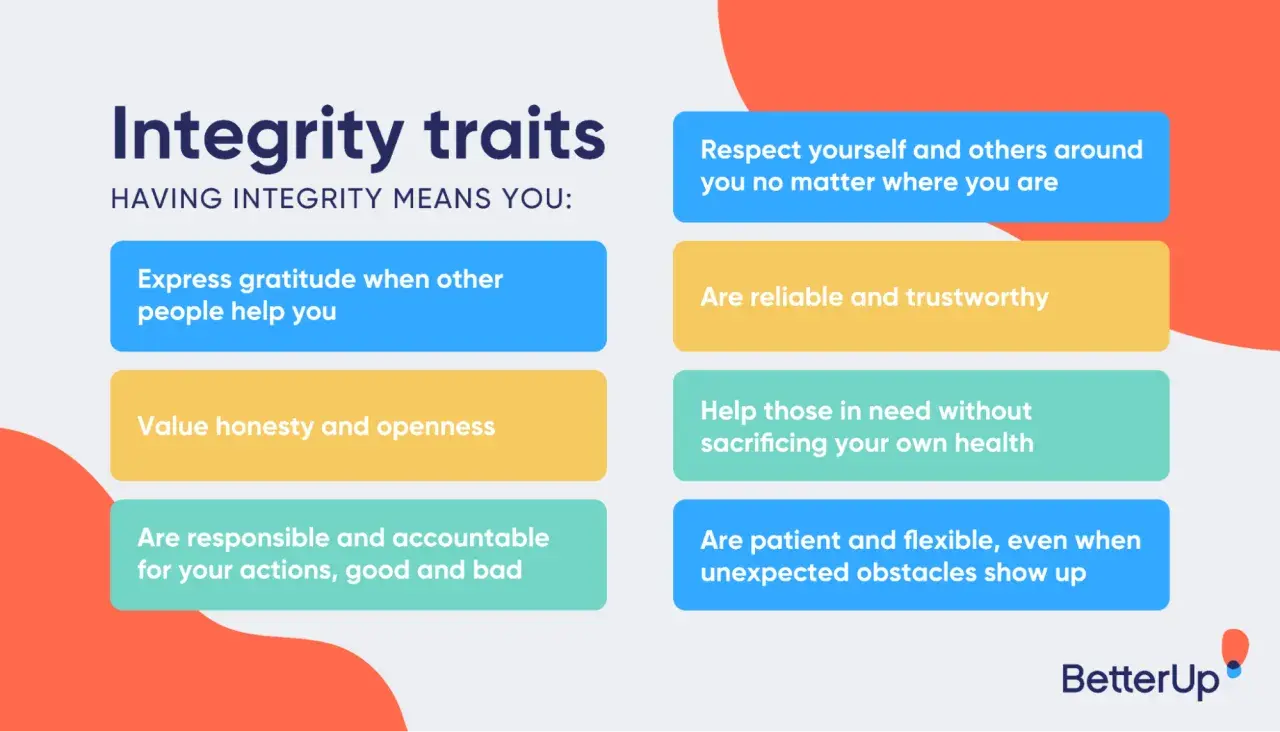
What matters most about integrity in leadership
- Integrity is alignment. It means values, promises, and actions point in the same direction.
- Trust is the main outcome. People follow leaders they can predict, not just leaders they like.
- Small behaviours matter most. Follow-through, honesty, and fairness shape reputation faster than speeches do.
- Pressure reveals the truth. Integrity becomes visible when there is conflict, time pressure, or uncomfortable news.
- It can be developed. Coaching helps turn values into habits, not just intentions.
What integrity means when you lead
In a leadership context, integrity is more than honesty. Honesty is part of it, but integrity also includes consistency, accountability, and the courage to stay aligned with your values when it would be easier not to. A leader can be charming, decisive, or highly experienced and still lose trust quickly if people sense that their words change depending on the audience.
I usually break the idea into three parts:
- Honesty means telling the truth clearly, even when the message is uncomfortable.
- Consistency means your standards do not shift with mood, pressure, or rank.
- Accountability means you own the outcome, not only the intention behind it.
That is why integrity is not the same as being rigid or always agreeing with people. Sometimes the most honest leader is the one who says, “This is the trade-off, and it is not ideal.” That kind of clarity helps people trust the decision even when they do not love it. Once that definition is clear, the next question is why it matters so much in practice.
Why people trust it before they can define it
Integrity matters because leadership runs on trust long before it runs on process. When people believe their leader is fair and dependable, they ask fewer defensive questions, share bad news earlier, and waste less energy guessing what will happen next. That has a direct effect on speed, morale, and the quality of decisions.
I also see this in coaching conversations with managers moving into their first people-lead role: people may forgive a hard call, but they rarely forgive inconsistency. A leader who explains the reason behind a decision, owns mistakes quickly, and applies the same rule to everyone becomes easier to follow. Harvard Business Impact has highlighted research linking stronger leadership character with better organisational outcomes, which fits what many teams already know from experience: trust is not abstract, it affects performance.
In the UK, this is especially visible in hybrid, cross-functional, and regulated environments where teams cannot observe every decision directly. People rely on the pattern they see across meetings, emails, and follow-through. That is why integrity is often felt before it is consciously defined. Once you see the outcome, the next step is learning how it looks in ordinary leadership behaviour.

How it shows up in day-to-day behaviour
Most teams judge integrity through small repeated actions, not grand statements. I would reduce it to a simple pattern: what you say, what you do, and what people experience should line up. When they do not, the gap is what people remember.
| Behaviour | What people notice | Why it matters |
|---|---|---|
| Keeping small promises | You call back when you said you would, and you follow through on minor commitments. | Reliability is built in details, not in announcements. |
| Explaining trade-offs openly | You name what the decision gives up as well as what it gains. | People trust choices they can understand, even when they disagree with them. |
| Admitting mistakes quickly | You own the miss before someone else has to expose it. | Accountability protects credibility. |
| Applying rules consistently | High performers do not get a different standard from everyone else. | Fairness keeps culture stable. |
| Protecting confidentiality | Private conversations stay private unless there is a clear reason to share them. | People speak more honestly when they feel safe. |
| Saying no when needed | You refuse requests that would break the standard you claim to uphold. | Boundaries make values real. |
When these behaviours are present, teams tend to relax into the work. When they are missing, people start watching the leader instead of focusing on the task. That shift is expensive, and it usually begins under pressure.
Where leaders usually lose it
The most common failures are usually not dramatic scandals; they are small compromises repeated under pressure. A leader overpromises to calm the room, softens the truth to avoid conflict, or makes an exception for the loudest person in the room. Each act may look minor once, but together they teach the team that values are flexible whenever the stakes rise.
- Selective honesty, where bad news is delayed until it is impossible to hide.
- Double standards, where seniority or personal loyalty changes the rule.
- Performative transparency, where the language sounds open but the real decision is already fixed.
- Silence in moments that need clarity, which people often read as avoidance.
- Borrowed values, where a leader talks about fairness or respect but does not model either under stress.
One UK-specific nuance is that understatement can hide a problem. If a leader says something is “fine” when it clearly is not, the team may hear politeness, but they also hear uncertainty. Integrity is not bluntness for its own sake; it is clear enough communication that people are not forced to guess what matters. Once you can spot these failure points, the next step is making integrity a deliberate leadership practice rather than a personality trait.
How to build it through coaching and habits
I treat integrity as a coachable leadership skill because it becomes stronger when values are translated into repeatable habits. The goal is not to sound more ethical in public; the goal is to become more dependable in private, where the real tests happen.
- Write down your non-negotiables. Keep them short and specific: honesty, fairness, confidentiality, or whatever actually guides your decisions.
- Translate each value into behaviour. For example, “be transparent” can become “explain the reason for major decisions within one working day.”
- Track promises, not just intentions. A simple list of commitments reveals whether you are overpromising or following through.
- Invite dissent early. Ask one person to challenge your reasoning before the decision is final. That reduces blind spots and ego-driven mistakes.
- Review pressure points after the fact. If a decision felt uncomfortable, ask what value was under strain and what you would repeat differently next time.
In coaching sessions, I often use one blunt question: “Would I still stand behind this decision if the team heard my reasoning in full?” That question cuts through rationalisation quickly. It also keeps integrity anchored in observable behaviour, which is where it belongs. From there, the final check is simple: how do you act when the pressure rises and the easier option is to compromise?
The decision test I use when the pressure rises
Before a hard conversation, a deadline, or a politically awkward decision, I run three checks. First, is this consistent with the standards I expect from other people? Second, have I explained the real trade-off instead of the convenient version? Third, will I still be comfortable with this choice next month, not just today?
- If the answer to any of those questions is no, I slow down and rewrite the decision.
- If the answer is yes, I move forward with much more confidence because the reasoning is visible, not hidden.
- If the answer is unclear, I ask for another perspective before acting.
That is the practical heart of leadership integrity: not a polished image, but a repeatable way of thinking, speaking, and deciding that people can trust when it matters most.
