
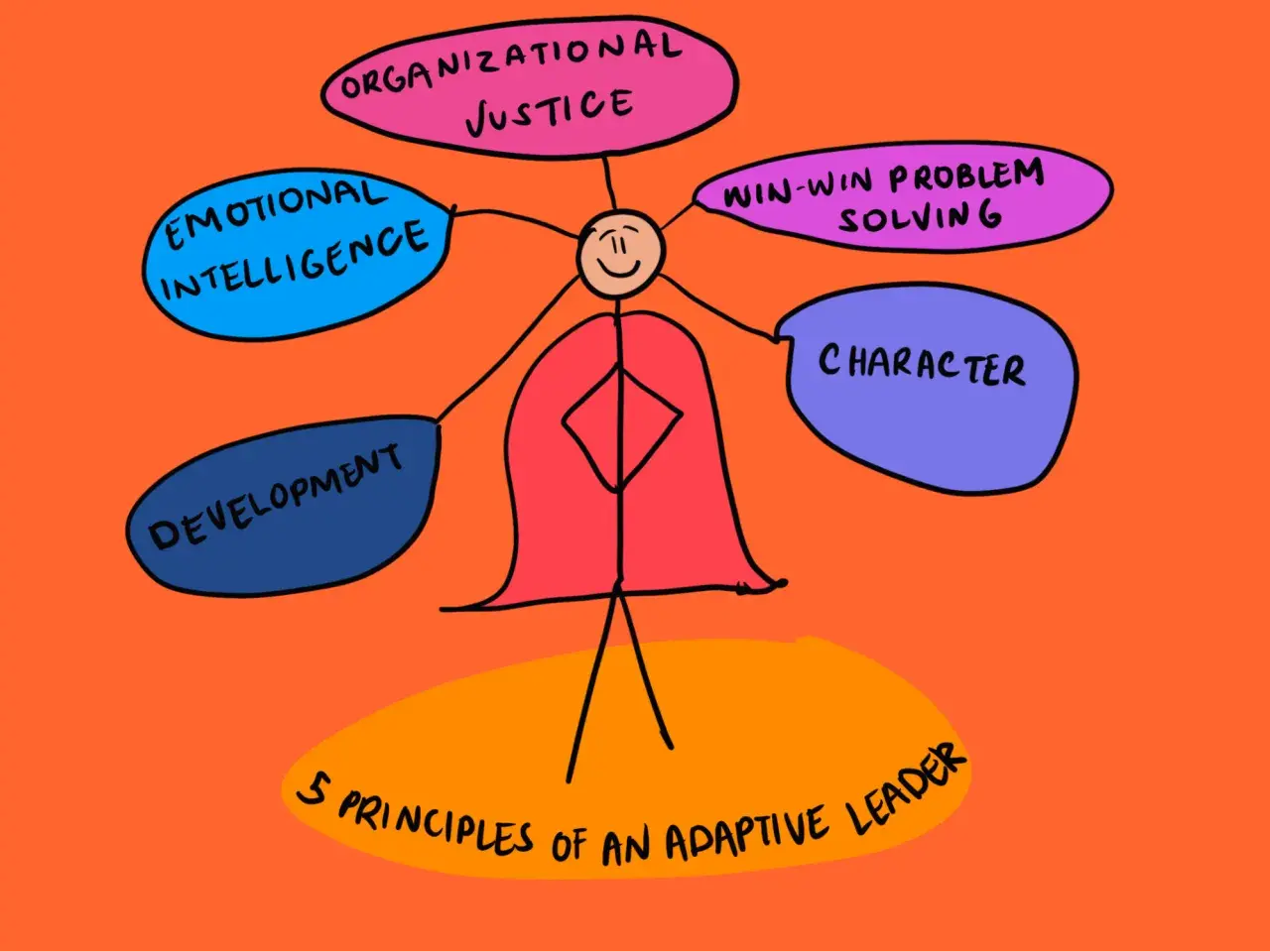
Leadership rarely fails because people do not care; it fails when the situation changes faster than the plan. This article explains what adaptability in leadership really means, why it matters in 2026, and how to build it in a way that strengthens trust rather than weakening it. I also cover the behaviours that make flexibility credible, the mistakes that make it look chaotic, and the coaching habits that help teams respond well under pressure.
The strongest leaders stay steady on purpose and flexible on method
- Keep purpose, values, and standards stable, while adjusting tactics, timing, and resourcing.
- Adaptability matters more when AI, hybrid work, and overlapping change compress decision windows.
- Visible signs include faster sensemaking, clearer communication, and calmer course correction.
- Coaching should focus on reflection, small experiments, and honest debriefs, not vague encouragement.
- The main risk is confusing adaptation with constant change or treating uncertainty like a signal to improvise everything.
What adaptability really means in leadership
When I talk about adaptability, I do not mean a leader who changes direction every time the wind shifts. I mean someone who can read a situation accurately, keep the destination clear, and adjust the route without losing credibility. McKinsey’s view of leadership as a set of mindsets and behaviours that aligns people around shared goals and helps them adjust to changing environments is a useful starting point, because it shows that adaptation is not a side skill; it is part of the job.
The difference between adaptable leadership and erratic leadership is consistency of purpose. A strong leader may change priorities, communication style, decision speed, or even team structure, but the logic behind those changes should remain visible. People can handle a hard decision. What they struggle with is a moving target they cannot understand.
| Situation | Rigid response | Adaptive response | Why it works |
|---|---|---|---|
| Market demand shifts | Keep the original plan because it was approved | Recheck assumptions and reallocate resources quickly | Protects relevance instead of defending sunk cost |
| Team morale drops | Push harder and demand more output | Slow down, listen, and remove the real blocker | Solves the cause rather than the symptom |
| New information appears | Ignore it until the next formal review | Update the plan and explain the change clearly | Keeps the team aligned with reality |
| Pressure rises | Micro-manage everything | Set boundaries, delegate with clarity, and review more often | Maintains control without crushing initiative |
That distinction matters because the pressure on leaders is no longer occasional. It is constant, and the next section explains why that has become especially obvious in the UK workplace.
Why it matters more in 2026, especially in the UK workplace
I do not think adaptability is a fashionable leadership trait; I think it is now a survival trait. Deloitte’s 2026 Global Human Capital Trends survey found that 7 in 10 business leaders see being fast and nimble as their main competitive strategy over the next three years, which matches what many teams are already feeling on the ground: change is no longer a project, it is the operating environment.
In the UK, that reality shows up in a few familiar ways. AI is reshaping tasks before most organisations have fully settled their operating model. Hybrid work still requires more deliberate coordination than many leaders expected. Budget pressure, skills shortages, and change fatigue can all hit at once, especially in sectors where service quality cannot slip. In that context, a leader who can adjust quickly without creating confusion has a real advantage.What I see most often is not resistance to change itself, but resistance to poorly explained change. People will usually accept a course correction if the reasons are clear, the pace is sensible, and the leader seems grounded. That is why adaptability has to be visible in behaviour, not just claimed in a values statement.
From here, the practical question becomes simpler: what does an adaptable leader actually do when the pressure is on?

The behaviours that make adaptability visible
I can usually tell whether a leader is genuinely adaptable by watching how they behave before they have the perfect answer. The best ones do not pretend certainty they do not have. They ask better questions, gather signal from the noise, and keep the team oriented while the facts are still settling.
| Behaviour | What it looks like in practice | What it prevents |
|---|---|---|
| Sensemaking | They ask what has actually changed, not just what feels uncomfortable | Reactions based on assumptions |
| Calm recalibration | They adjust course without dramatics or defensiveness | Panic-driven overcorrection |
| Clear explanation | They tell people what is changing, what is not, and why | Rumour and speculation |
| Selective flexibility | They change tactics quickly but keep standards and values intact | Confusion about priorities |
| Learning orientation | They treat setbacks as data, then update the plan | Repeated mistakes |
| Distributed decision-making | They let the right people decide faster at the right level | Delays caused by over-centralisation |
There is also a useful coaching distinction here. Situational leadership focuses on adjusting style to the person and the task, while adaptive leadership is more about helping a group work through uncertainty, learn in real time, and keep moving when the answer is not obvious. Both matter, but they solve slightly different problems.
Once those behaviours are visible, the next step is making them repeatable, which is where daily habits matter more than heroic moments.
How to build adaptability into your weekly routine
I prefer a practical view here: adaptability is trainable, but only if it is practised in ordinary work, not just during a crisis. A leader who waits for a major disruption before learning how to adapt is already behind.
- Define what must stay fixed. Write down the non-negotiables first: values, customer promise, quality threshold, and legal or safety requirements. Everything else becomes more flexible once those anchors are clear.
- Run a short sensemaking review every week. Ask three questions: what has changed, what do we know for certain, and what decision is now required? A 15-minute review is often enough to stop uncertainty from turning into drift.
- Use small experiments. When the evidence is incomplete, test one change with one team, one customer group, or one process step before scaling it. This reduces risk and builds confidence.
- Separate reversible from irreversible decisions. I want leaders to move quickly on low-risk choices and slow down on decisions that are expensive to undo. That balance keeps momentum without gambling with the organisation.
- Debrief the change, not just the outcome. After a shift, ask what worked, what confused people, and what would make the next adjustment smoother. Learning disappears quickly if you never review the process.
For emerging managers, I often suggest a simple 30-30-30 rhythm. In the first month, identify the things that must not move. In the second, run one controlled experiment. In the third, review the result with the team and decide what to keep, what to stop, and what to refine.
Those habits sound basic, but they are where real adaptability is built. The next challenge is avoiding the traps that make a leader look flexible while quietly undermining trust.
The mistakes that make flexibility look like indecision
The fastest way to damage confidence is to call constant change “agility” and hope nobody notices the lack of direction. People do not mind adaptation. They mind instability without explanation. That is why I pay close attention to the mistakes that often sit underneath apparently flexible leadership.
| Mistake | Why it damages trust | What to do instead |
|---|---|---|
| Changing direction too often | The team stops believing any decision will last long enough to matter | Change only when the evidence justifies it, then explain the trigger |
| Hiding behind “we are still exploring” | It feels like avoidance, not leadership | Be honest about uncertainty and state the next decision point |
| Ignoring emotional impact | People may understand the logic but still feel abandoned by the pace | Address workload, fear, and confusion directly |
| Copying someone else’s style | A borrowed persona usually breaks under pressure | Adapt the method, not the identity |
| Moving fast without alignment | The team works harder, but not in the same direction | Check understanding before execution |
One line I keep coming back to is this: if people cannot predict how decisions are made, they will experience flexibility as volatility. The leader may feel responsive; the team feels exposed.
That is why coaching matters so much. The more people practise adapting together, the less each change depends on one individual’s instinct.
How coaching turns individual flexibility into team capability
Leadership development tends to fail when it stays theoretical. If you want people to become more adaptable, coach the actual moments where judgement is needed: the moment a plan changes, the moment a team member pushes back, the moment new data arrives, or the moment a customer’s needs shift. In coaching conversations, I use prompts like these:- What has genuinely changed here, and what are we assuming has changed?
- Which part of this decision can we test safely before we scale it?
- What would make this feel clear enough for the team to act now?
- Which risks are worth taking, and which ones are just urgency disguised as progress?
- What do people need to hear from us before we move?
Those questions matter because they slow people down just enough to think clearly, without freezing the work. They also support psychological safety, which is simply the shared belief that people can speak up without being punished for raising concerns or pointing out problems. Without that safety, teams hide bad news, and adaptability collapses into guesswork.
I also like after-action reviews and pre-mortems. An after-action review asks what happened and what should change next time. A pre-mortem asks the team to imagine the plan has failed and identify why. Both tools help people think beyond the immediate moment, which is exactly what adaptive leaders need.
Once coaching starts to shape behaviour, the remaining question is whether it is actually working. That means looking beyond enthusiasm and checking the evidence.
How to know whether the shift is actually working
Not every organisation should measure adaptability the same way. A public-sector team, a start-up, and a hospital ward will not optimise for identical speed or risk. That is why I prefer a small set of indicators that show whether the organisation is adjusting well, not just moving quickly.
| Signal | What to look for | What it tells you |
|---|---|---|
| Decision speed | How long it takes to move from problem detection to action | Whether the team is stuck or able to respond |
| Quality of explanation | How clearly leaders explain what changed and why | Whether alignment is likely to hold |
| Recovery time | How quickly the team stabilises after a setback | Whether the organisation can absorb disruption |
| Escalation patterns | Whether too many issues need senior intervention | Whether decision-making is too centralised |
| Employee feedback | Whether people say change feels clear, manageable, and fair | Whether adaptability is being experienced, not just announced |
I would also watch for a quieter signal: do people bring problems early, or do they wait until the issue is already expensive? Early escalation usually means trust is intact. Late escalation usually means people have learned that speaking up is risky or pointless.
Numbers help, but they are not the whole story. A team can reduce decision time and still feel chaotic if the communication is poor. That is why the final piece is holding a few things steady while everything else continues to move.
What I would keep stable while everything else moves
If I had to reduce the whole topic to one principle, it would be this: keep the destination clear, change the route when needed, and tell people what you are doing before they have to guess. That is the version of adaptability that builds credibility instead of exhausting everyone around it.
In practice, that means preserving purpose, values, and standards while staying honest about uncertainty and willing to revise tactics. It also means treating coaching, feedback, and small experiments as part of normal leadership, not as optional extras for quieter periods. The leaders who do this well are not simply reactive; they are organised enough to adapt without losing trust.
If you want adaptable leadership to stick, start with one decision rule, one weekly review, and one honest conversation about what can move and what cannot. That small shift is often enough to change how a team experiences change, and that is where the real leverage begins.
