
In the UK, the most useful programmes usually blend management basics with coaching techniques, because many managers need both: structure for decisions and a better way to develop their teams. This article explains what the training should cover, who benefits most, how UK courses are typically delivered, what they cost, and how to judge whether a programme will actually change behaviour.
The essentials at a glance
- The best programmes focus on communication, delegation, feedback, decision-making, and coaching, not leadership theory alone.
- Most UK open courses run for 1 to 2 days, while more complete programmes add practice, follow-up, and workplace application.
- Coaching matters because many managers need to develop ownership in others, not just give instructions.
- Good value comes from live practice, realistic scenarios, and post-course reinforcement.
- The right option depends on whether you need a quick reset, a team-wide standard, or a longer qualification route.
What a strong programme should teach first
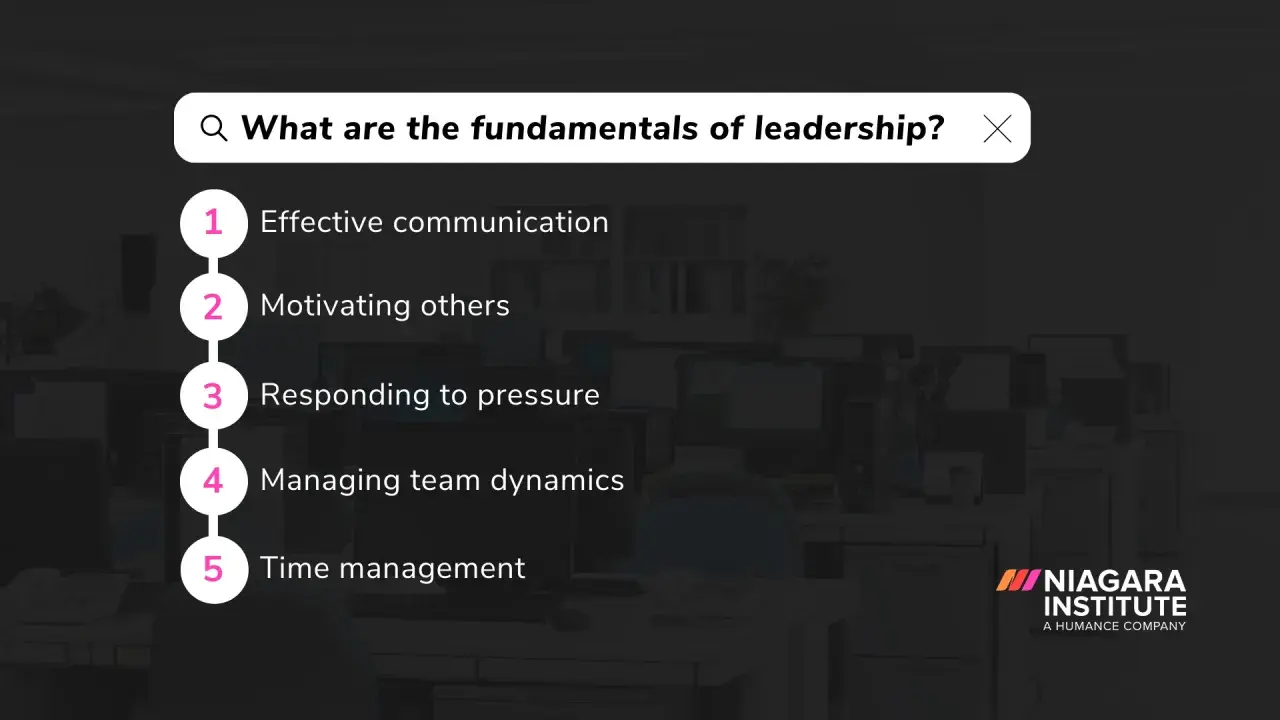
When I look at foundational leadership training, I want to see a clear sequence: self-management first, then people management, then the habit of leading through others. If a course jumps straight into vision statements and strategic language without teaching feedback, delegation, or prioritisation, it is skipping the parts that most new leaders actually struggle with.The core content should usually cover:
- Communication so people understand what matters, what has changed, and what good looks like.
- Delegation so work moves forward without the leader becoming the bottleneck.
- Feedback and performance conversations so problems are addressed early rather than left to grow.
- Decision-making so the manager can choose quickly when information is incomplete.
- Emotional intelligence so the leader can read the room, manage tension, and stay steady under pressure.
- Prioritisation and time management because leadership breaks down fast when the leader is always reacting.
- Coaching skills so people learn to think, own, and improve instead of waiting for answers.
I also like programmes that separate management from leadership without pretending they are opposites. Management keeps work organised; leadership keeps people aligned and engaged. The best training helps people do both, which is why the next question is not just what the content is, but who needs it most.
Who gets the most value from it
This kind of training is not only for senior leaders. In practice, the biggest gains often come from people who are newly responsible for others, or who have been promoted because they were excellent at the technical side of the job but have never been taught how to lead people. That transition is where many good employees get stuck.
The groups that usually benefit most are:
- First-time managers who need confidence and structure before bad habits set in.
- Team leaders and supervisors who are already managing day-to-day performance but need a better framework.
- Technical specialists promoted into leadership who need to move from being the problem solver to being the person who develops others.
- Project leads who influence without always having formal authority.
- Small business owners who are growing a team and can no longer lead purely by instinct.
- Experienced managers who need a reset because their current style is too reactive, too directive, or too inconsistent.
Timing matters as much as role. If someone is already overwhelmed, the training can still help, but the return is better when it arrives just before the pain becomes routine. That is where coaching becomes especially useful, because it changes how leaders think about conversations, not just how they manage tasks.
Why coaching belongs in the foundation, not as an optional extra
I would treat coaching as part of basic leadership, not an advanced bonus. A manager who only gives instructions can sometimes get short-term compliance, but a manager who knows how to coach builds capability. That difference is huge when the goal is to improve ownership, confidence, and performance over time.
In practical terms, coaching is a structured conversation that helps someone think clearly, see options, and commit to action. It is not counselling, and it is not the same as mentoring. Mentoring leans on experience and advice; coaching leans on questions, listening, and reflection. A good programme should make that distinction obvious.
The simplest coaching structure many managers learn is the GROW model, which stands for Goal, Reality, Options, and Will. It is useful because it stops conversations from drifting. Instead of moving straight to advice, the manager first clarifies the result, then the current situation, then possible approaches, and finally the next action.
Useful coaching behaviours usually include:
- Asking open questions instead of leading with solutions.
- Listening long enough to hear the real issue, not just the first complaint.
- Using silence without feeling the need to fill every pause.
- Agreeing one clear next step rather than ten vague intentions.
- Giving feedback in a way that supports ownership rather than defensiveness.
When coaching is taught well, managers begin to see that not every conversation needs to be a directive one. That shift matters when you start comparing the different ways this training is delivered in the UK.
How programmes are delivered in the UK
In the UK market, leadership basics usually come in four formats: open enrolment courses, in-house workshops, blended programmes, and longer certificate-style pathways. Each one solves a different problem, and the right choice depends on how fast you need change, how many people need the training, and whether you want a qualification at the end.
| Format | Typical length | Indicative cost | Best for | Main trade-off |
|---|---|---|---|---|
| Open enrolment course | 1 to 2 days | About £239 to £700+ per delegate | Individuals who need a fast, practical reset | Limited tailoring and follow-up |
| In-house workshop | 1 to 3 days, sometimes with follow-up | Quoted per cohort | Teams that need the same leadership behaviours | Requires preparation and manager buy-in |
| Blended or certificate pathway | 4 to 8 weeks, or several days spread out | Often around £1,000 to £2,000+ per delegate | Managers who need practice and recognised learning | More time away from the day job |
| Longer qualification route | 3 to 18 months | Varies widely | People building a career path in leadership | Slower to finish, but deeper reinforcement |
ILM and CPD accreditation are common quality signals in the UK, and I would see them as useful rather than magical. They tell you the course has a formal structure, but they do not guarantee that the learning will stick once the delegate is back at work. That is why the next decision is less about the label on the course and more about how well it matches the learner’s real needs.
How to choose the right format and provider
If I were choosing a programme for a manager, I would start with one blunt question: what behaviour needs to change in the workplace? That answer should drive everything else. If the problem is poor feedback, the course needs live feedback practice. If the problem is delegation, the course needs delegation scenarios. If the problem is team disengagement, the course needs coaching, not just policy language.Here is the filter I use:
- Check for practice, not just content. A good course lets people rehearse difficult conversations, not just hear about them.
- Look for relevance to your level. A first-time manager does not need the same programme as a director.
- Ask about follow-up. Reflection, check-ins, or manager support after the course usually make a bigger difference than another slide deck.
- Confirm the learning style. Some people need short sessions; others need a deeper stretch over several weeks.
- Be honest about budget and time away. A cheaper course can be expensive if nobody applies it afterwards.
Budget is part of the decision, but it should not be the only part. A one-day course can be enough for a specific gap, especially if the learner already has experience and just needs structure. For a new manager, though, a longer route often pays off because it gives enough repetition to change habits. That point becomes even more important when you look at where these programmes commonly fail.
Where leadership basics training usually falls short
The biggest mistake I see is treating training attendance as the finish line. People go on a course, enjoy it, take notes, and then return to the same workload, the same pressure, and the same habits. Without reinforcement, even a very good programme can fade fast.
Other common failure points are more specific:
- Too much theory, too little rehearsal. Leadership is behavioural, so people need to practise actual conversations.
- No manager support afterwards. If the learner’s own manager never asks what changed, the new habits rarely survive.
- One-size-fits-all content. A course built for every audience often ends up being sharply useful for none of them.
- Ignoring context. A respectful, coaching style will not fix a toxic culture on its own.
- Measuring satisfaction instead of impact. Smiles and positive feedback are nice, but they are not proof of change.
There is also a practical limit that many providers do not say out loud: not every leadership problem is a training problem. Sometimes the issue is role clarity, workload, poor hiring, or a broken process. In those cases, training can still help, but only if the organisation is honest about the wider cause. That is why the real work starts after the course ends.
What the next 30 days should look like
If a manager leaves a course and does nothing different, the organisation has paid for a memory, not a capability shift. I prefer to think in a simple 30-day follow-through: choose one behaviour, one conversation, and one measure. That keeps the improvement visible and manageable.
A practical first month might look like this:
- Week 1: Pick one recurring conversation to improve, such as weekly check-ins or performance feedback.
- Week 2: Use a coaching structure in at least one one-to-one, even if it feels awkward at first.
- Week 3: Delegate one meaningful task with clear expectations, not just a loose instruction.
- Week 4: Review what changed in speed, ownership, clarity, or confidence.
If you want the training to land, keep the measure simple. Look for fewer escalations, cleaner handovers, better ownership, and shorter back-and-forth on routine decisions. Those are the signs that leadership is becoming a habit rather than an event, and that is the point of the whole exercise.
My short version is this: the best foundational leadership programme does not try to make people sound impressive; it helps them become clear, calm, and useful to the team around them. If you are choosing or designing one, focus on practice, coaching, and follow-through before you focus on labels or jargon. That is what turns basic leadership learning into something people actually use.
