
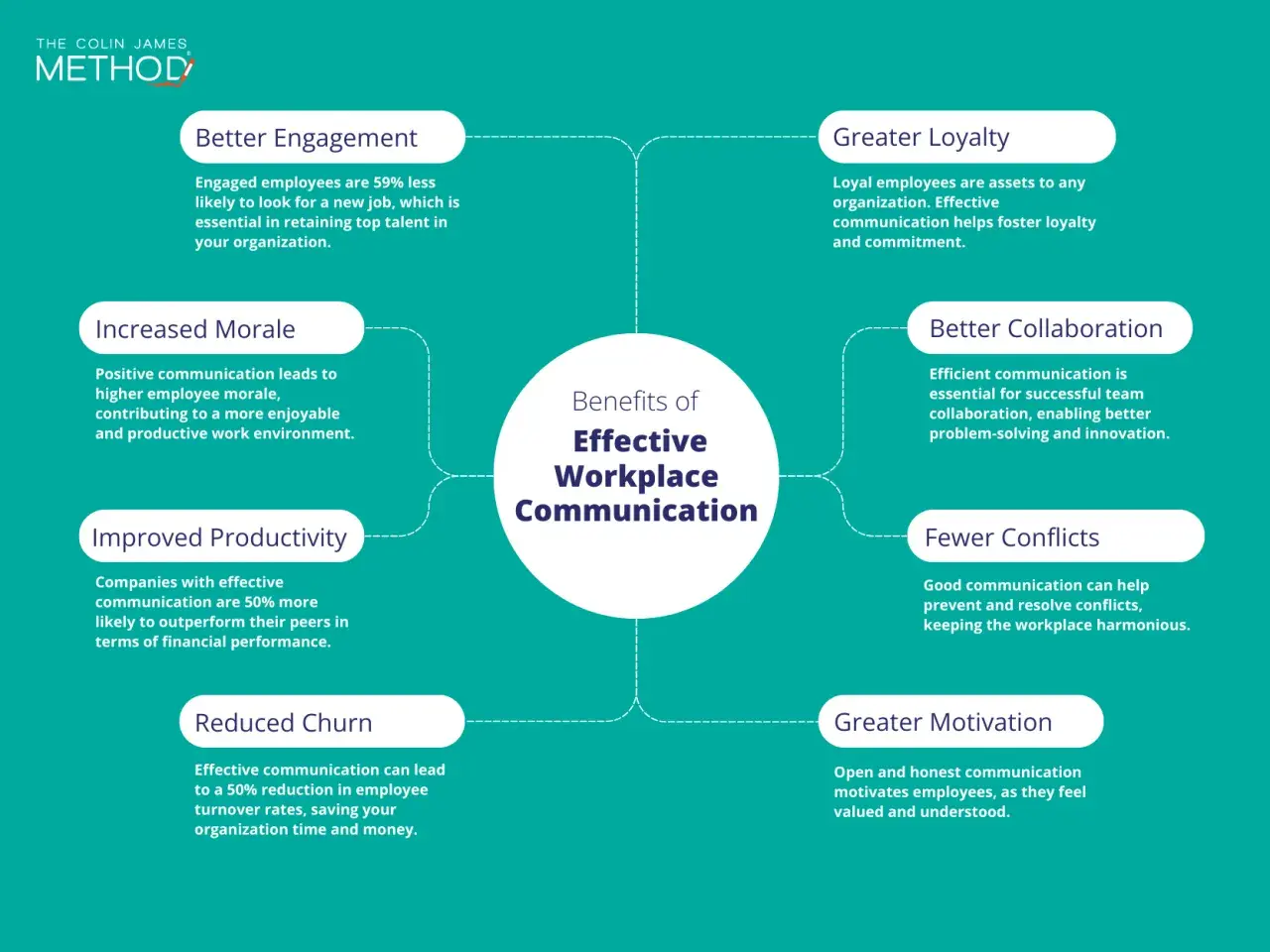
The essentials at a glance
- Lead with the point. People should know the purpose of a message in the first sentence or two.
- One message, one outcome. If a note tries to inform, persuade, and decide at once, it usually lands badly.
- Channel choice matters. Email, chat, meetings, and one-to-ones each serve different jobs.
- Clarity reduces friction. Better messages cut follow-up questions, rework, and avoidable assumptions.
- Hybrid teams need extra precision. When people do not share the same room, they do not share the same context.
What clear workplace communication actually looks like
In my experience, people often confuse clarity with brevity. They are related, but not the same. A message can be short and still vague, or longer and still perfectly clear if it has one purpose, the right context, and an obvious next step.
I think of it as three questions: What do I want this message to achieve? Who needs to act on it? What should happen next? If those answers are obvious, the communication is doing its job. If they are hidden inside a paragraph of background detail, people have to work too hard to understand you.
That is why purposeful messages feel calm rather than rushed. They leave less room for guessing, and that makes the next decision easier to make. That matters because the cost of unclear communication shows up in very practical ways.
Why it improves speed, trust, and follow-through
Unclear communication rarely fails in a dramatic way. It usually fails slowly: a missed deadline, two people doing the same task, a meeting that ends with no owner, or a manager who assumes agreement when there is only silence. Over time, that kind of friction slows down projects and weakens trust.
As CIPD’s employee communication guidance suggests, good internal communication is planned and tailored rather than improvised. I agree with that because people interpret the same message differently depending on their role, workload, and level of context. A finance lead, a new starter, and a line manager may all need different versions of the same update.
- Speed improves because fewer messages need rewriting or clarifying.
- Trust improves because people see that you respect their time.
- Execution improves because each message has an owner and a deadline.
- Conflict reduces because fewer problems are left to interpretation.
Once you understand the payoff, the next question is how to make your own messages work that way without sounding robotic.
How to structure messages so people can act on them
I use a simple structure whenever the message matters: lead, context, ask, deadline. It keeps the note moving and stops the important part from getting buried.
- Start with the purpose. Say why you are writing before you explain the background.
- Add only the context people need. Context should support the decision, not replace it.
- Make the ask explicit. If you need approval, input, or action, name it directly.
- Set a time boundary. A deadline, meeting date, or decision point removes ambiguity.
- Close the loop. Confirm what happens next and who owns it.
A useful test is this: if someone forwards your message to a colleague, would that colleague understand the action without a separate explanation? If not, the structure still needs work.
A simple before-and-after often shows the difference. “Can we discuss the client issue later?” is open-ended; “Can we spend 15 minutes at 3 pm agreeing the client response and assigning next steps?” is far more usable.
Once the structure is right, the channel becomes the next important decision.

Choose the right channel for the message, not the habit
Not every update belongs in a meeting, and not every problem should be reduced to chat. The channel is part of the message, because it affects tone, speed, and whether people can respond properly.
| Channel | Best for | Strength | Main risk | My rule of thumb |
|---|---|---|---|---|
| Decisions, summaries, documentation, formal requests | Creates a clear record | Too much text or too many threads | Use it when people need to refer back later | |
| Chat | Quick coordination, timing, small nudges | Fast and lightweight | False urgency and missing context | Keep it short; move anything nuanced out of chat |
| Meeting | Trade-offs, alignment, problem-solving, live decisions | Real-time discussion | A meeting that creates no decision | Use it only when discussion can change the outcome |
| One-to-one | Feedback, tension, career conversations, sensitive issues | Privacy and nuance | Avoiding written follow-up | Use it for personal or delicate topics, then confirm next steps in writing |
| Shared document | Project plans, handovers, async collaboration | Single source of truth | No one updates it | Use it when several people need to edit or track progress |
My rule is simple: if the message needs reflection, do not force it into chat; if it needs a paper trail, do not leave it in a hallway conversation. That choice gets even more important when the relationship is under pressure or the team is distributed.
Common mistakes that make smart people sound unclear
Most communication problems are not caused by bad intent. They come from habits that feel efficient in the moment but create confusion later. I see the same mistakes repeated in teams of every size.
- Front-loading too much background. Fix it by leading with the decision or request first.
- Mixing updates with asks. Fix it by separating information from action.
- Assuming urgency is obvious. Fix it by naming the deadline and consequence.
- Using polite language as a shield. Fix it by staying courteous without blurring responsibility.
- Leaving ownership vague. Fix it by attaching one name to one next step.
- Overexplaining in email. Fix it by moving complexity into a call or short meeting.
I see one mistake more than any other: people try to sound collaborative by softening the ask until it disappears. That usually creates more work, not less. Courtesy matters, but it should not blur responsibility.
These habits become even more noticeable in UK workplaces, where tone is often polite but expectations still need to be explicit.
What it looks like in UK workplaces and hybrid teams
In the UK, I often see communication shaped by a mix of politeness, indirect phrasing, and a strong preference for not creating unnecessary friction. That style can work well, but it has a weak spot: people sometimes assume the message is understood because it sounded considerate. Considerate is good; ambiguous is not.
Acas is a helpful benchmark here because it keeps returning to early, clear, respectful conversation when issues need to be raised. In practice, that means saying what happened, what you need, and what outcome you are aiming for before the discussion gets loaded with assumptions.
Hybrid work raises the stakes further. If half the team hears a decision in a meeting and the other half reads a trimmed version later, the message needs to survive translation. That means fewer side comments, more explicit owners, and a written record of the final decision.
- For line managers: repeat the same key message in the team meeting and in writing.
- For project leads: separate the decision, the reasoning, and the action list.
- For remote colleagues: avoid relying on context that only exists in the room.
- For sensitive topics: choose a one-to-one conversation before moving to a broader group.
This is where communication stops being a soft skill in the abstract and becomes a management habit.
The habit that keeps messages clear under pressure
If I had to reduce the whole topic to one habit, it would be this: pause before sending anything important and ask whether the message has one purpose, one audience, and one next step. That tiny checkpoint prevents a lot of avoidable noise.
- Before you send: write the action in one sentence.
- Before a meeting: decide what needs to be solved there, not just discussed.
- Before a feedback conversation: be clear about the behaviour, the impact, and the change you want.
- Before closing the task: confirm the owner, deadline, and success signal.
I think this is the real advantage of a communication style built on clarity and purpose: it is not reserved for senior leaders or polished presenters. It is a repeatable discipline that helps everyone work with less friction and more confidence. If you build that habit into your week, your messages improve almost automatically, and so does the quality of the work that follows.
