
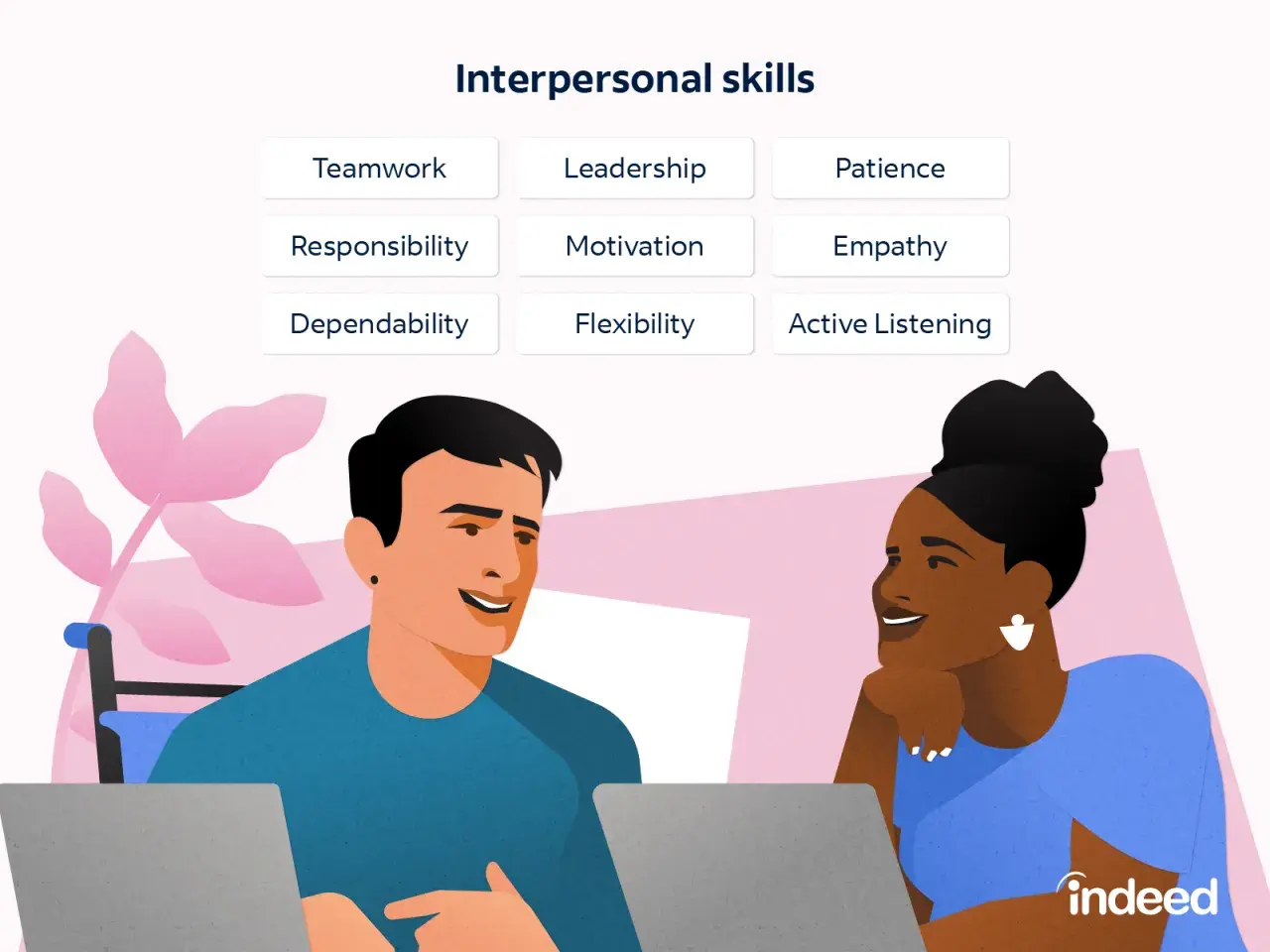
The practical signals behind strong workplace relationships
- It means reading people well, adapting your style, and moving conversations forward without unnecessary friction.
- In practice, it shows up in listening, timing, tone, and how you handle disagreement.
- It is not the same as charm or manipulation, and it is not about being agreeable all the time.
- The skill can be built through repeatable habits, not just personality.
- Hybrid working makes it more visible, because written and digital communication carry more weight than before.
What interpersonal savvy means at work
I would describe interpersonal savvy as a form of social judgement. It is the ability to understand what is happening between people, then choose the response that improves the relationship and the outcome at the same time. That usually involves reading context, noticing unspoken concerns, adjusting your language, and knowing when to push, when to pause, and when to let a point breathe.It is easy to confuse this with being “good with people” in a vague sense, but that misses the point. Strong interpersonal judgement is not about winning approval. It is about building enough trust that people will listen to you, even when the message is inconvenient. In my experience, that is why the best communicators are often not the loudest ones; they are the ones who know how to make their point without forcing the room into resistance.
- Context awareness means understanding the stakes, the personalities involved, and the mood of the conversation.
- Emotional control means staying steady when the discussion becomes awkward, tense, or political.
- Adaptation means changing your style for a senior leader, a peer, a client, or a new starter without sounding fake.
- Ethical influence means shaping decisions through clarity and trust, not pressure or spin.
Once you see it this way, the connection to workplace communication becomes much clearer, because savvy is not separate from communication. It is what makes communication land well in the first place.
How it shows up in everyday workplace communication
You rarely notice interpersonal savvy in isolation. You notice it in the small decisions that keep work moving: the way someone opens a difficult meeting, responds to a tense email, or corrects a colleague without creating embarrassment. In a UK office, on Teams, in a client call, or during a quick corridor conversation, those details matter more than people like to admit.
| Situation | Low-savvy response | Savvy response | Why it works |
|---|---|---|---|
| Team meeting disagreement | Interrupting, talking over others, or shutting the idea down too quickly | Stating the concern, asking one clarifying question, then suggesting a next step | It keeps disagreement useful instead of personal |
| Feedback to a colleague | Being so indirect that the message is easy to miss | Being specific, calm, and focused on the behaviour rather than the person | It protects the relationship while still being honest |
| Email to a busy stakeholder | Long background, buried point, vague request | Clear subject line, short context, one action request | It respects attention and reduces unnecessary back-and-forth |
| Hybrid check-in | Assuming silence means agreement | Checking understanding and inviting a reply in a format that suits the person | It prevents the false calm that often appears in remote work |
| Client complaint | Defending the process first | Acknowledging the issue, then explaining the fix | It lowers emotion before you solve the problem |
The main thing I see here is that savvy communication is not about sounding polished. It is about reducing friction. In hybrid teams especially, written tone matters more than many people expect, because the other person cannot rely on facial expressions or a quick side conversation to recover the meaning. That is why a short, thoughtful message often does more good than a long, impressive one.
The behaviours that make people trust your judgement
People usually decide whether to trust your judgement before they decide whether they agree with you. That is why the visible behaviours matter so much. They give other people evidence that you are thoughtful, stable, and worth listening to, especially when the pressure rises.
Active listening that changes your response
Real listening is not waiting for your turn to speak. It means taking in what the other person is saying, noticing what they are worried about, and shaping your answer around that concern. A simple test I like is this: if your reply could have been written before the other person finished talking, you probably did not listen deeply enough.
Timing that avoids unnecessary friction
Timing is an underrated skill. A message that is correct at 9 a.m. may land badly at 4.55 p.m. after a bad day. Likewise, a sharp correction in a group meeting may save time in one context and embarrass someone in another. Savvy communicators know that the right message at the wrong moment can still fail.
Tone that matches the moment without sounding artificial
This is where many people overcompensate. They either sound so formal that they freeze the relationship, or so casual that the message loses weight. The goal is not to mimic the other person. It is to match the seriousness of the moment. Calm, direct, and respectful usually works better than trying to sound clever or overly warm.
Read Also: Workplace Communication Workshop - Solve Your Team's Problems
Repair after a misstep
Everyone misjudges a conversation now and then. What separates skilled people from difficult ones is how quickly they repair the damage. A brief “I think I came across too abruptly there” or “Let me rephrase that more clearly” can save a working relationship. That willingness to reset is part of interpersonal skill, not a sign of weakness.
When these habits are consistent, people start to experience you as steady and fair. That makes the next conversation easier, which is exactly why the next section matters.
Common mistakes that look confident but damage relationships
A lot of workplace friction comes from people confusing confidence with effectiveness. A direct style is not automatically strong, and a calm tone is not automatically clear. I would be cautious about any communication habit that wins a short-term point but leaves a long-term problem behind.
- Confusing bluntness with honesty is one of the most common mistakes. You can be truthful without sounding contemptuous.
- Overexplaining often happens when people are nervous. It can make a simple point feel like a defence case.
- Avoiding directness can feel polite in the moment, but it usually forces the other person to guess what you really mean.
- Using one style for everyone ignores the reality that different people need different levels of detail, pace, and formality.
- Assuming silence means consent is risky, especially in meetings where people may be uncertain, distracted, or reluctant to challenge publicly.
The most expensive mistake is usually not a dramatic one. It is the repeated pattern of small misunderstandings that slowly erode trust. A technically accurate message can still fail if it is delivered in a way that makes people defensive.
That is why the practical side of building this skill matters so much. It is not enough to understand the idea; you need habits that work in real conversations.
How to build it in real work, not just theory
If I were helping someone improve quickly, I would keep the process simple. You do not need to reinvent your personality. You need a few repeatable behaviours that make your communication easier for other people to receive.
- Prepare for the person, not just the message. Before a meeting or difficult conversation, write down 3 things: what you want to achieve, what the other person may care about, and what they might resist.
- Use one clarifying question before you respond. A question such as “What matters most to you here?” or “What would a good outcome look like on your side?” often prevents a lot of guesswork.
- Pause for 2 to 3 seconds before answering something sensitive. That short pause usually improves tone, and it stops you replying from irritation or assumption.
- Close with a clear next step. A 2-line recap after a meeting is often enough: what was decided, who is doing what, and by when.
- Ask for feedback on one specific area. Do not ask, “How am I doing?” Ask, “When I push back, do I sound clear or too abrupt?” Specific feedback is easier to use.
I also think it helps to practise in lower-stakes moments. A quick check-in, a routine update, or a short email is a safer place to refine tone than a high-pressure review meeting. That is where you can test whether your wording is clear, respectful, and easy to act on.
Over time, these habits turn into reputation. People start expecting that you will be clear, fair, and manageable in tense situations, which is one of the strongest career assets you can have.
Why it matters for career growth and leadership in the UK
In the UK workplace, interpersonal savvy has a direct effect on how people experience your competence. Technical skill may get you noticed, but it is often your relational judgement that determines whether people trust you with bigger responsibilities. I see this most clearly in line management, project leadership, client work, and cross-functional collaboration, where one awkward interaction can slow an entire piece of work.
It matters even more in 2026 because communication is spread across more channels. Some of your influence happens in a meeting, some in Slack or Teams, some in a concise email, and some in a follow-up note that keeps everyone aligned. That means your ability to adapt tone and preserve relationships is no longer a soft extra. It is part of how work gets done.
- For promotion, it shows that you can handle people as well as tasks.
- For leadership, it helps you create trust without over-managing.
- For collaboration, it reduces the cost of misunderstanding.
- For change work, it helps people feel informed instead of pushed.
- For client-facing roles, it makes your organisation feel more dependable and easier to work with.
In my view, this is why the skill is often underestimated. It does not always announce itself, but it quietly shapes how far people are willing to go with you.
The simplest way to use it in your next conversation
If you want a practical way to apply this straight away, use a small sequence: start with the shared goal, acknowledge the other person’s pressure, ask one clarifying question, then give a clear next step. That four-part pattern works in a surprising number of workplace situations because it keeps the conversation grounded.
That is the core of strong interpersonal judgement in practice. It is not about being smooth, charming, or politically clever. It is about being effective with people while leaving as little unnecessary damage behind as possible, which is usually what good workplace communication should do.
