
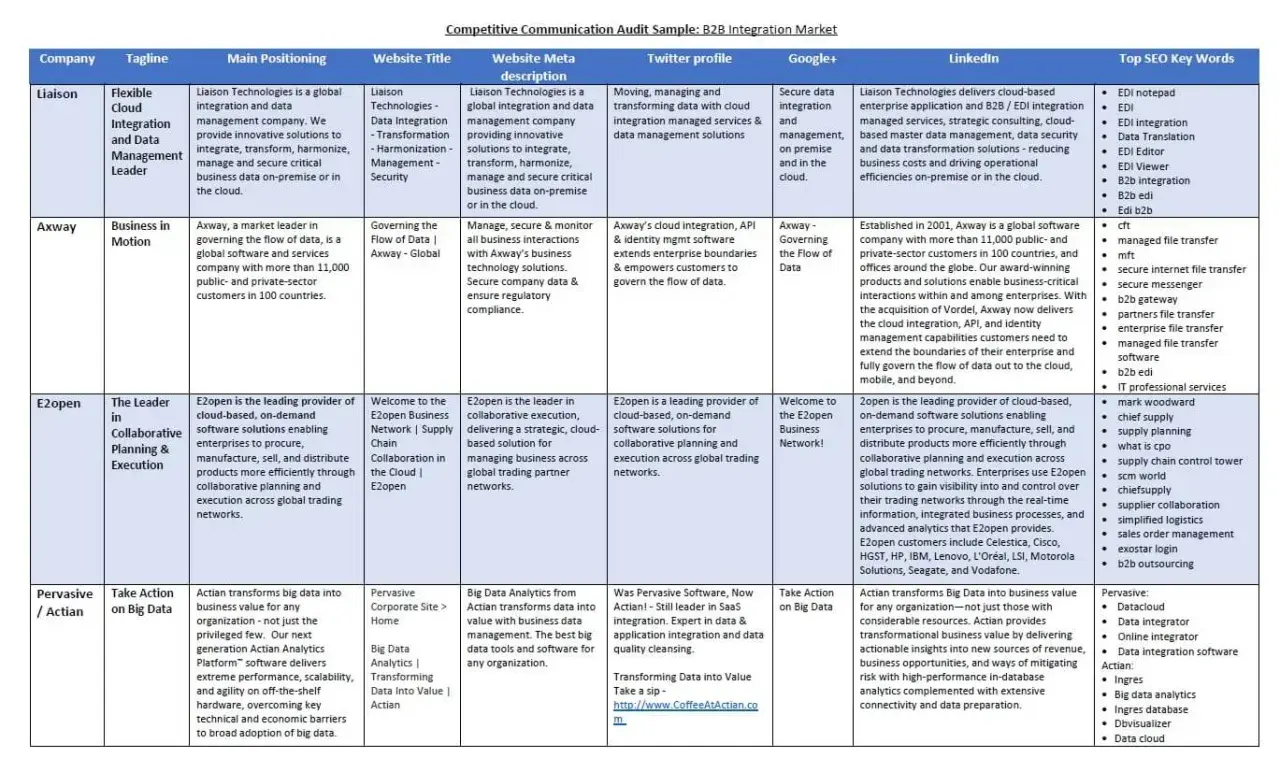
Three signals that tell you whether workplace communication is working
- Reach tells you whether people actually saw the message through the channel you chose.
- Clarity shows whether employees understood what changed and what they were supposed to do next.
- Trust reveals whether people believe the message enough to act on it without chasing extra confirmation.
- Follow-through is the real test: if managers and teams act differently after the update, the communication has not landed properly.
- A short audit, usually over 10 to 14 working days, is enough to expose the most important patterns in a first pass.
What a communication audit is really checking
I treat the audit as a check on the whole message path. The question is not just "Did we send it?" but "Did the right people receive it, understand it, and use it?" That usually means looking at four things: the message itself, the channel, the manager relay, and the employee response.
- Message quality is about whether the content is specific, short, and action-focused.
- Channel fit asks whether email, Teams, intranet, briefings, or noticeboards match the audience.
- Manager relay checks whether line managers can explain the message without rewriting it.
- Employee response shows whether the message produced the expected behaviour or just more questions.
In practice, the most common problem is not silence. It is distortion. A leader sends one clear update, a manager trims it, another adds context, and by the time it reaches the team the meaning has shifted. Once you see that pattern, the next step is to test it in a real example.

A practical example from a hybrid UK team
Take a 250-person UK organisation with a head office, a regional depot, and a mostly hybrid support team. Leadership used a weekly email, managers repeated key points in team meetings, and operations depended on Teams plus noticeboards for the depot. On paper, that looked organised. In reality, the audit showed a gap between who received the message and who could act on it quickly.
| Channel | What I checked | What the example showed | What it meant | Likely fix |
|---|---|---|---|---|
| Weekly email | Open rate, clicks, and follow-up questions | Most office staff saw it, but only a minority could name the next action without rereading | The email gave information, but not a usable decision | Lead with one action, one deadline, and one owner |
| Manager briefings | Consistency across departments | Some managers gave a strong update; others summarised loosely and missed key details | The cascade was uneven | Give managers a short script and a one-minute FAQ |
| Teams messages | Speed and visibility | Fast replies, but several different interpretations of the same policy | Speed without structure created noise | Use pinned posts and a single source of truth |
| Noticeboards | Relevance for depot staff | Useful for shift workers, but some notices stayed up too long after they were outdated | Static channels need tighter ownership | Set a review date for every notice |
The useful part of this example is not the format. It is the pattern. One channel was good at speed, another at reach, another at reinforcement, but none of them worked well enough on its own. That is exactly why a communication audit has to look at the whole system, not just one message.
How I would run the audit step by step
I keep the process lean. A communication audit can become a paperwork exercise very quickly, so I prefer a structure that gives me enough evidence without dragging everyone into endless interviews. In most organisations, 10 to 14 working days is enough for a first pass if the scope is tight.
1. Define one clear question
I start with a single issue, such as "Do employees know what to do after leadership updates?" or "Which channel works best for frontline staff?" If the question is too broad, the findings become vague and impossible to act on.
2. Map the real communication routes
I list every channel that matters: email, intranet, Teams, Slack, manager meetings, shift handovers, printed notices, and any unofficial routes people actually use. This is where channel sprawl becomes obvious. Channel sprawl means too many overlapping places for the same information, which usually creates confusion rather than reach.3. Collect both numbers and comments
I would use a short pulse survey with 5 to 7 questions, plus a handful of interviews with managers and employees from different groups. The survey tells me what is happening at scale; the interviews explain why. If I only have time for one live method, I choose focused conversations with people who depend on the message to do their work.
4. Compare audiences instead of averaging them
Averaging the whole organisation often hides the real issue. Office staff may say communication is fine while field staff, night-shift workers, or new starters feel left out. I always split the findings by audience because the fix is often different for each group.
5. Rank the problems by business impact
Not every issue deserves the same level of attention. A typo in a newsletter is not the same as a safety update that reached the wrong team late. I rank problems by how much they affect decisions, service delivery, risk, and manager time.
Read Also: 5 Best Workplace Communication Books - Solve Your Problems
6. Turn the findings into one-page actions
If the final output is a long report no one reads, the audit is wasted. I want a short action sheet that names the issue, the audience, the fix, the owner, and the next review date. That gives leadership something they can actually use.
Once the process is clear, the next question is what to measure so the findings are worth trusting.
What to measure so the results mean something
Open rates and attendance counts are useful, but they are only the first layer. I would never treat them as proof that communication worked. What matters is whether the message was seen, understood, and acted on in the right way.
| Metric | What it tells you | What good looks like | What signals a problem |
|---|---|---|---|
| Reach | Did the target group actually receive the message? | Most of the intended audience saw it through the right channel | Whole groups miss it or only hear it second-hand |
| Understanding | Did people know what changed? | They can explain the key point in one sentence | They ask the same question again and again |
| Action clarity | Do they know what to do next? | The next step, deadline, and owner are obvious | Managers have to translate the message repeatedly |
| Trust | Do employees believe the message is reliable? | People treat it as the single source of truth | Rumours move faster than official updates |
| Accessibility | Can everyone use the format? | Plain English, mobile-friendly, and usable by different working patterns | Long PDFs, jargon, or desktop-only formats |
| Follow-through | Did the message change behaviour? | Teams act consistently after the update | Different teams interpret it in different ways |
I also like to check one simple thing: how many people can restate the message without looking at it again. That is often a better indicator than a raw click count. If the answer is "not many", the message probably needs to be shorter, sharper, or delivered through a different channel.
How to turn findings into fixes that stick
The fastest way to waste an audit is to produce nice charts and then change nothing. I look for fixes that reduce friction, not just fixes that sound strategic. In most workplaces, that means making communication easier for the person who has to read it, pass it on, or act on it.
- Give each message one owner so employees know who is accountable for the final wording.
- Use one primary channel for the first release and treat all others as support channels, not duplicates.
- Write a manager version with a short script, three key points, and one likely question.
- Build accessibility in from the start with plain English, captions, and formats that work on mobile and for shift workers.
- Set a review cycle so notices, intranet posts, and pinned messages do not drift out of date.
- Close the loop by telling employees what changed because of their feedback.
For UK teams, I am especially cautious about assuming that an email counts as communication on its own. If people work shifts, travel between sites, or rely on line managers for context, the message needs a second and sometimes third route. The point is not to broadcast more; it is to make the message travel cleanly.
Where audits go wrong and the limits to remember
Most weak audits fail for the same reasons. They focus too much on email, they undercount frontline staff, or they mistake leadership confidence for employee understanding. They also tend to ask whether people "liked" the communication when the real question is whether it helped them do their work.
- Only measuring email misses informal channels, which are often where meaning gets rewritten.
- Using one audience average hides the gaps between office, field, shift, and new-starter groups.
- Ignoring managers misses the middle layer that often makes or breaks the message.
- Confusing visibility with clarity leads to false confidence when people saw the message but did not understand it.
- Expecting communication to fix culture sets up the audit to fail; it can reveal cultural problems, but it cannot solve them alone.
That last point matters. A communication audit can show where trust is weak, but if the underlying issue is poor decision-making or inconsistent leadership, the fix has to go beyond communications. The audit is the diagnostic, not the cure.
What I would do after the first round of findings
After the first audit, I would not rebuild the whole communication system. I would choose the three highest-impact fixes, pilot them for 30 days, and measure again. That is usually enough to show whether the message is getting cleaner, faster, and more useful.
- Rewrite one recurring message into a short template with a single action line.
- Reduce one message stream from several channels to one primary route and one fallback route.
- Give managers a repeatable briefing pack they can deliver in under five minutes.
- Schedule a follow-up pulse survey and compare it with the original baseline.
A good audit does not prove that communication is perfect. It shows where the bottlenecks are, who is being left out, and which habits are creating noise instead of clarity. If I had to reduce the whole process to one rule, it would be this: make every important message easier to find, easier to repeat, and easier to act on the first time it lands.
