
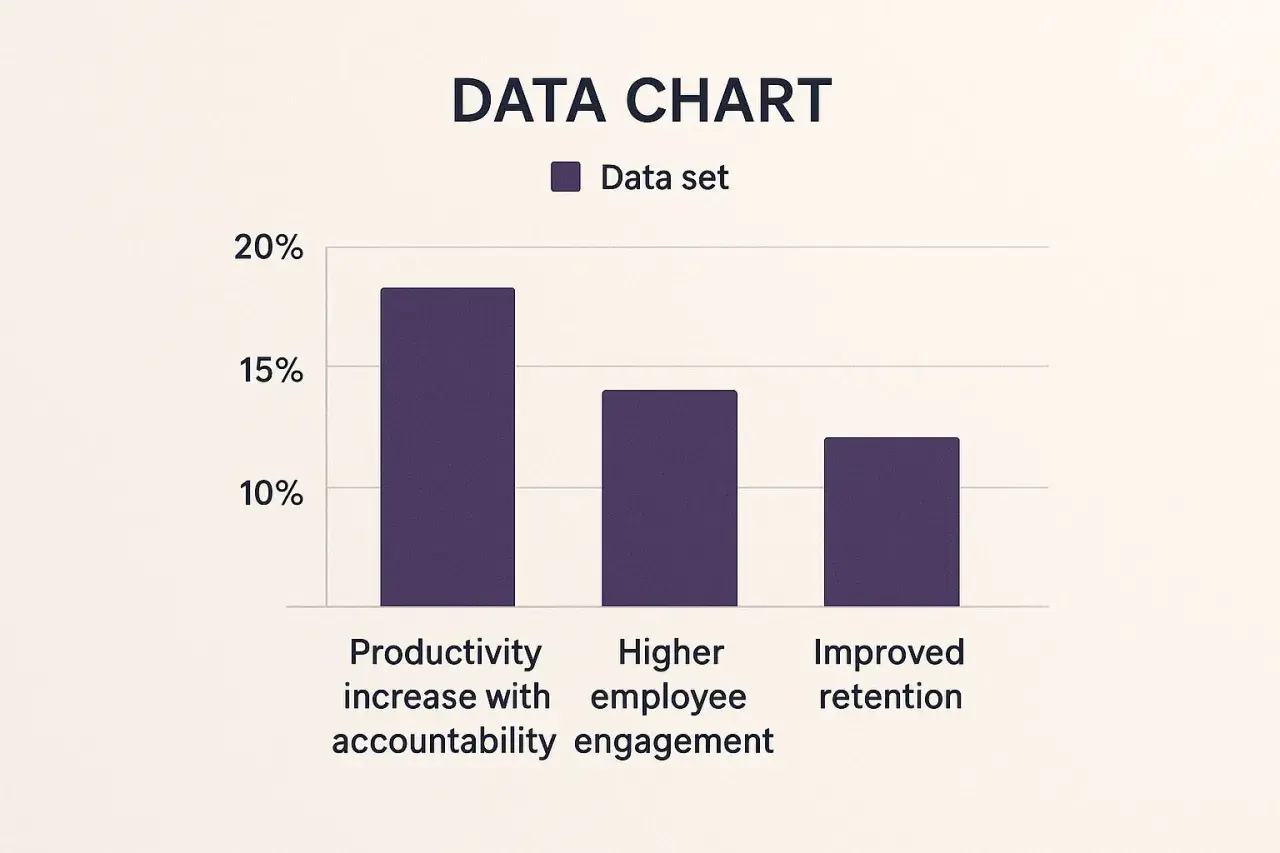
What strong leadership accountability looks like in practice
- Ownership is explicit, not implied. A good leader says who is responsible and what will happen next.
- Accountability shows up early, before a small problem becomes a visible failure.
- The goal is correction and learning, not self-protection or public performance.
- Teams trust leaders who keep promises, admit misses, and reset expectations clearly.
- The strongest examples are practical, calm, and specific rather than dramatic.
What accountability actually looks like when a leader does it well
Accountability starts with a simple standard: if I own the decision, I own the result. In practice, that means a leader does not hide behind the team when something goes wrong, and does not take all the credit when things go right. I find the most credible leaders talk in specific terms, naming what was promised, what happened, what changed, and what happens next.
That sounds basic, but it is where many managers slip. They say they value accountability, yet their updates stay vague, their priorities shift without explanation, and their follow-through depends on whether anyone is watching. In UK workplaces, that pattern erodes trust quickly because people notice inconsistency before they notice intent.Good accountability is less about sounding tough and more about making the work legible. Once that is in place, the examples become easy to recognise in ordinary meetings, project reviews, and one-to-ones. The next step is to see how those principles show up in real situations.
Real examples of accountable leadership in everyday work

Most examples are not dramatic. They are small, repeated choices that tell the team, "You can trust me to own this." Here are the ones I see most often.
| Situation | Accountable leader response | Why it matters |
|---|---|---|
| A project misses its deadline | The leader says, "I approved the timeline too quickly. We need a revised plan, and I will own the reset with the client." | This shows ownership without shifting the fault onto the team. |
| A budget forecast is wrong | The leader explains what assumption failed, updates the forecast, and adjusts future reporting checkpoints. | It turns a mistake into better decision-making instead of defensiveness. |
| A customer complaint escalates | The leader responds quickly, acknowledges the gap, and assigns one person to resolve it with a deadline. | The team sees that the issue is being handled, not managed through vague reassurance. |
| A hiring decision underperforms | The leader reviews the process, admits where the assessment was too optimistic, and improves the hiring criteria. | This keeps the team focused on learning, not embarrassment. |
| A public presentation contains an error | The leader corrects it directly, owns the miss, and follows up with the accurate information after the meeting. | That kind of calm correction is one of the clearest examples of mature leadership. |
The pattern is consistent: direct ownership, no excuses, and a visible next step. A leader does not need to sound harsh to be accountable; they need to be clear. That distinction becomes even more important when people confuse accountability with blame.
Why accountability is not the same as blame or control
People often avoid accountability because they hear blame. That is a category error. Accountability is about answerability and action; blame is about fault; control is about forcing compliance. I have found that teams relax as soon as leaders separate those ideas publicly.
| Concept | What it means | Healthy leadership version | What it looks like when mishandled |
|---|---|---|---|
| Accountability | Owning outcomes and follow-through | "I will take responsibility for the result and fix the process." | Silence, excuses, or vague ownership |
| Responsibility | Being assigned a task or role | "You own this deliverable, and I will support you." | Too many owners or no clear owner at all |
| Blame | Assigning fault after something goes wrong | "Let’s understand what failed and how to prevent it." | Public shaming or defensive politics |
| Control | Forcing behaviour through pressure | "Here are the standards, the deadline, and the check-in points." | Micromanagement and low trust |
When leaders confuse these ideas, they usually get the worst of all worlds: people hide problems, conversations become political, and mistakes surface too late to fix cleanly. Once that is clear, the conversation shifts from correction to coaching.
How to coach accountability without turning it into punishment
Coaching is where accountability becomes a system instead of a personality trait. The best managers do not wait for review season; they build short check-ins, written commitments, and visible measures into the week. That is usually what makes accountability feel fair rather than threatening.
- Make commitments specific, with one owner, one deadline, and a clear definition of done.
- Ask "What will be true by Friday?" instead of "Can you keep me updated?"
- Use an after-action review, a short structured debrief after a project or incident, to capture lessons while the details are fresh.
- Review misses in private first, then share the process lesson with the wider team if it helps others.
- Reward early escalation when risks appear, because silence is usually the real failure.
- Model the same standard for your own promises, so the team sees the rule applied evenly.
In coaching terms, the message should be simple: honesty is safer than delay, and clarity is more useful than optimism. If a leader can say, "Here is what happened, here is what changes, and here is what I own," the team gets a model they can copy. The next issue is what breaks when leaders get this wrong.
Common mistakes that make accountability feel fake
Accountability loses force fast when leaders use it only after something has gone wrong. The biggest mistakes are inconsistent standards, public shaming, taking credit in good times and assigning fault in bad ones, and using vague language like "someone needs to own this." That last phrase usually means the leader has not done the harder job of clarifying ownership.- Moving goalposts makes people stop trusting the standard.
- Selective enforcement tells the team that accountability depends on status, not behaviour.
- Over-apologising without action sounds polite but solves nothing.
- Micromanaging after the fact creates fear instead of learning.
- Using accountability only for failures turns it into punishment, not performance.
If you want the honest version, people rarely object to accountability itself. They object to unfairness. Once leaders are seen as consistent and calm, the same expectations that once felt heavy start to feel normal. From there, the practical question becomes how to make the behaviour repeatable.
Turn accountability into a repeatable habit your team can copy
When I coach managers, I ask them to make accountability visible in three places: planning, meetings, and follow-up. In planning, every action needs a single owner. In meetings, every decision needs a deadline and a next step. In follow-up, every miss needs a short review that ends with a revised commitment, not a long explanation.
- Start each week by naming the top three commitments that matter most.
- End each meeting with who owns what, by when, and how success will be checked.
- Use post-mortems to study the process, not to punish the person.
- Admit your own misses in front of the team when appropriate.
- Keep the standard steady, even when the project is urgent or the room is tense.
The strongest leaders do not just talk about ownership, they make it visible enough for others to follow. If you can point to a moment where you owned a miss, another where you corrected course early, and another where you held yourself to the same standard as the team, accountability stops feeling abstract. It becomes part of the culture, which is where it starts to matter most.
