
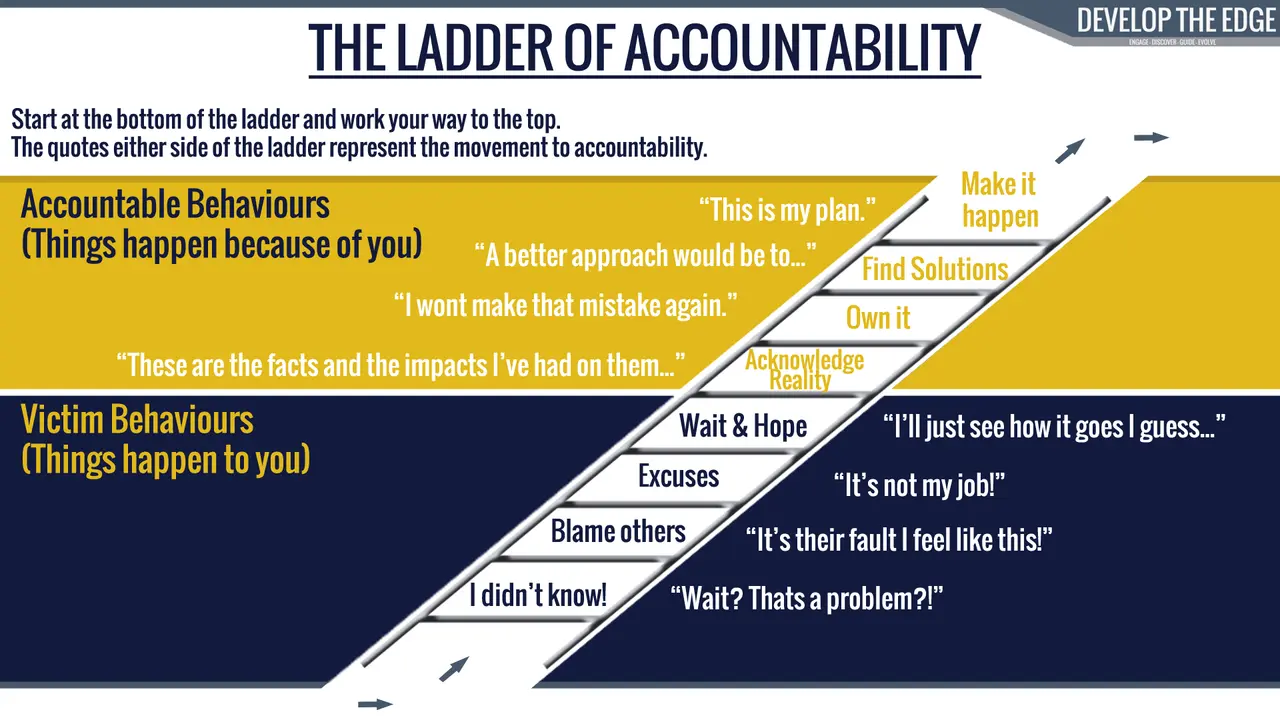
Leadership accountability is less about pressure and more about ownership: clear decisions, honest follow-through, and the discipline to own results when plans go off track. This article breaks down leadership accountability training, the skills it should build, and how to judge whether a programme will change behaviour in a real team rather than just sound good in a workshop. I’ll also show where training helps, where it does not, and what to look for in a UK setting.
What to know before you choose a programme
- Accountability is not blame. Good leadership creates clarity, ownership, and follow-through without turning every mistake into a public trial.
- Responsibility and accountability are not the same thing. Tasks can be delegated; the final outcome still sits with the leader.
- Strong programmes are practical. They teach feedback, delegation, decision-making, and how to handle missed commitments.
- Training works best with reinforcement. Coaching, manager check-ins, and 30/60/90-day measurement matter more than one polished session.
- Systems matter as much as skills. If roles, goals, and metrics are unclear, no course can fully fix the problem.
- For UK teams, the issue is urgent. Hybrid work, matrix structures, and stretched line managers make ownership harder to maintain.
What accountability means in leadership
In practice, accountability means a leader can explain what was decided, why it was decided, what happened next, and what they learned when the result fell short. It is not the same as being the person who does every task. A leader can delegate responsibility, but they cannot delegate away the obligation to own the outcome.
I find this distinction matters because many teams use the word accountability when they really mean control. That is a mistake. Control is about directing every step; accountability is about setting direction, defining standards, and being answerable when the result lands. The strongest leaders do not hide behind their team, and they also do not smother the team in micromanagement.
| Concept | What it means | What often goes wrong |
|---|---|---|
| Responsibility | A person or team is assigned a task, deliverable, or area of work. | It gets treated as if it includes final ownership of everything. |
| Accountability | A leader remains answerable for the result, even when work is delegated. | It gets confused with blame, punishment, or rigid oversight. |
| Ownership | People act as if the outcome matters to them personally and not just contractually. | It becomes a slogan instead of a habit supported by clear expectations. |
Once that difference is clear, the next question is why this topic matters so much now in real organisations rather than only in leadership theory.
Why this matters in UK organisations
The UK workplace has a few conditions that make accountability harder to sustain. Teams are often hybrid, decisions move across functions, and line managers are expected to coach, track performance, and keep morale intact at the same time. In that environment, vague ownership turns into delay very quickly.
Gallup recently reported that less than half of leaders rate themselves as outstanding or exceptional at creating accountability, which is a useful warning sign. My read is simple: the gap is rarely about talent alone. It is usually about unclear expectations, weak follow-up, and a culture that tolerates drift until the deadline is already gone.
CIPD has also been clear that accountability should work without blame. That framing matters. When leaders build accountability properly, they create trust, reduce guesswork, and make learning safer. When they do it badly, they create silence, defensiveness, and a habit of hiding problems until they become expensive.
That is why the best programmes are not motivational talks. They are behaviour change tools, and the details of what they teach matter.

What strong programmes teach
Good accountability training for leaders is practical, specific, and uncomfortable in the right way. It gives managers language they can use on Monday morning, not just concepts they can admire in the room.
| Skill | What it looks like in practice | Why it matters |
|---|---|---|
| Setting clear outcomes | The leader states what success looks like, by when, and how it will be judged. | People cannot be accountable for a target they cannot see. |
| Giving direct feedback | The leader names the gap, explains the impact, and agrees the next step. | Accountability fails when feedback is vague or delayed. |
| Delegating with boundaries | Authority, constraints, and check-in points are defined before the work starts. | It stops the common “I thought you meant something else” problem. |
| Handling missed commitments | The leader reviews what happened, owns their part, and resets the plan quickly. | Teams learn more from how misses are handled than from any slogan about standards. |
| Coaching for ownership | The leader asks better questions instead of immediately fixing the issue themselves. | People build judgement when they have to think, not just comply. |
I would describe the best programmes as “high clarity, low drama.” They help leaders become direct without becoming harsh. They also train the habits that are easy to underestimate: naming the real issue, following through on commitments, and checking progress before the work slips.
When a course includes role-play based on real cases from the business, the learning usually sticks better. When it stays abstract, accountability becomes an idea rather than a behaviour.
How delivery models compare
Not every format solves the same problem. A short workshop, a coaching series, and a blended programme each serve a different purpose, and a good buyer should know the difference.
| Format | Best for | Main strength | Main limitation |
|---|---|---|---|
| One-day workshop | Creating shared language and basic awareness | Fast, efficient, easy to roll out | Often fades without follow-up |
| Coaching | Senior leaders or managers with recurring behaviour issues | Personal, tailored, and honest | Harder to scale across large groups |
| Blended programme | Managers who need both theory and practice | Better transfer into day-to-day work | Requires more time and coordination |
| Team-based session | Groups that need to reset shared norms | Exposes dependency and handoff issues quickly | Can surface tension if trust is already low |
If the issue is awareness, a workshop may be enough. If the issue is repeated avoidance, weak feedback, or missed deadlines that keep coming back under different names, a workshop alone is usually too light. In that case, I would expect coaching, manager check-ins, and some form of progress review across 30, 60, and 90 days.
A useful rule of thumb: training introduces the habit, coaching corrects the habit, and follow-up makes the habit normal. Without the last part, most programmes become event memory rather than performance change.
Where training stops and management systems begin
This is the part many organisations skip. You can train leaders well and still fail if the wider system rewards confusion. Accountability breaks down when strategy is fuzzy, roles overlap, or every meeting ends with “let’s revisit this next week” and no one actually owns the next step.
That is why I always look at the operating system around the training. A simple RACI chart can help here: it shows who is Responsible, Accountable, Consulted, and Informed for a task. It sounds basic, but it prevents a huge amount of silent drift.
- Clear goals: People need outcomes that can be checked, not just intentions that sound good in a deck.
- Visible ownership: Every important action should have one clearly accountable person.
- Rhythm of review: Weekly or fortnightly check-ins work better than surprise interventions at the end of the quarter.
- Simple evidence: Dashboards, action logs, and deadline tracking make it harder for commitments to disappear.
- Aligned incentives: If the business rewards speed but punishes careful escalation, leaders will hide problems.
The hard truth is that training cannot repair a broken management system on its own. If leaders are asked to be accountable but have no authority, no time, or conflicting targets, the behaviour you want will not stick. The programme can still help, but only if the organisation is ready to support it.
That also explains why some accountability initiatives feel punitive even when the content is sound.
Common mistakes that make accountability feel punitive
When accountability is handled badly, leaders start hearing the word as a threat. That is usually a design problem, not a language problem.
- Using accountability as shorthand for blame. People stop surfacing issues if they expect punishment instead of problem-solving.
- Waiting too long to address missed commitments. The longer the silence, the more awkward the conversation becomes.
- Setting goals that are broad but not observable. “Improve ownership” is too vague unless it translates into visible behaviour.
- Exempting senior leaders from the same standards. Nothing damages trust faster than double standards.
- Confusing urgency with clarity. Speed without a clear owner usually creates churn, not progress.
I also see leaders make the mistake of correcting everything themselves. That feels efficient in the moment, but it quietly trains the team to wait for rescue. Real accountability is slower at first because it requires conversation, not just intervention. Over time, though, it saves time because people become more self-correcting.
Once you know what can go wrong, choosing the right programme becomes much easier.
How to choose a programme that changes behaviour
The best accountability programme is not the most polished one. It is the one that changes what managers do when a deadline slips, a priority changes, or a team member avoids ownership. I would ask a provider very direct questions before buying.
| What to ask | What a strong answer sounds like | Red flag |
|---|---|---|
| What will leaders do differently? | Two to four observable behaviours, stated in plain language | Broad claims like “improves leadership capability” with no behaviour change |
| How much practice is built in? | Role-play, live case work, reflection, and manager rehearsal | Mostly slides and discussion |
| What happens after the session? | 30/60/90-day follow-up, peer check-ins, or coaching | A single event with no reinforcement |
| How is impact measured? | Manager observation, action tracking, team pulse checks, and delivery metrics | Only participant satisfaction forms |
| Does it fit our context? | Examples that reflect your sector, your level of leadership, and your working model | Generic scenarios that could belong to any company anywhere |
If budget is tight, I would still prioritise follow-up over polish. A modest session with strong reinforcement usually beats an expensive event that nobody revisits. If the provider cannot explain how behaviour will be sustained after the room empties, you are probably buying awareness, not change.
The final step is turning the learning into a visible routine that people can actually feel in the team.
A 30-day reset that makes accountability visible
If I had to turn this into a simple rollout, I would start with a 30-day reset rather than trying to redesign the whole culture at once. Small, visible habits change the tone faster than big speeches.
- Pick three outcomes that really matter and assign one accountable owner to each.
- Write down what success looks like, including a date and a simple measure.
- Use the weekly meeting to review commitments, not just status updates.
- Ask each manager to name one miss, one lesson, and one corrective action.
- Track one follow-through metric, such as on-time handoffs, closed actions, or agreed decisions made on schedule.
That is the practical heart of accountability work: visible commitments, honest review, and leaders who stay calm enough to own the result without hiding behind excuses. When that becomes normal, the team gets faster, trust improves, and performance becomes easier to manage because people know exactly what they are answerable for.
