
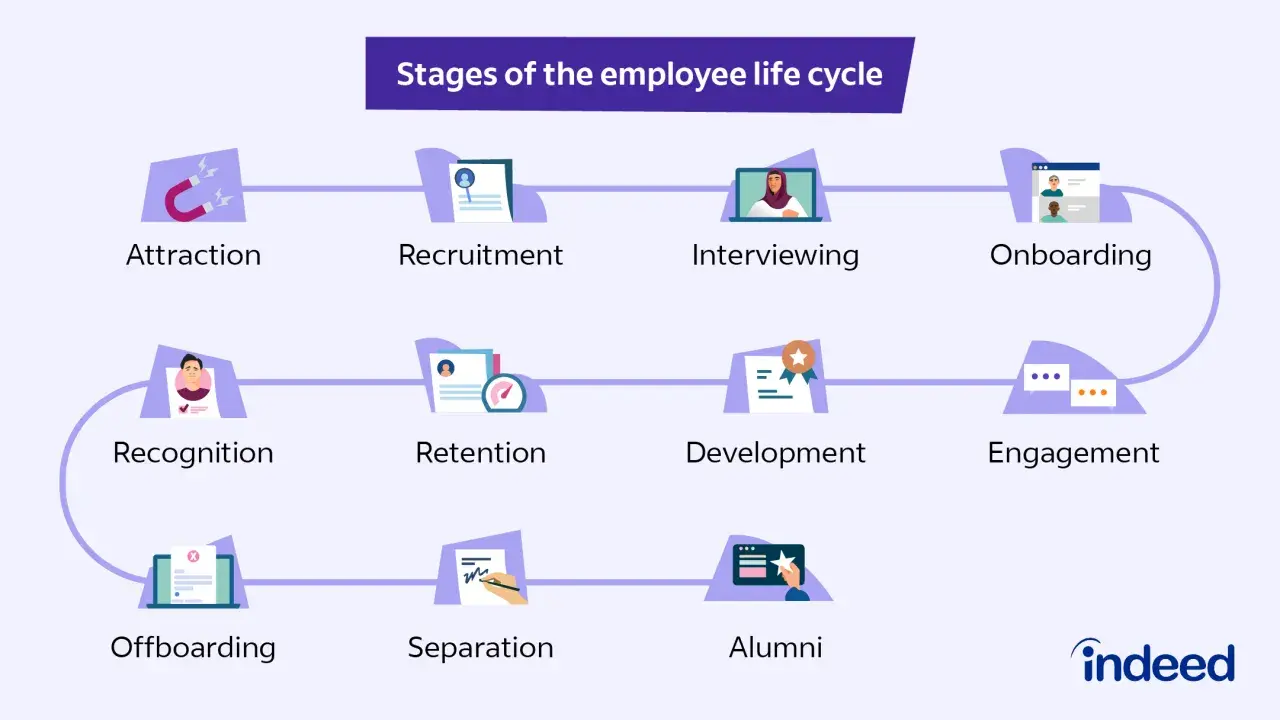
The employee life cycle is where culture stops being a slogan and starts being visible. From the first job ad to the last handover, people judge how an organisation communicates, manages pressure, develops talent, and handles change. In this article I break down each stage, show where workplace culture has the biggest effect, and explain what matters most for UK employers in 2026.
Culture shapes every stage of the employee journey
- Recruitment sets expectations before anyone signs a contract, so honesty matters as much as speed.
- Onboarding should combine role clarity, social belonging, and early manager support within the first 90 days.
- Development keeps people engaged when learning, promotion paths, and feedback are visible and fair.
- Retention depends on the everyday experience: workload, flexibility, recognition, and trust in managers.
- Offboarding protects knowledge, reputation, and future rehire potential when someone leaves.

What the journey looks like in practice
I find it useful to break the journey into linked decisions rather than one HR process. Each stage answers a different question, and the answer to one question shapes the next. Some models split recruitment into attraction and selection, but the culture issues are the same: people are deciding whether they trust you.
| Stage | What employees want | What culture reveals | What breaks if neglected |
|---|---|---|---|
| Recruitment | “Will this place treat me fairly?” | Response speed, interview quality, and whether the role matches reality | Weak offers, candidate drop-off, and mistrust before day one |
| Onboarding | “Can I do this well?” | Clarity, welcome, and manager availability | Confusion, slow confidence, and early regret |
| Development | “Can I grow here?” | Coaching, access to learning, and internal mobility | Stalled careers and quiet disengagement |
| Retention | “Is this worth staying for?” | Workload, flexibility, recognition, and fairness | Burnout, turnover, and cynical teams |
| Exit | “Can I leave well?” | Professionalism, handover discipline, and respect | Bad reputation and lost alumni goodwill |
CIPD’s people practice guidance treats recruitment, induction, development, retention, and exit as connected phases, and that is the right lens for culture work. Once you see the whole chain, recruitment becomes easier to judge because it is really the first live test of the culture you claim to have. That leads straight into the next stage.
Recruitment is the first culture test
Recruitment is where candidates learn whether your values are operational or decorative. They notice how quickly people reply, whether interviewers agree on criteria, and whether the role description matches the actual job. In a UK context, I would also make right-to-work checks and employment terms clear early, because ambiguity at this stage tends to become distrust later.
- Write for reality. Say what the role does on a busy week, not just on a good one.
- Use structured interviews. The same questions and scoring guide reduce bias and make hiring easier to defend.
- Show the working culture. Let candidates meet the manager, hear about team cadence, and understand how hybrid or shift patterns really work.
- Be honest about pressure. A realistic preview filters out the wrong people and reassures the right ones.
- Reply like a professional organisation. Silence is a culture signal too.
When recruitment is handled this way, the handover into onboarding feels like a continuation rather than a sales correction. That is important, because the first weeks on the job are where expectations either harden into trust or collapse into confusion.
Onboarding turns promises into habits
The first 90 days are where most new hires decide whether they are settled or still guessing. I like 30-60-90 day plans because they are simple enough to use and specific enough to measure. They also expose whether a manager is actually available, which is usually the difference between confidence and confusion.
- Before day one: equipment, logins, calendar invites, and a named contact.
- Week one: role expectations, team norms, and how success is measured.
- Weeks two to four: shadowing, small tasks, and feedback that corrects mistakes early.
- By day 90: a proper check-in on progress, learning, and what still feels unclear.
The cultural signal here is simple: people either feel guided or left to self-assemble. A welcoming onboarding experience does not remove accountability; it makes accountability possible because people know what good looks like. From there, the next question is whether the organisation gives them a reason to stay and improve.
Development and internal mobility keep people moving
Development is where a decent workplace becomes a serious one. Training courses matter, but they are only part of the picture. What keeps people engaged is a visible path to better work: coaching, stretch assignments, honest feedback, and promotion criteria that do not depend on who is most visible in the office.
- Skills growth: a clear map of which capabilities matter now and which will matter next.
- Manager coaching: regular conversations that focus on behaviour, not just output.
- Internal mobility: fair access to projects, secondments, and vacancies.
- Succession planning: a plan for roles that would hurt the business if they were suddenly empty.
- Learning time: protected time to apply new skills, not just watch another webinar.
I have seen more frustration caused by stalled careers than by a lack of perks. When people cannot see progression, they start looking elsewhere even if the team atmosphere is pleasant. The next question, then, is how to keep development from being cancelled out by the daily experience of work.
Retention is built in the everyday middle
Retention lives in the middle of the week, not in the annual offsite. People stay when workloads are manageable, managers are consistent, recognition is specific, and the organisation gives them enough control over how they work. That is also where flexible working becomes more than a policy sheet. Under current UK practice, employees can request flexible working from day one, and employers should handle the request reasonably within two months, so it is part of culture whether leaders treat it that way or not.
- Workload: if everything is urgent, nothing is sustainable.
- Recognition: specific feedback beats generic praise.
- Flexibility: hybrid, adjusted hours, compressed weeks, or job shares can all work if the role is designed for them.
- Belonging: people need to feel heard in meetings, not just included on paper.
- Fairness: opaque pay or promotion decisions create doubt fast.
Not every role can be fully flexible, and that is exactly why the conversation has to be honest. What matters is whether the limits are explained, consistent, and reviewed rather than used as a blanket no. Once that daily experience starts to fray, departures stop being surprising and become predictable.
Offboarding closes the loop and shows whether culture is real
Offboarding is where a culture becomes visible without the polish of onboarding or the momentum of day-to-day work. A strong exit process includes a proper handover, access removal, final payroll clarity, and an exit conversation that is calm enough to surface useful truth. The best ones also ask what the company should keep, change, or stop doing.
- Protect knowledge: document clients, priorities, and recurring issues before the person leaves.
- Protect relationships: keep the tone respectful even when the departure is disappointing.
- Protect learning: separate one-off complaints from repeat patterns.
- Protect future options: good leavers can become returning hires or external advocates.
Leavers talk to the people who remain, and that unofficial message often lasts longer than any employer brand campaign. If the exit feels fair, people remember that. If it feels sloppy or retaliatory, they remember that too. That is why the final audit matters.
A quick culture audit that exposes weak points before turnover does
If I were reviewing a team tomorrow, I would not start with a broad engagement survey. I would audit seven checkpoints: the job ad, the interview process, the first week, the first 90 days, the learning path, the manager rhythm, and the exit handover. Those are the places where the culture either holds together or starts to leak.
- Look for mismatches. If the job ad promises autonomy but the manager micromanages, fix the contradiction.
- Watch for delays. Slow replies in hiring and onboarding create avoidable anxiety.
- Check manager habits. Culture often changes when one manager changes, which means behaviour is the real system.
- Test progression. If good people stay flat for too long, retention will eventually suffer.
- Use exits as data. Ask why people leave, then compare the answer with what stayers are saying.
The practical goal is not perfection. It is alignment: the experience people have should match the promise the organisation makes. When those two line up, the whole journey feels coherent, and that is what turns workplace culture into something people can actually trust.
