
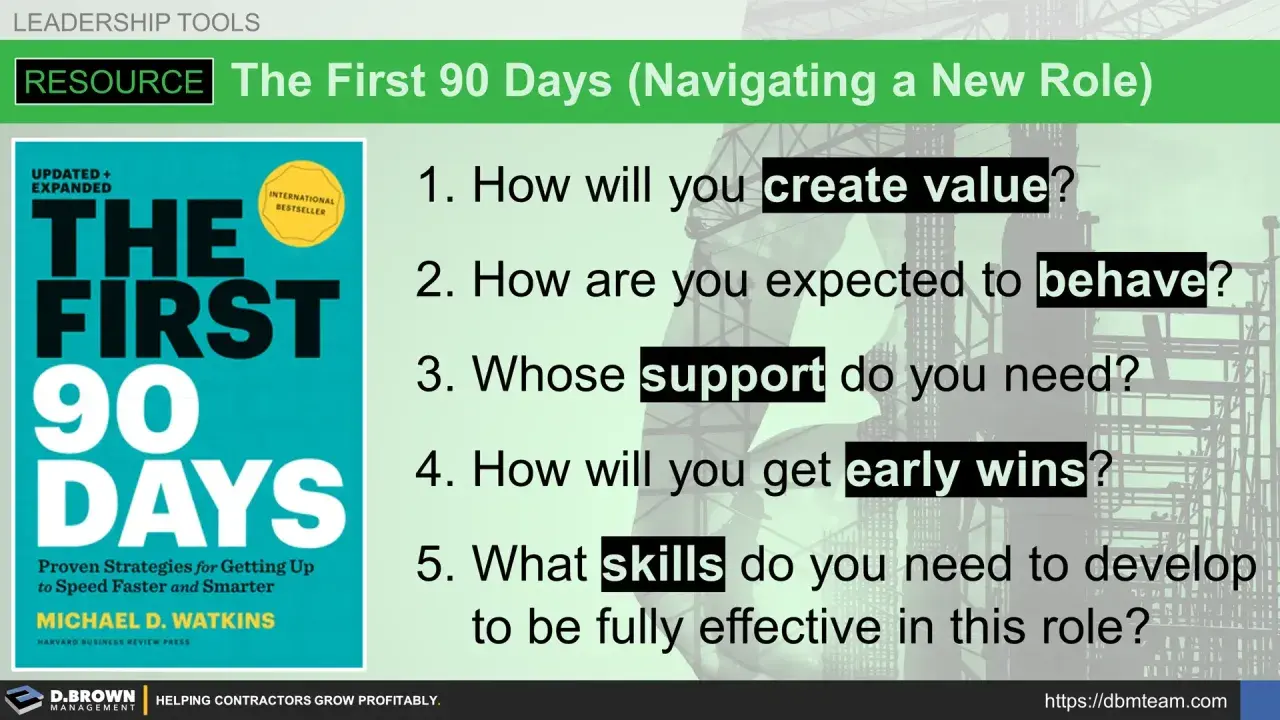
Stepping into management changes the job in ways that are easy to underestimate. The work is no longer only about your own output; it is about setting priorities, reading people, making calls with incomplete information, and earning trust while you are still learning the role. This article breaks down the most common new manager challenges, what usually causes them, and the practical moves that make the first months less chaotic.
The first pressure points are usually people, pace, and confidence
- The hardest shift is moving from doing the work yourself to getting results through other people.
- Former peers, awkward authority changes, and unclear expectations create most early friction.
- The first 90 days should focus on listening, learning, and building a simple management rhythm.
- Feedback, delegation, and conflict handling are the skills that change the experience fastest.
- In the UK, line managers are expected to handle day-to-day people issues, so support and training matter.
Why the first promotion changes the job so sharply
The biggest adjustment is psychological, not technical. You may still know the work better than anyone else in the room, but now success depends on whether other people can do it without you stepping in every ten minutes.
That shift catches many people off guard. A strong specialist is rewarded for speed and personal expertise; a manager is rewarded for judgment, prioritisation, and the ability to create clarity for others. If you keep acting like the best doer in the team, you usually become the bottleneck and the team stays dependent.
There is also a status change. Former peers may need time to accept your new authority, and if you were promoted internally, the social awkwardness can be worse than the operational work itself. I have seen newly promoted managers spend weeks trying to preserve every old relationship and, in doing so, avoid the decisions their new role actually requires.
That is why the transition feels less like a title change and more like a redesign of how your value is measured. Once that is clear, the practical pressure points become much easier to name and solve.
The main pressure points for a new manager
Most early problems are predictable. They are not signs that someone is unsuited to management; they are usually the result of being asked to do several hard things at once without enough structure.
| Challenge | What it looks like | What helps |
|---|---|---|
| Letting go of hands-on work | You keep checking every detail and become the bottleneck | Define the outcome, the quality bar, and the check-in points, then step back |
| Leading former peers | People want reassurance, but also clear decisions | Reset expectations one-to-one and make your boundaries explicit early |
| Giving feedback | You wait too long because the conversation feels uncomfortable | Use short, specific, behaviour-based feedback while the issue is still small |
| Delegating properly | You either micromanage or dump work without support | Delegate the result, the limits, and the level of autonomy, not just the task |
| Handling people processes | Absence, performance, and grievances feel more formal than expected | Learn your internal process and know when to involve HR or a senior manager |
| Staying calm under uncertainty | There is pressure to have answers before you have enough context | Make decisions in stages and revisit them as more information appears |
The pattern is simple: the work gets easier when the manager stops trying to personally solve everything. The first 90 days work best when you treat them as a learning phase, not a rescue mission.

What the first 90 days should actually look like
If I were coaching a new manager, I would divide the transition into three phases. The goal is not to prove yourself quickly. The goal is to understand the team, create stability, and make a few good decisions that build credibility.
Days 1 to 30 are for listening and mapping
Start by understanding what the team actually does, what good performance looks like, and where the pressure points are. Ask each direct report three simple questions: what is working, what is blocking progress, and what should I avoid changing too soon?
At the same time, identify the key stakeholders, recurring meetings, and metrics that matter. In a hybrid team, this is even more important because informal learning is weaker and people assume less is understood than it really is.
Days 31 to 60 are for setting rhythm
Once you understand the terrain, build a management cadence. Weekly one-to-ones, a clear team meeting, and a short priorities review are often enough to create order without making the role feel bureaucratic.
This is also the point where delegation should become more deliberate. If a task keeps coming back to you, either the ownership is unclear or the person has not been given enough context to succeed. Fix the handover instead of absorbing the work yourself.
Days 61 to 90 are for making adjustments
By this stage, you should know which problems are one-off and which are structural. Start addressing recurring friction, skill gaps, or performance issues earlier rather than later.
This is also the right time to ask for feedback on your own management style. A simple question such as, “What should I keep doing, and what should I change?” usually gets you more useful information than a formal review process.
Once the operating rhythm is clear, the harder people conversations become far less abstract, which is where the next part matters.
How to handle feedback, delegation, and conflict early
Among the new manager challenges that create the most stress, feedback, delegation, and conflict stand out because they are all people-facing and slightly uncomfortable. They also matter more than almost anything else in the first months, because they shape trust very quickly.
Give feedback while the issue is still small
I prefer the SBI model here - situation, behaviour, impact. It keeps the conversation concrete. You describe what happened, what you observed, and why it matters, instead of hinting or building a case in your head for three weeks.
For example: “In yesterday’s client call, you interrupted twice, and it made it harder for the team to finish the point.” That is direct, factual, and usable. You are not attacking the person; you are correcting a behaviour.
Delegate outcomes, not just tasks
Most poor delegation comes from being vague. If you hand over only the task, you end up either overchecking it or regretting the result. Good delegation includes four things:
- the outcome you want
- the deadline
- the limits or non-negotiables
- the point at which you want a check-in
That level of clarity does not remove ownership from the other person; it gives them room to own the work properly. It also stops the classic pattern where the manager stays mentally attached to everything.
Read Also: Manager-Employee Communication - Build Trust & Clarity
Deal with conflict before it hardens
Many new managers wait too long because they hope tension will fade on its own. In practice, it usually grows quietly. The better move is to separate facts from assumptions, speak to the specific behaviour, and keep the conversation grounded in work rather than personality.
If the issue touches absence, discipline, grievance, or equality concerns, do not improvise. Use the formal process, and involve HR early enough to avoid making the problem harder to unwind later.
Once those skills start to settle, the remaining question is whether the organisation has given the manager enough backing to use them well.
What support should look like in a UK organisation
In the UK, line managers are often expected to absorb people responsibilities quickly, so support cannot be an afterthought. CIPD's line-manager resources point to a basic truth I see constantly: the manager shapes the day-to-day experience of the team more than the policy handbook does.
Acas training for new managers covers the practical basics that usually surface first in real workplaces, including communication, absence, discipline, grievance, and equality law. That is the right starting point, because confidence grows faster when the manager knows where the boundaries are.
| Support | Why it matters | What it should include |
|---|---|---|
| Clear role boundaries | Prevents guesswork about what the manager can decide alone | A short list of decisions to own, escalate, or discuss |
| People-management induction | Reduces mistakes in the first difficult conversation | Communication, absence, discipline, grievance, and equality basics |
| A mentor or buddy | Gives the new manager a safe place to test judgment | Regular informal check-ins with someone experienced |
| Protected time | Stops management work being squeezed out by operational tasks | Space for one-to-ones, planning, and follow-up work every week |
| HR access that feels usable | Makes policy easier to apply under pressure | Named contacts, simple guides, and fast answers |
| Feedback on style | Prevents unhelpful habits from becoming normal | Periodic coaching or peer review of how the manager leads |
If the organisation gives a new manager only responsibility and no support, the role becomes unnecessarily expensive in time, stress, and turnover. With the right structure, the learning curve is still steep, but it is manageable.
That structure is what allows the last part to work: building habits that keep the role steady after the initial ramp-up.
The habits that keep the second month easier than the first
Once the first rush is over, I would focus on a few habits rather than trying to master everything at once. Small, repeatable routines matter more than occasional bursts of effort.
- Hold one-to-ones every week and ask at least one open question in each meeting.
- Review the team’s top three priorities every Monday before anything else fills the diary.
- Write down decisions, follow-ups, and owners so nothing depends on memory alone.
- Ask for feedback after difficult conversations instead of waiting for a formal review.
- Keep one learning slot each week for the people side of the role, not just the technical side.
That mix of discipline and humility is usually what separates managers who settle quickly from managers who stay reactive. If I had to reduce the whole transition to one rule, it would be this: protect clarity for the team, not your image as the expert. Once people know what matters, who decides, and how issues will be handled, the role stops feeling like improvisation and starts feeling manageable.
