
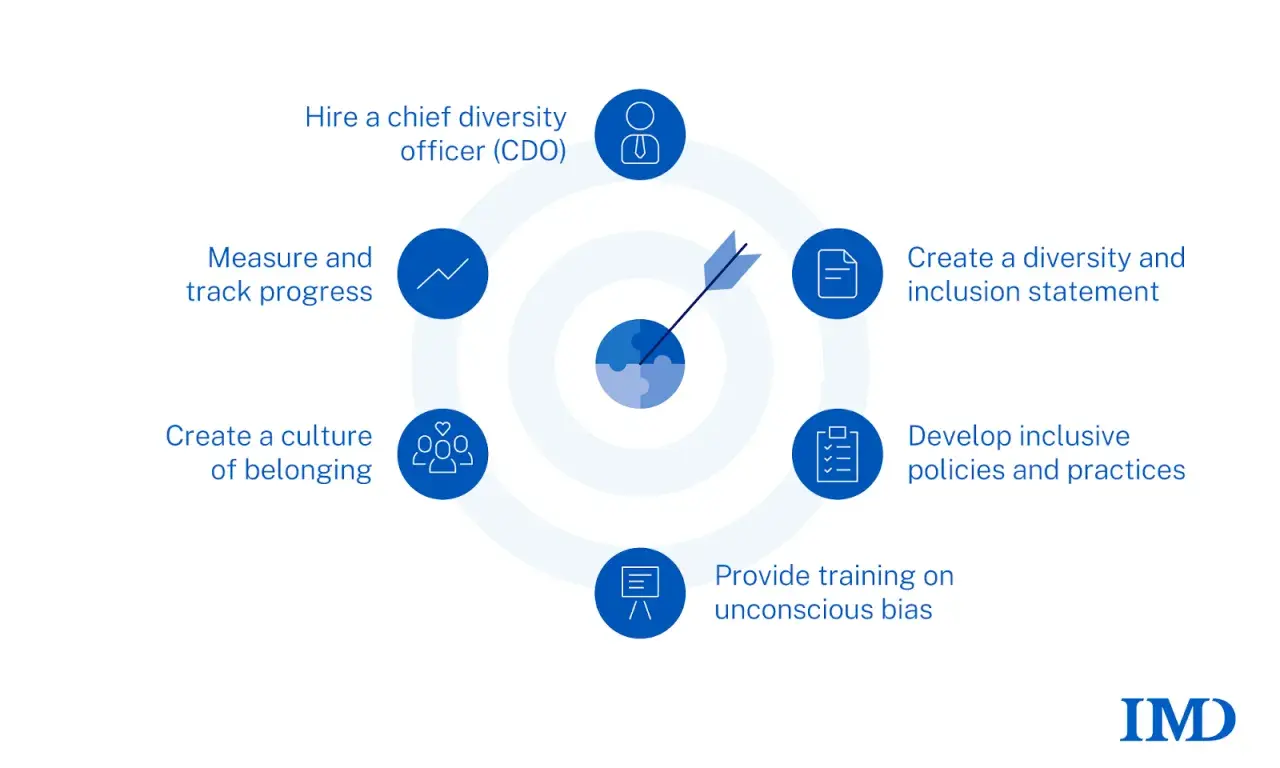
DEI issues in the workplace are rarely just about language or policy. They usually show up in hiring, pay, promotion, day-to-day behaviour, and whether people feel safe enough to speak honestly. In the UK, that makes the topic as much about workplace culture as it is about compliance, so the real question is how to build an environment where fairness is visible in practice, not just promised in a handbook.
The fastest way to read DEI problems is through behaviour, outcomes, and accountability
- Most inclusion problems show up first as small patterns, not one major incident.
- Bias in recruitment, promotions, and feedback is often the root cause, not the surface symptom.
- UK employers need to think about the Equality Act 2010, harassment risk, and reasonable adjustments at the same time.
- Culture improves when leaders change systems, not when they simply launch another campaign.
- Progress should be measured with data, not guesses, especially across hiring, pay, retention, and belonging.
What DEI issues in the workplace usually look like
I usually separate the topic into three layers: representation, fairness, and belonging. Representation is about who is in the room. Fairness is about whether opportunities, pay, and decisions are consistent. Belonging is about whether people can speak, contribute, and stay without feeling that they have to hide who they are.
| Issue | How it often shows up | Why it matters | First fix |
|---|---|---|---|
| Hiring bias | Jobs are filled through informal networks or vague ideas of "fit" | It narrows the talent pool and reproduces sameness | Use structured criteria, diverse panels, and objective scoring |
| Pay inequality | Different groups end up paid differently for similar work or get stuck in lower-paid patterns | It damages trust and makes retention harder | Review pay bands, starting salaries, and progression routes |
| Promotion gaps | Some people are always "ready later" while others move faster on less evidence | It sends a clear message about who belongs at senior level | Define promotion criteria and assess decisions against them |
| Microaggressions | Interruptions, jokes, assumptions, or comments that are brushed off as banter | They create fatigue, exclusion, and eventual silence | Set behaviour standards and address patterns early |
| Accessibility gaps | No adjustments, rigid hours, inaccessible software, or unworkable meeting habits | People are judged on obstacles the organisation created | Offer reasonable adjustments and review how work is designed |
| Weak reporting | People do not trust complaints processes or fear retaliation | Problems stay hidden until they become turnover or legal risk | Make reporting safe, visible, and separate from line-management pressure |
The important point is that these are not isolated HR problems. They shape how people behave, who stays, and who advances. Once you start reading DEI through culture and outcomes, the next question is why the same patterns keep surviving in organisations that claim to value inclusion.
Why these problems persist in UK organisations
The legal baseline in Britain is clear: the Equality Act 2010 protects nine characteristics, including age, disability, race, sex, religion or belief, and sexual orientation. That matters, but law alone does not change habits. People still make subjective decisions every day, and that is where culture either supports fairness or quietly erodes it.
The issue is usually not one obvious act of discrimination. It is the accumulation of small choices:
- Job adverts written for a narrow idea of the "ideal candidate".
- Promotion decisions based on confidence and visibility instead of evidence.
- Managers who apply rules differently depending on who is asking.
- Work patterns that reward people who can always stay late or attend social events.
- Policies that exist, but are not explained, monitored, or enforced.
As of 2026, the pressure is not just moral. It is operational. ONS reported a gender pay gap of 12.8% among all employees in April 2025, and disabled adults were still much less likely to be in employment than non-disabled adults. Those figures do not describe every company, but they do show why it is risky to assume the system is already fair. If the inputs are biased, the culture will usually be biased too, which is why the everyday signals matter so much.

The everyday signals people notice first
When culture is weak, people do not always complain about "DEI". They complain about being interrupted, overlooked, or made to feel difficult for needing normal support. The signals are often small; the pattern is what hurts.
| Signal | What it usually means | Better response |
|---|---|---|
| Everyone important makes decisions in after-hours chats | Access depends on social availability, not work contribution | Move key decisions into documented channels and meeting notes |
| People joke about accents, names, hair, religion, or age | Banter is being used to excuse exclusion | Set a clear behaviour standard and intervene consistently |
| Flexible workers are treated as less committed | Visibility is being confused with value | Measure output and outcomes, not presenteeism |
| Someone asks for an adjustment and has to justify it repeatedly | The organisation is making support feel like a favour | Normalise reasonable adjustments and speed up approvals |
| Only a few voices dominate meetings | People with status, confidence, or familiarity are driving the room | Use facilitation rules, turn-taking, and pre-read materials |
| Dress codes are enforced unevenly | Rules are being shaped by bias rather than business need | Check whether the code is actually necessary and non-discriminatory |
I pay special attention to two patterns: the people who are always asked to adapt, and the people who never have to. If a team is asking carers, disabled staff, or minority colleagues to do all the adjusting, the culture is already teaching them they belong less. The next step is leadership, because the fix only sticks when managers change the rules of the game.
What effective leaders do differently
Strong inclusion work is not a slogan. It is a set of decisions about policy, behaviour, and accountability. Acas recommends having a workplace policy and action plan that explains expected behaviour, who owns delivery, and how progress will be monitored. That is the right starting point in most UK organisations, because it turns values into something people can actually use.- Set standards in plain English. People should know what respectful behaviour looks like, what is not acceptable, and how complaints will be handled.
- Use objective criteria for hiring and promotion. If decisions rely on instinct, similarity, or "culture fit", bias has room to grow.
- Train managers to spot exclusion early. A manager does not need to wait for a formal complaint to notice who is being interrupted, ignored, or excluded.
- Make reasonable adjustments routine. Reasonable adjustments are practical changes that remove disadvantage for a disabled worker or candidate, and they should not be treated like special treatment.
- Create reporting routes people trust. Not everyone will feel safe going to their direct manager, so there should be more than one route to raise an issue.
- Treat harassment as a culture issue, not a one-off incident. UK employers now have a positive duty to take reasonable steps to prevent sexual harassment, including risk assessment, training, and action on behaviour from customers or clients.
How to measure whether the culture is improving
If you only measure training attendance, you are measuring activity, not impact. I prefer a small dashboard that combines hard data with employee feedback, because inclusion becomes visible in outcomes long before it becomes visible in branding. Psychological safety, for example, means people can raise concerns without fear of punishment, and that is something you can test rather than assume.| Metric | What healthy looks like | Warning sign |
|---|---|---|
| Recruitment funnel | Different groups move through stages at broadly similar rates | One group drops away at application, shortlist, or interview |
| Promotion data | Progression is linked to performance and readiness, not proximity | Senior roles remain dominated by the same profile year after year |
| Pay data | Differences are explained by role, level, and tenure, not hidden bias | Unexplained gaps persist or widen |
| Retention | People across groups stay at similar rates when role type is similar | One group leaves faster, especially after promotion or manager changes |
| Employee survey results | Belonging, fairness, and speaking up improve over time | People still say they have to mask, stay quiet, or work around the system |
| Adjustment turnaround | Requests are handled quickly and consistently | Approvals depend on which manager someone has |
Use anonymous surveys and equality monitoring together if you can. The value is not perfection; it is comparison over time. If belonging scores improve but turnover in one group stays high, the culture is not fixed yet. That leads to the practical part: what I would tackle first in a UK team.
What I would tackle first in a UK team
If I had to prioritise, I would work in this order.
- Fix the basics of behaviour and reporting. Write down what unacceptable conduct looks like, explain how to report it, and make sure people know the process will be taken seriously.
- Audit the highest-stakes decisions. Start with recruitment, promotion, pay, and performance review, because those are the places where bias does the most damage.
- Make flexibility and adjustments normal. If the organisation expects people to perform at their best, it has to remove unnecessary barriers for carers, disabled staff, and people with different working patterns.
- Train managers on what to notice. Good managers do not just "treat everyone the same". They notice when people are being excluded by process, timing, tone, or access.
- Review the data regularly. A quarterly check is usually enough to spot patterns without turning the process into bureaucracy.
