
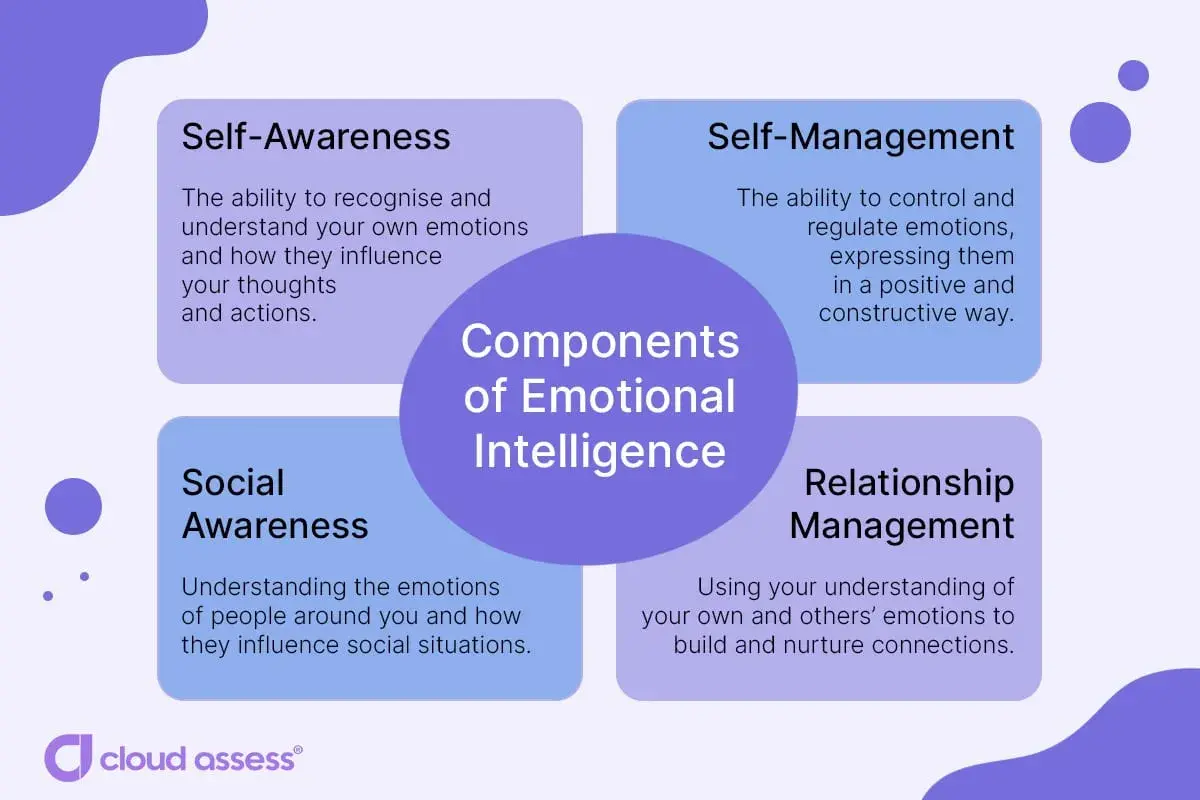
Well-designed emotional intelligence training for managers is less about making leaders "nicer" and more about helping them stay clear, calm, and effective when pressure rises. It matters because the hardest parts of management are rarely technical; they are conversational, relational, and emotional. In this article I focus on what the training should change, what a useful programme looks like in the UK, how to compare options, and how to tell whether the investment actually shifts behaviour.
What managers should take away first
- Good training changes behaviour, not just awareness. Managers should leave with habits they can use in feedback, conflict, and one-to-ones.
- The strongest programmes are practice-heavy. Role play, reflection, and coaching matter more than slide decks.
- The core skills are predictable. Self-awareness, self-regulation, empathy, social awareness, and feedback discipline do most of the work.
- Format matters. Short workshops can introduce the language, but follow-up is what makes the learning stick.
- Measure outcomes at team level. Look at conflict escalation, engagement, retention risk, and the quality of manager conversations.
- In the UK, context matters. Hybrid teams, wellbeing expectations, and more explicit people-management standards raise the bar.
What emotionally intelligent managers actually do differently
I usually define emotional intelligence in management by behaviour, not theory. An emotionally intelligent manager notices tension early, regulates their own response, listens long enough to understand the real issue, and then responds in a way that is firm without being careless. That sounds simple until you watch how often pressure, impatience, or blind spots derail it.
In practice, these managers tend to do four things consistently: they give clearer feedback, they handle disagreement without turning it into personal friction, they read the mood of the room before it becomes a problem, and they make decisions with less emotional spillover. That is why the topic keeps showing up in leadership development. A CIPD evidence review on people managers found that leadership training can improve communication skills, effective leadership behaviour, goal-setting, and motivation. Those are not abstract benefits; they are the daily mechanics of good management.
One more point matters here. Emotional intelligence is not a soft alternative to performance. It is often what allows performance to happen without burning people out or creating avoidable conflict. In a UK workplace, where hybrid communication, wellbeing conversations, and fair management practices all matter, that distinction is important. The next question is what the training actually has to teach if it is going to change behaviour.
The skills a useful programme must build
Not every course that talks about emotional intelligence teaches the same things. A useful programme should build a small set of repeatable skills and show managers how to use them under pressure. If the course cannot connect the skill to a real work situation, it is probably too theoretical.
Self-awareness
Self-awareness is the ability to notice what you are feeling, what triggers you, and how your tone changes when you are tired, defensive, or rushed. This is the foundation because a manager who cannot read their own state usually misreads other people too. Good training helps managers spot patterns such as overreacting in performance reviews, shutting down under challenge, or avoiding uncomfortable conversations.
Self-regulation
Self-regulation is not suppression. It is the ability to pause, slow down, and choose the right response instead of the fastest one. In management, that means not sending the sharp email, not interrupting in a tense meeting, and not using authority when clarity would work better. I look for training that gives managers language and tactics for that pause, because “stay calm” is not a strategy.
Empathy
Empathy in leadership means understanding another person’s perspective well enough to respond accurately, not just sympathetically. It helps managers handle stress, absence, workload concerns, and performance issues without becoming either cold or permissive. The best training makes empathy concrete: listen for the issue behind the complaint, ask one more question before judging, and check whether the problem is capability, capacity, or something personal.
Social awareness and influence
This is the ability to read a team dynamic, not just one individual. It includes noticing who is silent, who dominates, where trust is low, and when a team is starting to split into camps. A manager with strong social awareness can shape a discussion before it becomes unproductive. That is especially useful in hybrid teams, where body language is harder to read and misunderstandings linger longer.
Read Also: Build Resilient Teams - Practical UK Management Guide
Feedback and conflict handling
This is where emotional intelligence becomes visible. Managers need to give direct feedback without humiliation, receive challenge without defensiveness, and address conflict early rather than waiting for it to harden. The better programmes rehearse these moments repeatedly. A single lecture on “difficult conversations” is not enough.
When I see these five areas covered well, I know the training has a realistic chance of improving management behaviour. The format then determines whether that learning survives past the course room.
What a strong training format looks like
The best training is not built around passive listening. It is built around repeated practice, feedback, and application to real workplace situations. That is one reason why simple awareness courses often disappoint: managers understand the ideas, but their habits do not change.
| Format | Best for | Typical length | Strength | Limitation |
|---|---|---|---|---|
| Bite-sized module | Busy line managers who need a starting point | 90 minutes to 2 hours | Easy to fit into a work week and useful for awareness | Learning fades quickly unless there is follow-up |
| Half-day or full-day workshop | Teams that need a shared language and immediate tools | 4 to 8 hours | Good for role play, discussion, and practical exercises | Too little time for deep habit change |
| Cohort programme | New or promoted managers | 5 to 9 days spread over several weeks | Allows practice, reflection, and accountability between sessions | Requires real commitment from the organisation |
| Coaching plus training | Senior managers or managers with visible people challenges | 4 to 8 coaching sessions over 2 to 4 months | Targets individual habits and difficult patterns directly | Costs more and depends on manager buy-in |
There is a reason practical programmes outperform purely theoretical ones: behaviour changes through repetition, not admiration. The strongest sessions usually include case scenarios from the manager’s own environment, direct feedback from peers or facilitators, and a follow-up plan. If I had to pick one quality that predicts value, it would be this: does the programme make managers rehearse the exact conversations they avoid at work?
That standard becomes even more important when you are choosing between providers, which is where a lot of organisations make expensive mistakes.
How to choose the right programme in the UK
In the UK, I would judge a programme on fit before I judge it on branding. A good-looking brochure means very little if the content does not match the actual management problems in front of you. The questions below are the ones I would ask before buying.
- Who is it for? First-time managers need different material from experienced heads of department. A mixed audience can work, but only if the facilitator handles it well.
- Does it match the real context? Hybrid management, difficult feedback, return-to-office friction, wellbeing issues, and cross-functional work need to appear in the case studies.
- Is there practice, not just explanation? I would want role play, reflection, peer discussion, and structured follow-up.
- Who is delivering it? A facilitator who has actually managed people usually brings better judgement than someone who only knows the concepts.
- Is there reinforcement after the course? Even two short follow-up sessions can make a big difference.
- Can the organisation support the change? If line managers return to a culture that rewards bluntness, speed, or avoidance, the training will be partly wasted.
There is also a strategic point here. In UK organisations, leadership development increasingly sits alongside inclusion, wellbeing, and performance management rather than outside them. That means the best programme is not the one with the most inspirational language; it is the one that helps managers behave better in real conversations. Once you know what to buy, the next problem is spotting what will undermine it.
The mistakes that quietly ruin the impact
Most failures are not dramatic. They are subtle, and that is why they repeat across organisations. The training may be well-intentioned, but the design or the follow-through is wrong.
- Making it too conceptual. If managers spend most of the time discussing definitions, they leave with vocabulary, not skill.
- Treating empathy as softness. Good empathy supports honesty; it does not replace accountability.
- Using one-off workshops as a complete solution. A single session can raise awareness, but habits need reinforcement.
- Ignoring the manager’s own pressure. Stressed managers do not become more emotionally intelligent by being told to try harder.
- Failing to connect training to current problems. If the examples do not mirror the real workplace, the learning stays abstract.
- Never measuring change. Without evidence, the programme becomes a feel-good expense instead of a management tool.
I would also flag a common misconception: emotional intelligence does not mean being endlessly accommodating. The best managers are often quite direct; the difference is that they are direct with control, timing, and respect. That distinction matters when you start measuring whether the programme actually delivered.
How I would measure whether it worked
I would not rely on course feedback forms alone. Satisfaction tells you whether people enjoyed the session, not whether they manage better on Monday morning. To assess impact properly, I would look at a mix of behavioural and team indicators over 30, 60, and 90 days.
| Timeframe | What to track | What it tells you |
|---|---|---|
| 30 days | Manager confidence in feedback, number of difficult conversations started on time, self-reported use of new techniques | Whether the manager is applying the basics |
| 60 days | Team pulse scores, meeting quality, evidence of calmer conflict handling, fewer escalations | Whether behaviour is changing in real interactions |
| 90 days | Retention risk, absenteeism patterns, unresolved people issues, 360-style feedback from direct reports | Whether the change is visible to the team and the organisation |
One useful rule: ask for one behavioural commitment before the course ends and review it twice after the course. For example, a manager might commit to pausing for 10 seconds before responding in conflict, or to using one structured listening question in every one-to-one. Small commitments are easier to measure than vague promises and far more likely to survive pressure.
That leaves the final part, which is the part many organisations skip: what happens after the course is over.
What to do in the first 90 days after training
If I were putting this into practice, I would turn the course into a 90-day habit plan. The aim is not to keep managers in training mode forever; the aim is to move the learning into normal management behaviour.
- Week 1 to 2: Choose one recurring situation to improve, such as feedback, workload tension, or meetings that drift into conflict.
- Week 3 to 4: Use one new technique consistently, such as reflective listening, a pause before responding, or a cleaner feedback structure.
- Month 2: Ask for targeted feedback from one peer, one direct report, or one senior leader on how the behaviour is landing.
- Month 3: Review the pattern: what improved, what still triggers you, and where the team responds differently now.
The managers who benefit most from this kind of development are not the ones who already think they are strong communicators. They are the ones willing to notice where their habits break down under stress and then practise something better until it becomes normal. That is the real value of emotionally intelligent leadership development: it gives managers a more reliable way to work with people when the work is at its most difficult.
