
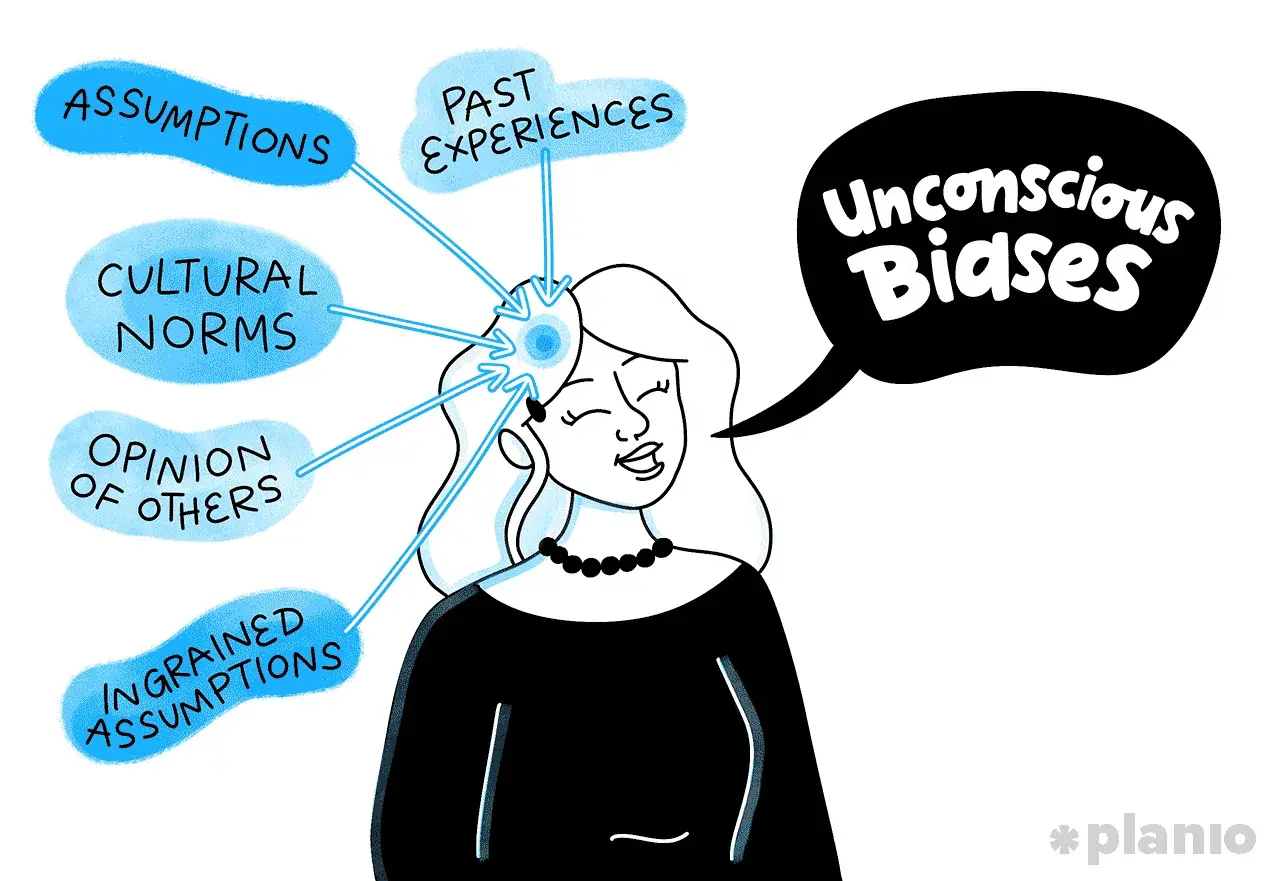
What matters most before you invest in bias training
- Awareness is useful, but it is only the first step. Training that stops at insight rarely changes workplace outcomes.
- Repeated, interactive, job-specific sessions perform better than one-off slide decks or compliance videos.
- Behaviour change depends on systems. Recruitment, review, and promotion processes must support the lesson.
- Measure decisions, not attendance. The useful metrics are shortlist quality, rating patterns, and follow-through.
- UK employers should pair training with practical controls such as structured interviews, blind sifting, and written decision records.
What effective bias training is really supposed to change
When I evaluate a bias programme, I do not start with whether people liked it. I start with three questions: did it raise awareness, did it change behaviour, and did the organisation make it easier to keep behaving well? Those are different levels, and too many programmes only touch the first one.
Awareness is the simplest win. People learn that snap judgments happen, that assumptions can distort decisions, and that “gut feel” is not always neutral. Behaviour is harder. That means an interviewer uses a rubric, a manager pauses before rewarding a familiar style over a stronger result, or a team chair interrupts bias in a meeting instead of letting it set the tone. Culture is the hardest layer of all, because it is the point where fair habits stop being exceptional and become standard practice.
| Level | What it looks like in practice | Why it matters |
|---|---|---|
| Awareness | Employees can spot common bias patterns in hiring, feedback, and everyday interaction. | It creates the language for change, but does not guarantee change. |
| Behaviour | Managers use consistent criteria, challenge assumptions, and document reasons for decisions. | This is where training starts to affect real outcomes. |
| Culture | Fair process is normal, leaders model it, and teams expect it. | This is what keeps progress from fading after the workshop ends. |
That distinction matters because many organisations accidentally buy awareness when they think they are buying transformation. The next step is to look at what the evidence says about how far training can actually go.
What the evidence actually shows
The short version is blunt: bias training can help, but it is not a magic lever. The UK’s Equality and Human Rights Commission review found that unconscious bias training can raise awareness and may reduce implicit bias in the short term, but it does not reliably produce sustained behaviour change on its own. A recent meta-analysis found a small but statistically significant effect on workplace behaviour, which tells me something important: training can help, but only if the design and the surrounding environment are doing real work too.
That is the gap most readers are trying to understand. They are not asking whether bias exists. They are asking whether the training moves anything that matters inside a workplace. Here is the cleanest way I would summarise the evidence.
| Outcome | What the evidence generally supports | Practical reading |
|---|---|---|
| Awareness of bias | Fairly strong support, especially when training is interactive and concrete. | This is the most reliable outcome. |
| Implicit bias measures | Short-term improvements are possible, but they are not the same as lasting change. | Useful, but not enough to judge success. |
| Explicit attitudes | Mixed results, often small. | Do not expect a lecture to rewire deeply held beliefs. |
| Workplace behaviour | Small positive effects are possible when training is designed for transfer. | This is where design quality matters most. |
| Organisational outcomes | Usually depend on process changes, leadership follow-through, and repeated reinforcement. | Training alone is rarely enough. |
In other words, I would not dismiss training, but I would stop pretending that a single session fixes a system. The evidence points in a more modest direction: training can create the conditions for better decisions, then the organisation has to make those decisions easier to repeat.
That is why the design of the programme matters more than the label on the slide deck.

The training features that improve the odds
If I had to bet on one model, I would choose training that combines awareness with practice and follow-up. That is much closer to a habit-breaking approach than a one-hour briefing. The strongest versions do not just explain bias; they give people something to do when bias shows up.
- Repeat the learning. One-off sessions fade fast. Spaced sessions, refresher prompts, and team discussions keep the content usable.
- Make it job-specific. A good recruitment workshop should look different from a performance-review workshop. Generic examples are easy to forget.
- Use behaviour practice. Role-play interview questions, calibration discussions, feedback conversations, and meeting interventions so people can rehearse the right move.
- Include implementation intentions. These are simple if-then plans, such as “If I notice I am favouring a familiar candidate, then I will re-check the scoring rubric before deciding.”
- Use counter-stereotypic exemplars. That means showing examples that contradict lazy assumptions, such as capable leaders, engineers, carers, or analysts who do not fit the stereotype people expect.
- Bring in perspective-taking and contact. When people hear real experiences from colleagues and work through concrete scenarios, the issue stops being abstract.
- Keep managers in the room. Bias training matters more when the people who make decisions are present, involved, and expected to act afterwards.
I also think the best programmes are careful about what they do not promise. They do not tell participants that bias will disappear. They teach people to slow down, check assumptions, and use better decision rules. That sounds less glamorous, but it is far more useful in a live workplace.
One reason this approach is stronger is that it moves from “knowing about bias” to “interrupting bias in the moment”. That is a different skill, and it is much closer to actual behaviour change.
There is a reason some researchers and practitioners keep returning to the same habit-breaking logic: it pairs insight with action. When done well, it gives employees a repeatable routine instead of a moral slogan.
Once the content is stronger, the next question is whether the organisation around it helps people use the lesson.
Where workplace culture makes or breaks the result
Bias training does not happen in a vacuum. If the culture rewards speed over scrutiny, familiarity over evidence, or consensus over challenge, people will revert to the old habit even after a strong session. Culture either reinforces the new behaviour or quietly cancels it out.
That is why I prefer training that is linked to real process changes. UK guidance from Acas points in this direction too: practical safeguards such as blind sifting, using more than one person in hiring decisions, allowing time for decisions, and keeping written records all reduce the space where bias can hide. Training makes those controls easier to use; the controls make the training stick.
| Workplace area | What training should reinforce | What good process looks like |
|---|---|---|
| Recruitment | Focus on evidence, not instinct. | Structured interviews, blind sifting where practical, and multiple reviewers. |
| Performance reviews | Separate observable performance from personality comfort. | Clear criteria, calibration, and written examples for ratings. |
| Promotion | Make readiness visible instead of assumed. | Transparent competencies and documented promotion standards. |
| Meetings | Challenge interruptions, dominance, and selective listening. | Rotating facilitation, turn-taking rules, and explicit follow-up. |
| Leadership behaviour | Model correction without defensiveness. | Managers name bias, correct it early, and track decisions over time. |
In practice, this is where many organisations either win or lose. If training is isolated from hiring, promotion, and feedback systems, people learn the vocabulary of inclusion while the old culture keeps running underneath. If the systems change too, the training becomes useful rather than decorative.
That also explains why some programmes look successful on paper but fail in reality.
The mistakes that make a programme look busy but change little
I see the same errors again and again, and most of them are fixable. The problem is not usually that the organisation cared too little. It is that the intervention was designed to be easy to deliver, not hard to ignore.
| Mistake | Why it fails | Better alternative |
|---|---|---|
| One-off mandatory briefing | People treat it like a compliance chore and forget it quickly. | Use a series of sessions with follow-up actions. |
| Generic content | Employees cannot connect it to the decisions they actually make. | Use examples from hiring, management, meetings, and promotion. |
| Measuring satisfaction only | Liking the course is not the same as changing behaviour. | Track decisions, process adherence, and outcome data. |
| Shame-based delivery | People become defensive or disengaged. | Use specific practice and clear decision rules. |
| Training without process change | The environment keeps rewarding the old habit. | Update the systems that shape decisions. |
| Assuming “awareness” equals progress | People may understand bias and still behave the same way. | Plan for transfer into daily work. |
The biggest failure mode is subtle: the programme creates the feeling that something substantial has already been done. Once that happens, urgency drops. People are less likely to challenge the next bad decision because they think the organisation has already “dealt with bias”.
That is the exact opposite of what good training should do.
How to measure whether it is working in a UK organisation
If I were reviewing a programme for a UK employer, I would not begin with headcount changes. I would begin with process measures, then move outward to behaviour and outcomes. That gives a more honest picture of whether the intervention is actually influencing work.
Start by measuring a baseline, then compare again at 30, 90, and 180 days. You do not need perfect causality to learn something useful, but you do need more than a post-course smile sheet.
| Timeframe | What to measure | What progress looks like |
|---|---|---|
| 30 days | Completion, scenario understanding, confidence in using the decision tools. | People can name the bias pattern and explain the countermeasure. |
| 90 days | Use of structured rubrics, written justifications, and manager follow-up. | Decision quality improves inside real workflows. |
| 180 days | Shortlist pass-through rates, review patterns, promotion slates, and complaint themes. | Process metrics begin to move in a fairer direction. |
| 12 months | Retention, internal mobility, inclusion survey scores, and representation trends. | Culture change starts to show up in outcomes. |
One practical rule helps here: if the training improves awareness but leaves process data unchanged, it has not fully worked. That does not mean it failed completely. It means it did the first job and missed the second.
I also recommend mixing numbers with narrative. Ask employees where bias shows up most often, which team behaviours changed, and which decisions still feel opaque. The stories will tell you where the metrics are hiding their weak spots.
What I would keep, cut, and combine in a real programme
If I were shaping a bias initiative for a UK workplace in 2026, I would keep the learning, cut the theatre, and combine the training with process redesign. That is the cleanest way to turn a soft-sounding topic into something operational.
- Keep awareness, case-based discussion, and behaviour practice.
- Cut one-off generic lectures, moralising language, and attendance-only metrics.
- Combine training with structured recruitment, better performance reviews, and manager accountability.
- Repeat the intervention over time so the lesson becomes a habit, not a memory.
- Review the results in the actual decision data, not just in feedback forms.
If I had to reduce the whole subject to one line, it would be this: the best bias training is really a behaviour system with a learning component. It helps people see the bias, practise the fix, and work inside rules that make the fix easier to repeat. That is the version worth buying, because it is the one that has a realistic chance of changing workplace culture rather than merely naming its problems.
