
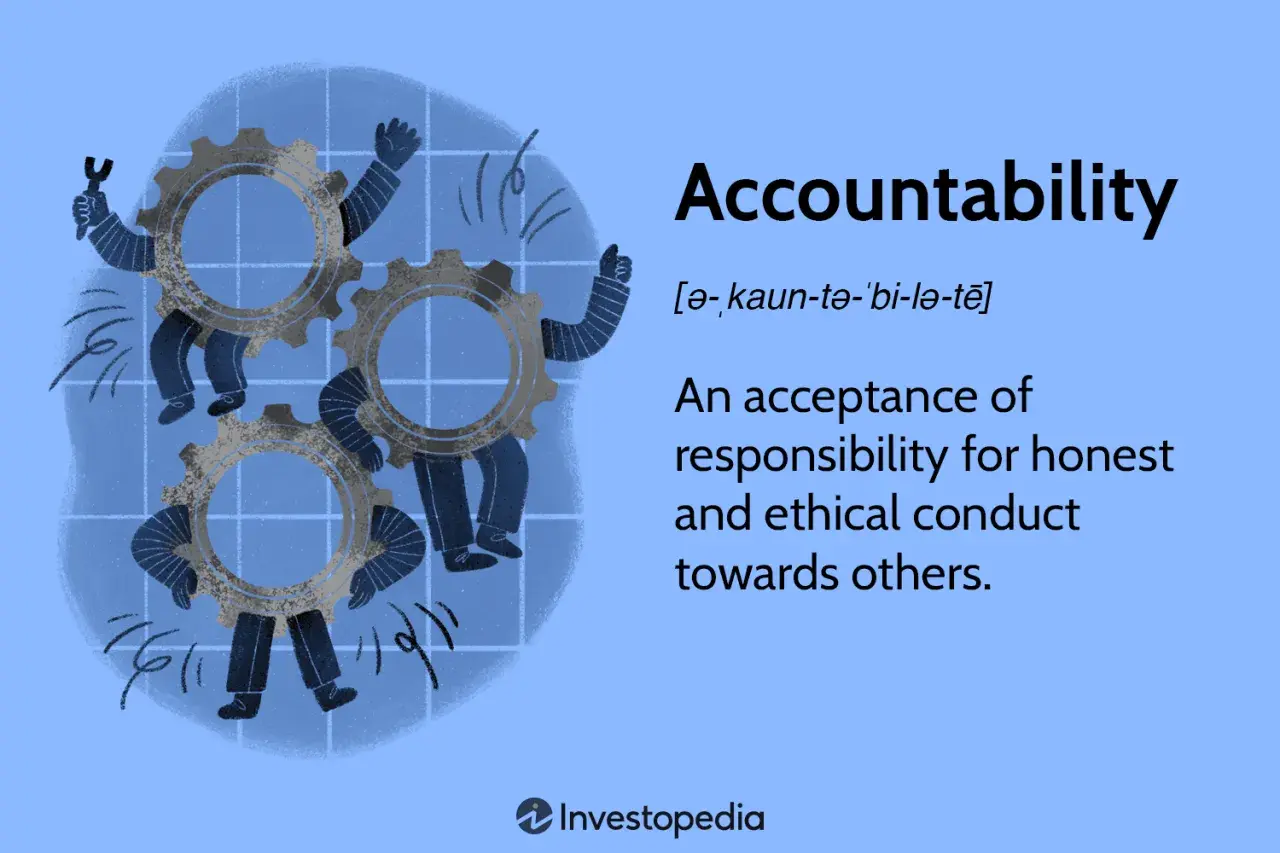
What matters most
- Accountability is best understood as a core workplace value when people own outcomes, not just tasks.
- It is different from responsibility: responsibility is about the work, while accountability is about answerability and follow-through.
- Healthy accountability depends on clear goals, visible ownership, honest reporting, and fair consequences.
- When leaders use it as punishment, teams usually hide problems instead of solving them.
- In hybrid UK workplaces, the value shows up most clearly in communication, deadlines, and how people handle mistakes.
What accountability means in a workplace culture
At work, accountability is the habit of owning both the result and the consequences of the work. It is not just saying, “I was involved”; it is being able to explain what you committed to, what happened, what changed, and what you did next. In my view, accountability is absolutely a workplace value when it means answerability rather than punishment, and that is especially clear in UK workplaces where clear handovers, realistic deadlines, and early escalation tend to separate reliable teams from fragile ones.
That is why accountability sits closer to a value than a process. A process can be written once and forgotten; a value changes behaviour when pressure is high, time is short, or the news is uncomfortable. That difference matters because the next question is not simply what accountability means, but why organisations rely on it at all.
Why leaders treat it as a value, not just a rule
Rules tell people what to do. Values tell people how to behave when the rulebook is incomplete. Accountable teams do not need a manager to chase every update because people already know that missed deadlines, vague status reports, and silent problems damage trust.
I think this is where many cultures get it wrong. They write accountability into performance language, but they never make it concrete enough to guide decisions. The result is predictable: people protect themselves, managers spend more time monitoring than leading, and the team starts optimising for appearances instead of outcomes. Once that happens, the practical question becomes what accountable behaviour actually looks like from day to day.

What accountable behaviour looks like in day-to-day work
Accountability becomes visible in small, repeatable behaviours, not grand statements. It shows up when someone gives an honest update, names the risk before it grows, and takes action without waiting to be asked twice. The simplest way I know to separate real accountability from polite avoidance is to look at what people do in ordinary work situations.
| Situation | Accountable response | Weak response |
|---|---|---|
| Missed deadline | State what changed, reset the plan, and warn everyone affected before the delay spreads. | Stay quiet until someone asks for an update. |
| Wrong assumption | Own the error quickly, correct the facts, and explain what will be different next time. | Reframe the mistake as unclear instructions from someone else. |
| Competing priorities | Escalate early, ask for a decision, and make the trade-off visible. | Keep saying yes to everything and hope the conflict disappears. |
| Hybrid work handover | Leave a clear written trail, confirm ownership, and close the loop in writing. | Assume the next person will figure it out. |
These are ordinary moments, which is exactly the point. Culture is built in ordinary moments, and that is why the distinction between accountability and the other workplace terms matters next.
Accountability, responsibility and ownership are different
These words often get used as if they mean the same thing, but they do not. Responsibility is about the task. Ownership is about internal commitment. Accountability is about answerability to other people and to the standard you agreed to meet.
| Term | What it really means | Workplace example |
|---|---|---|
| Responsibility | The duty to do the task or play a role. | A project coordinator updates the timeline. |
| Ownership | Internal commitment to make the outcome work. | A marketer spots a weak campaign brief and improves it. |
| Accountability | Being answerable to others for the result, the standard, and the follow-through. | A team lead explains why a launch slipped and how the team will recover. |
| Blame | Searching for fault without solving the issue. | People hide problems to avoid being singled out. |
Ownership can exist quietly inside one person, but accountability makes that commitment visible to the team. When leaders confuse these terms, they set the wrong expectations, so the next step is building the culture deliberately rather than hoping it appears.
How leaders build accountability without creating blame
Accountability works best when leaders make it easy to understand and safe to tell the truth. I would start with five practical moves:
- Define the outcome, not just the activity. “Launch the client pack by Thursday” is clearer than “keep moving it forward.” If the target is vague, the follow-through will be vague too.
- Assign one clear owner for every deliverable. Shared work is fine, but one person should coordinate the result. On larger projects, a RACI matrix, a simple role-mapping tool, can stop ambiguity before it starts.
- Use short, regular check-ins. A 15-minute weekly review is often enough for small teams; bigger projects may need twice-weekly touchpoints. The point is not surveillance, it is visibility.
- Make reporting safe and specific. People should be able to say, “We are off track because of X,” without being punished for surfacing the truth early. That is how you get problems while they are still fixable.
- Follow through on consequences fairly. If the same behaviour is excused for one person and challenged in another, the value stops being real very quickly.
In 2026, this matters even more in hybrid UK teams, where silence can be mistaken for progress and visibility is easy to fake. The stronger the system, the less a manager has to rely on guesswork, and that leads straight to the mistakes that quietly destroy the culture.
Common mistakes that weaken the culture
Most organisations do not lose accountability in one dramatic moment. They erode it through small habits that teach people the wrong lesson.
- Using accountability only after something goes wrong. Then it feels like punishment, not a standard.
- Keeping goals vague. If no one can define success, nobody can be fairly accountable for it.
- Rewarding visibility over substance. Some teams praise fast replies and polished updates even when the actual work is slipping.
- Excusing senior people. Nothing damages a values-led culture faster than different rules for different levels.
- Turning every issue into a blame search. People stop surfacing risks when they expect only embarrassment in return.
The pattern is simple: when accountability is handled inconsistently, people learn to manage perception instead of performance. So the final question is not whether the word appears in the values statement, but whether it can survive a normal working week.
How to tell whether accountability is truly part of the culture
I use a basic test: if people can name their commitments, raise problems early, and correct course without theatre, accountability is real. If they only speak up after the deadline has passed, or if every difficult conversation turns into a defensive one, the organisation has a trust and clarity problem, not a values problem.
- People give honest progress updates before being chased.
- Managers can explain who owns what, and why.
- Mistakes lead to learning and correction, not panic and concealment.
- Standards are applied consistently across roles and seniority levels.
- Teams are comfortable saying, “This is off track” early enough to fix it.
That is the simplest answer to whether accountability belongs among a company’s core values: it does when the organisation can practise it under pressure, not just describe it in a handbook. When it is real, people trust the team more, deliver more cleanly, and spend less energy covering gaps; when it is not, the culture is usually more fragile than it first appears.
