The essentials behind accountability gaps at work
- Accountability starts with clarity. If owners, deadlines, and standards are vague, follow-through will be too.
- Repeated blame-shifting, missed handoffs, and silent failures are stronger signals than one-off mistakes.
- Weak follow-up from line managers is one of the fastest ways a team drifts into low ownership.
- The cost shows up in slower delivery, lower trust, more rework, and higher burnout.
- The fix is usually simple to describe but hard to sustain: clear ownership, regular check-ins, and consistent consequences.
What weak accountability looks like day to day
In practice, I look for patterns rather than one-off slip-ups. A missed deadline can happen to anyone; a missed deadline that is explained away, handed off, and never revisited tells a different story. The same is true when people say “I thought someone else had it”, when meetings end without a named owner, or when errors only surface after a manager asks twice.
Healthy teams make ownership visible. People know what they are responsible for, what “done” looks like, and when progress will be checked. Weak teams leave that to interpretation, which is how small gaps become a normal part of the day.
The difference between a mistake and a pattern
One mistake followed by a clear correction is not the problem. The real warning sign is repetition: the same task gets dropped, the same person avoids the same issue, and the same conversation has to be had again because nothing was documented, reviewed, or escalated. That is where accountability stops being an individual issue and starts becoming part of the culture.
Once that pattern settles in, the next question is why it develops in the first place.
Why weak ownership develops in workplace culture
I rarely see this start with bad intentions. More often, it grows out of a system that tolerates ambiguity: roles overlap, priorities conflict, and no one is sure who has the final say. Over time, people learn that it is safer to stay vague than to commit.
Unclear roles and fuzzy priorities
If three people think they own the same task, nobody really owns it. If the priority changes every week, people stop treating deadlines as serious. Role clarity is boring, but it is one of the strongest defences against drift.
Leaders who avoid hard conversations
When managers ignore missed commitments, the team notices. Gallup has long argued that people experience the workplace mainly through their direct manager, and I think that is exactly right here: if the line manager tolerates loose behaviour, the culture will follow that example.
Blame without learning
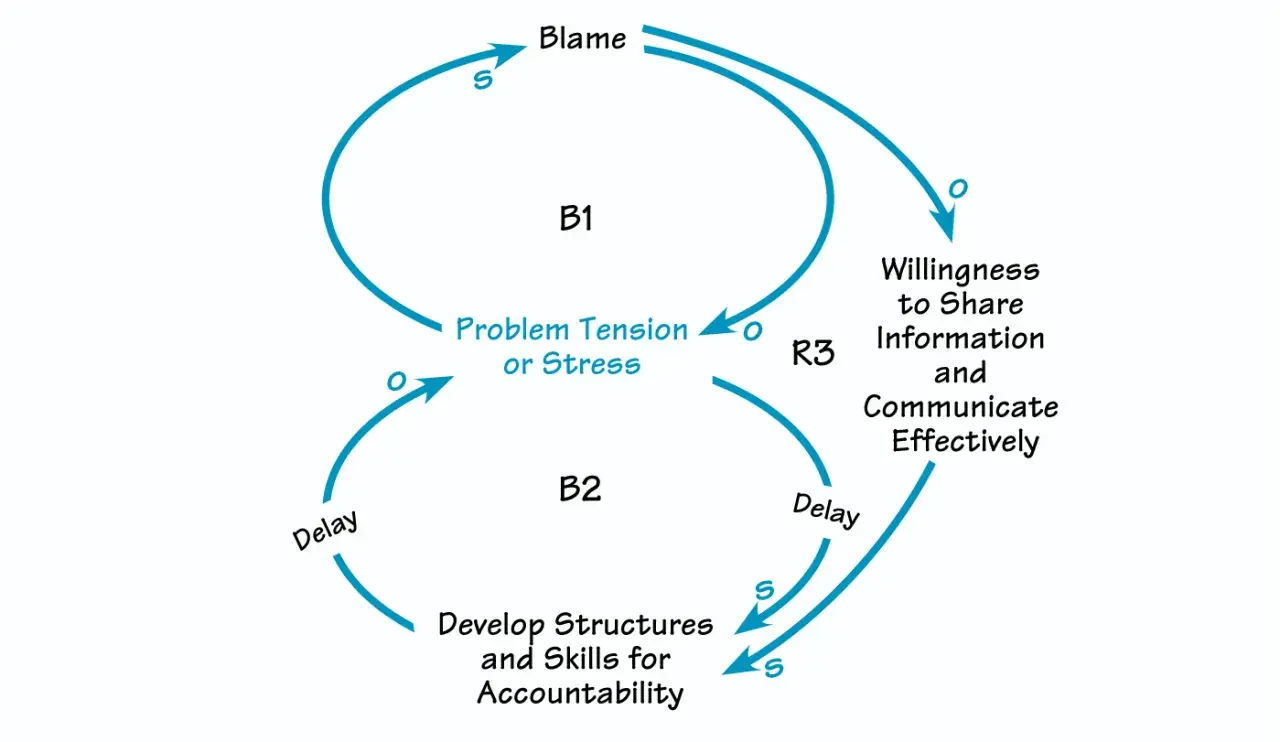
Accountability is not the same as public shaming. When every mistake is treated as a performance crisis, people hide problems instead of raising them early. Psychological safety, the feeling that people can speak up without being humiliated, matters because ownership only works when people are willing to surface the truth.
In other words, you do not fix the problem by choosing between blame and leniency; you fix it by making expectations explicit and follow-up consistent. That leads naturally to the real business impact.
What it costs teams and businesses
The cost is usually bigger than the original mistake. A missed handoff creates rework, a vague decision creates delay, and a repeated excuse drains the patience of everyone around it. In my experience, weak accountability is expensive because it spreads.
| What you see | What it usually leads to | Practical cost |
|---|---|---|
| Repeated missed deadlines | Work piles up and needs rescuing | Overtime, stress, slower delivery |
| Decisions reopened after meetings | No one trusts the decision has landed | Delay, confusion, lost momentum |
| Blame-shifting between colleagues | People protect themselves instead of solving problems | Lower trust, weaker teamwork |
| Problems hidden until the last minute | Managers get involved too late | More firefighting, more pressure |
| High performers becoming the default rescue team | Bad habits are quietly absorbed by reliable people | Burnout, resentment, uneven standards |
For UK employers, the knock-on effect can also become an HR issue: performance reviews take longer, disputes become harder to settle, and managers end up spending time on preventable escalation. That is why it is a mistake to treat the problem as merely “soft”. It affects delivery, retention, and risk.
Once the cost is visible, the next step is to separate a people problem from a process problem.
How to diagnose the real root cause
I would not jump straight to “the person is not responsible enough”. Start by testing the system around the behaviour. A useful diagnosis usually comes down to five questions: Was the expectation clear? Was one person named as owner? Did they have the authority and resources to finish? Was there a review date? And did anyone act when the deadline slipped?
| Possible cause | How it shows up | What to test first |
|---|---|---|
| Unclear ownership | Tasks bounce between people and no one can say who decides | Assign one owner and write it down |
| Conflicting priorities | Everything is urgent, so nothing is truly owned | Reset the order of priorities with the manager |
| Skill or resource gap | The person means well but cannot finish on time | Check training, capacity, and access to tools |
| Fear of consequences | People hide issues until they become visible failures | Change how problems are raised and discussed |
| No follow-up system | Meetings happen, but nothing is tracked afterwards | Add written recaps and short review points |
This matters because the right response depends on the cause. A capability gap needs support; a priority problem needs re-scoping; a behaviour problem needs a firmer conversation. If you do not diagnose it properly, you end up using the wrong tool and the same issue keeps coming back.
That is also why managers matter so much in the fix.
How managers can rebuild ownership without blame
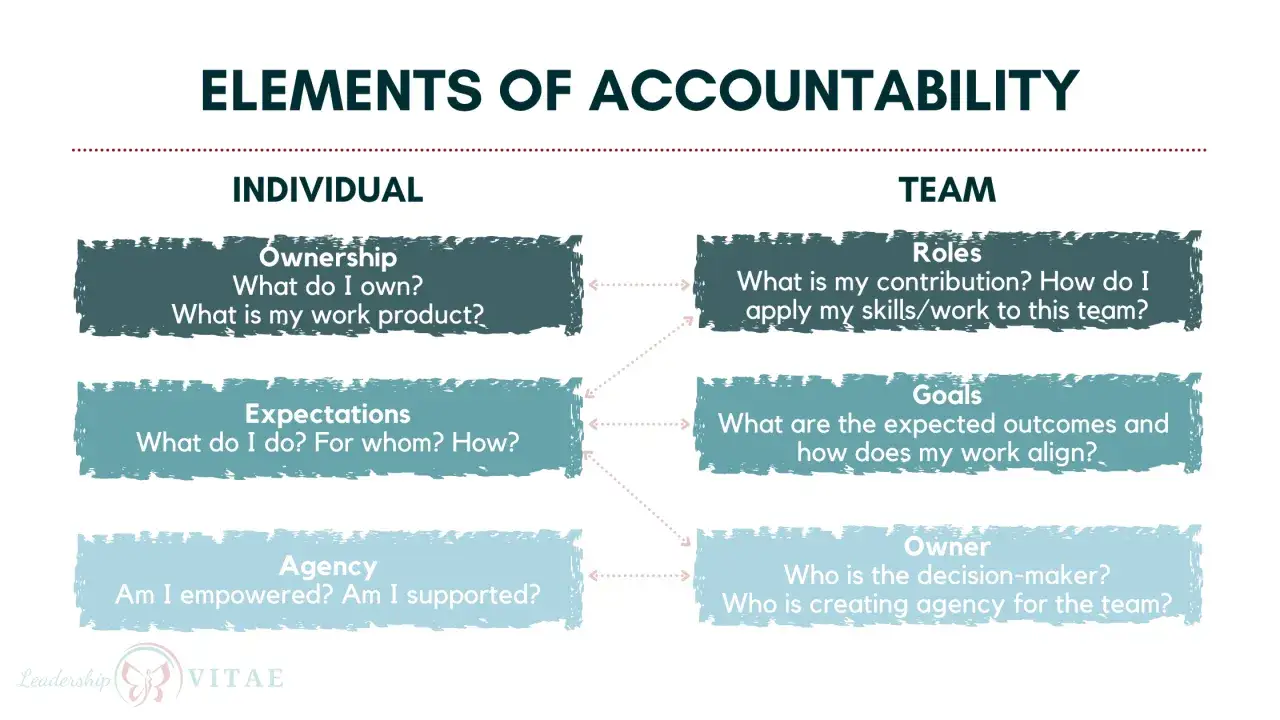
If I were resetting a struggling team, I would start with a few simple habits and apply them relentlessly. Accountability works best when it is visible, specific, and routine, not when it appears only after something goes wrong.
- Give every outcome one owner. If two people share delivery, name one person responsible for the finish line.
- Define “done”. Spell out the result, standard, and date.
- Close every meeting with a recap. Send a short written note with owners, deadlines, and blockers.
- Review progress on a short cadence. Weekly is often enough for active work; faster if the project is risky.
- Address misses privately and quickly. Keep the conversation factual: what happened, what should happen next, and by when.
- Escalate repeated misses consistently. If the same pattern continues, the team must see that standards are real.
For UK teams, I would anchor this in Acas-style practice: regular performance reviews, ideally at least once a year for employees, plus much more frequent check-ins when conduct or performance is slipping. If an issue needs formal follow-up, the employee should understand what needs to change, how it will be reviewed, and over what period. That kind of clarity is firm without being theatrical.
Keep the tone firm, not punitive
This is not about surveillance or micromanagement. It is about making ownership easy to see. If every conversation feels like a courtroom, people will hide problems; if every mistake is ignored, standards disappear. I want the middle ground: clear expectations, quick feedback, and consequences that are predictable rather than emotional.
The point is not to create a blame culture. It is to make it impossible for work to float around anonymously. That matters just as much for employees who are trying to protect their own work.
What employees can do when the culture does not change
When you are working inside a low-accountability environment, you cannot fix the whole organisation on your own. You can, however, protect your work and make your own ownership visible.
- Confirm decisions in writing after meetings.
- Ask direct questions like “Who owns this?”, “What does done look like?”, and “When do you want the next update?”
- Keep a simple record of commitments, handoffs, and approvals.
- Raise repeat problems early instead of waiting until the deadline has already been missed.
- Do not quietly absorb other people’s unfinished work if it becomes a pattern.
- If the issue affects workload, fairness, or wellbeing, use the formal route through your line manager, HR, or your union if you have one.
I also tell employees not to confuse being helpful with becoming the default safety net. If you are always rescuing the same gaps, the system has no reason to change, and your own reputation can end up carrying other people’s mistakes.
The best teams make the last step automatic.
The smallest operating rhythm that keeps responsibility visible
The simplest fix I know is also the least glamorous: every piece of work should end with one owner, one deadline, one definition of done, and one review date. If that rhythm becomes normal, people stop hiding behind process, and follow-through becomes part of the job rather than an extra effort.
- At the end of each meeting, name the owner.
- State the deadline and the standard.
- Record the next check-in.
- Remove or escalate anything that is blocked.
That is usually enough to expose where the real problem sits: a missing skill, a missing decision, or a manager who has not been consistent enough. In my view, accountability improves fastest when the team can see work moving, not when the organisation simply talks about being more accountable.