
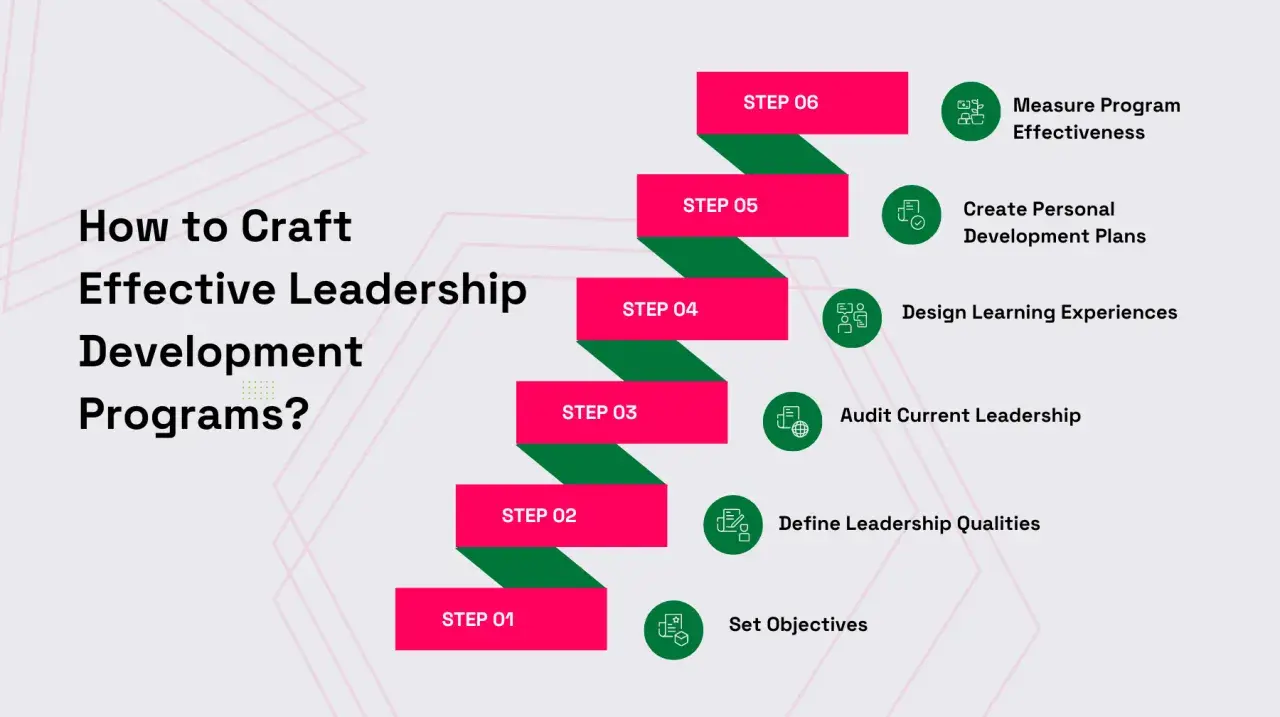
A good leadership curriculum is not a list of topics; it is a route from awareness to better decisions, better conversations, and steadier team performance. In this article I break down what to include, how to sequence the learning, where coaching fits, and how to judge whether the programme is actually changing behaviour in a UK workplace. I also cover the mistakes that waste time, because most weak programmes fail at transfer rather than content.
I’ve written this for aspiring managers, new line managers, and experienced leaders who need a practical development plan that feels usable on a busy week, not a classroom exercise that disappears on Friday.
Key points to keep in mind before you build the programme
- Start with the role and the business need, not a generic list of leadership traits.
- Blend short input, practice, reflection, and coaching so the learning sticks between sessions.
- Teach the fundamentals first: self-awareness, communication, feedback, decision-making, delegation, and change.
- Measure behaviour change, not just attendance, if you want a credible result.
- Keep the design realistic for UK teams that are often hybrid, time-poor, and expected to show CPD evidence.
What a strong programme has to achieve
A leadership curriculum only works when it is built from the job backwards. I want it to help someone do the things that actually define leadership in practice: set direction, have difficult conversations, develop people, handle uncertainty, and keep standards visible when pressure rises. If the learning does not improve those behaviours, it is content, not capability.That is why I never start with “what topics sound important?” I start with “what must this person do better in real life?” The answer changes by level, which means the curriculum has to change too.
| Audience stage | Main need | What good looks like |
|---|---|---|
| Aspiring leaders | Confidence, self-awareness, and the basics of influencing others | They can speak up clearly, prioritise their own work, and prepare for people responsibility |
| New managers | Delegation, feedback, performance conversations, and time management | They stop firefighting, give clear direction, and avoid carrying every task themselves |
| Experienced managers | Coaching, cross-functional influence, and leading change | They grow other people and solve problems without becoming the bottleneck |
| Senior leaders | Strategic judgement, culture shaping, and decision quality | They align teams around priorities and create conditions for other leaders to succeed |
The common mistake is trying to serve all four groups with the same material. That usually produces bland sessions and very little behaviour change. Once the purpose is clear, it becomes much easier to choose the right content and avoid the bloated, one-size-fits-all version.

The modules that matter most
When I build a leadership development pathway, I keep returning to the same core modules. They are not glamorous, but they solve the problems leaders deal with every week. I would rather teach one difficult conversation well than skim over five leadership theories badly.| Module | Why it matters | What to practise |
|---|---|---|
| Self-awareness and values | Leaders need to know what triggers them, what their default style is, and where they create friction | A short 360 feedback review, a reflection log, and a personal leadership statement |
| Communication and influence | Most leadership problems are communication problems in disguise | Briefings, listening practice, stakeholder mapping, and concise written updates |
| Feedback and difficult conversations | Teams improve when standards are specific and feedback is timely | Real case practice, role-play, and follow-up notes after live conversations |
| Coaching and delegation | Good leaders grow capacity instead of holding all the work themselves | Delegating a stretch task, using open questions, and checking progress without micromanaging |
| Decision-making and prioritisation | Leaders are paid to choose under uncertainty, not to delay forever for more data | Scenario work, decision logs, and priority-setting exercises |
| Change and resilience | Teams need a leader who can stay steady when plans shift | A change plan for a live project, plus a review of what resistance might appear |
| Inclusion and team culture | Trust, psychological safety, and fairness affect performance more than most leaders admit | Meeting norms, inclusive language checks, and a review of who gets heard |
If I had to cut anything, I would cut generic theory first and keep the practice. Most adults do not need more jargon; they need a chance to rehearse a better response before they are in the middle of the real situation. The order of those topics matters too, which is why the next question is how to pace the learning.
How I would sequence the learning over 12 weeks or 6 months
The most useful structure is usually a blend of short teaching, workplace practice, and reflection. I still find the 70-20-10 lens helpful as a planning shorthand, but I treat it as a guide rather than a rule. The point is simple: most of the learning should happen in the work, not away from it.
For a new manager cohort, I would normally aim for an eight- to twelve-week journey. That is long enough to build habits and short enough to keep momentum. For more senior groups or behaviour change that is tied to culture, four to six months is more realistic.
| Format | Typical length | Best use | Limitation |
|---|---|---|---|
| Two-day workshop | 1-2 days | Awareness, shared language, and quick introductions to core ideas | Weak on transfer if nothing happens afterwards |
| Blended foundation journey | 8-12 weeks | New managers and aspiring leaders who need habits, not just information | Needs discipline between sessions |
| Coached development programme | 4-6 months | Behaviour change, confidence, and more visible impact on teams | Costs more and needs manager support |
| Leadership pipeline track | 9-12 months | Succession, senior leadership readiness, and strategic capability | Can become too broad if it tries to cover everything |
A practical sequence looks like this: assess first, teach second, practise third, then reinforce. That may sound obvious, but many programmes reverse the order and wonder why nothing changes. I prefer to begin with a simple capability check, then assign one or two workplace tasks after each module, and close with a review session where people bring real evidence from the job.
This structure only starts to work when coaching turns the material into daily habit.
Why coaching turns knowledge into behaviour
Coaching is where a leadership programme stops being a course and starts becoming a system of change. It is not therapy, and it is not a softer version of management. It is a disciplined conversation style that helps people think more clearly, own their choices, and commit to action they will actually take.
That is also why I would never bolt coaching on as an afterthought. In practice, it works best when it sits inside the wider learning strategy, not beside it. You teach a concept, test it in the workplace, and use coaching to help the learner reflect on what happened, what got in the way, and what to do next.- Use coaching when the learner owns the problem. If the issue needs reflection, pattern spotting, or confidence-building, coaching is a strong fit.
- Use it after practice tasks. A short coaching conversation after a feedback meeting or delegation task can lock in the learning.
- Keep the skills basic and clear. Open questions, active listening, summarising, silence, and contracting, which is agreeing the purpose and boundaries of the conversation, are usually enough to get started.
- Do not use coaching for urgent compliance issues. If the situation needs a direct instruction, policy correction, or immediate decision, coaching is the wrong tool.
In the UK context, I think this is especially relevant because line managers are often asked to lead, support wellbeing, and deliver results at the same time. Coaching gives them a way to develop people without defaulting to advice-giving or control. It also helps when the organisation wants a stronger coaching culture, because leaders learn the behaviour by using it, not by hearing about it once in a workshop.
Once behaviour is changing, I want evidence, not just enthusiasm.
How to tell whether it is working
If a programme is effective, people should do something differently within a few weeks. If they are only more positive in the room, that is not enough. I always push for a measurement plan that tracks learning transfer, not just satisfaction.
A smile-sheet score of 4.8 out of 5 can be flattering, but it does not prove leadership growth. A better approach is to measure at baseline, at the end of the module, and again after 30, 90, and 180 days. That gives you a realistic view of whether the habit has survived the first burst of motivation.
| Metric | What it tells you | When to check it |
|---|---|---|
| Attendance and completion | Whether the programme is accessible and relevant enough for people to stay engaged | Immediately |
| Confidence and self-efficacy | Whether learners understand the tools and feel able to use them | End of each module |
| Manager or peer feedback | Whether behaviour is changing in the workplace | 30-90 days |
| 360 feedback | Whether others notice a shift in leadership style and consistency | 3-6 months |
| Team outcomes | Whether the change is affecting turnover, absence, engagement, or delivery | 6 months and beyond |
The pilot version I would launch first
When I want to test a new leadership development programme, I keep the first version deliberately lean. For most UK teams, I would pilot with 5 to 7 hours of core content, two coaching touchpoints, and three workplace assignments. That is enough to see whether people actually use the learning without overloading their calendars.
- Keep the audience narrow. Start with new managers, or another clearly defined group, rather than mixing every leadership level together.
- Make the tasks real. Ask participants to use the material in one live feedback conversation, one delegation decision, and one coaching-style check-in.
- Build in sponsor support. A line manager or senior sponsor should know what the learner is practising and reinforce it.
- Check the timing. Hybrid calendars, holiday periods, and busy delivery cycles can break even a good design if they are ignored.
- Map it to CPD if needed. For many UK professionals, a clear CPD record makes the learning easier to evidence and easier to value.
The strongest programmes are usually the simplest ones that are repeated well: clear purpose, useful practice, coaching support, and a real way to measure change. If I were advising a team building this from scratch, I would start small, keep the content tied to actual leadership behaviour, and improve the journey after one cohort rather than trying to design the perfect version on day one.
