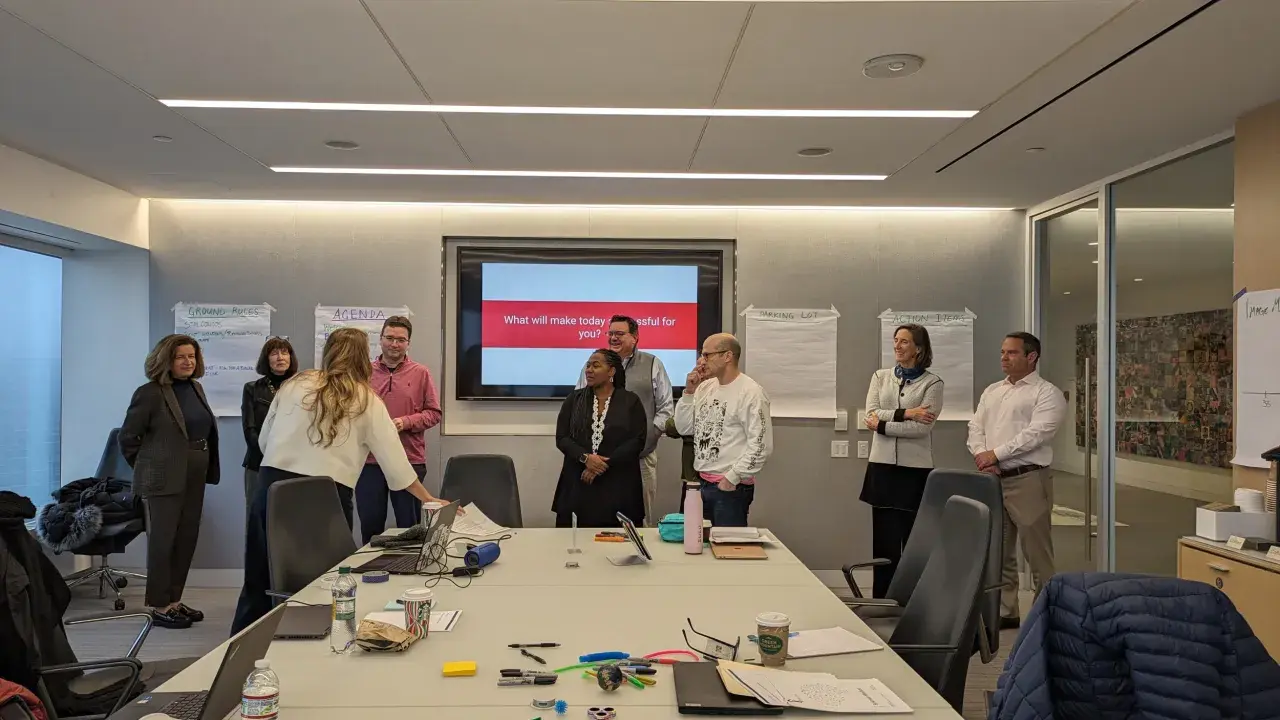
A coach of a team does more than keep meetings on track. The real job is to improve how people think, speak, decide, and recover when pressure rises, so the group can perform without relying on one strong personality. In UK workplaces, where hybrid working and constant change can blur ownership, that role is often the difference between a busy team and a genuinely effective one.
The essentials at a glance
- Team coaching is about the quality of collaboration, not just individual output.
- The best coaches set direction, ask sharper questions, and keep actions visible.
- Coaching is different from managing, mentoring, and facilitation, even when the same person does all four.
- Good coaching is consistent: short check-ins, clear agreements, and visible follow-through matter more than big speeches.
- If standards, conduct, or deadlines are at risk, the coach has to switch from coaching to direct management.
What a team coach is really responsible for
When I separate the role from general leadership, I usually define it like this: a team coach helps the group improve how it works together, while a manager owns delivery, decisions, and accountability. The coach is looking for patterns in the room, not just the next task on the list.
That distinction matters because team coaching is not therapy, and it is not a motivational talk with nicer language. It is a structured way of helping people notice what is helping performance and what is quietly slowing it down.
| Role | Main focus | What it sounds like |
|---|---|---|
| Team coach | Improve collaboration, reflection, and team habits | "What is happening in the way we are working together?" |
| Manager | Own results, resources, priorities, and performance | "This is the decision, the deadline, and the standard." |
| Mentor | Share experience, perspective, and career advice | "Here is what I learned in a similar situation." |
I find this comparison useful because it stops teams from expecting one person to do everything. A good coach may also manage and mentor, but the style has to change depending on the moment. That distinction matters because the responsibilities become more concrete once the team coach is in the flow of work rather than only in formal sessions.
The responsibilities that matter most
I see six responsibilities that repeatedly make the difference between a useful coach and a polite observer.
- Clarify the team's purpose. People work better when they can connect daily decisions to a clear shared outcome, not just a vague sense that they should "work harder".
- Create psychological safety. That means people can speak honestly, admit uncertainty, and challenge ideas without being punished for it.
- Ask questions that expose patterns. A strong coach listens for recurring issues such as avoidance, over-reliance on one person, or conflict that never reaches the surface.
- Keep accountability visible. Insight is cheap if nobody owns the next step, so every useful conversation needs a name, a date, and a measurable action.
- Strengthen communication. The coach should help the team speak more clearly, disagree more cleanly, and make decisions without circling the same issue three times.
- Turn reflection into action. A session should end with something practical that changes behaviour, process, or priority in the next 7 to 14 days.
If a team coach is doing this well, the group does not become dependent on the coach. It becomes better at coaching itself. Once those responsibilities are clear, the next question is how they show up in real meetings and decisions.

What team coaching looks like in practice
In a normal week, team coaching should be visible in three places: preparation, live conversation, and follow-up. I would not spend an hour wandering through general updates; in a 45-minute session, roughly 10 minutes can go to context, 25 minutes to the core issue, and 10 minutes to commitments.
Before the session
The coach should know the outcome, the tension point, and the decision that the team needs to make. That might mean reviewing workload, recent misses, or a recurring communication problem. The point is not to script the conversation; it is to avoid starting blind.
During the session
Good coaching uses short, open prompts: What is happening here? What are we not saying? What would a better version of this look like in two weeks? I like to keep the room balanced, because the quiet voices often hold the most useful signal.
Read Also: Leadership Accountability - Build Trust, Drive Results
After the session
Actions should be written down immediately, with one owner and one date per action. If the team cannot name the next step in plain English, the session was too abstract. In hybrid teams, I also recommend a 15-minute follow-up within 48 hours to check whether the agreement is still alive.That is the practical side; the next issue is the mistakes that quietly undo it.
Common mistakes that weaken the coaching approach
Most coaching fails for ordinary reasons, not dramatic ones. The coach talks too much, avoids tension, or treats a single workshop as if it were a culture shift.
| Mistake | Why it hurts | Better move |
|---|---|---|
| Giving advice too early | The team stops thinking for itself and waits to be rescued | Ask two or three questions before you offer any view |
| Avoiding conflict | The real issue stays hidden and the same friction returns | Name the tension directly and work from evidence |
| Coaching only strong performers | The broader team misses support where it is needed most | Coach the whole system, not just the easiest people |
| No follow-through | Good intentions fade and trust drops | Review commitments every 1 to 2 weeks |
| Confusing support with lowered standards | Performance slips because expectations become fuzzy | Keep standards explicit while still coaching the route to them |
The pattern behind all of these mistakes is the same: the coach becomes pleasant but non-essential. That is why coaching still has to sit next to performance management, not replace it.
When coaching should give way to management
There are moments when coaching is the wrong tool, or at least only a small part of the answer. If someone is repeatedly missing deadlines, breaching policy, creating conduct issues, or failing in a role they are not equipped for, a coach has to become direct and specific.
- Use coaching when the person can reflect, choose, and improve.
- Use management when the standard is fixed and the decision is non-negotiable.
- Escalate when the issue is formal, risky, or tied to HR policy.
In practice, that means saying what needs to change, by when, and how progress will be measured. Coaching can support the conversation, but it cannot be the only conversation if the team's output or behaviour is at risk. That boundary matters, because a healthy coaching style should strengthen accountability, not dilute it.
Once that boundary is clear, it becomes much easier to build a culture where coaching is normal rather than occasional.
How to build a coaching culture that lasts
In UK teams, I would keep the system simple. A coaching culture does not need a giant programme; it needs repeatable habits that fit around real work.
- Set two or three team norms. For example, no interruptions in review meetings, every disagreement must end with a next step, and every owner must name a deadline.
- Use short check-ins. A weekly 15-minute coaching conversation often does more than a quarterly off-site.
- Train managers in questioning and listening. Many managers default to advice because it feels efficient, not because it works best.
- Review the process every month. Ask what the team is doing better, what still feels stuck, and where the coach is becoming a bottleneck.
- Use digital tools carefully. AI prompts and note-taking tools can help with reflection, but they should not replace judgement, trust, or accountability.
The best cultures make coaching feel normal, not ceremonial. If the team can speak honestly, make decisions faster, and correct itself with less drama, the culture is doing its job. That is the point of the work, and it leads naturally to the first 90 days, where small habits matter more than grand plans.
What I would focus on in the first 90 days
If I were stepping into this role, I would avoid trying to transform everything at once. The first three months should be about trust, rhythm, and evidence.
- Days 1-30: observe meetings, interview team members, and map recurring friction points. I want to know where decisions stall and where people stop speaking up.
- Days 31-60: agree on team goals, working norms, and a simple coaching cadence. At this stage, clarity matters more than ambition.
- Days 61-90: track progress against the agreements, remove one or two bottlenecks, and hand more ownership back to the team.
That is usually enough to see whether the coach is changing behaviour or just adding another layer of conversation. When the role is working, the team becomes clearer, calmer, and more accountable without losing speed.